Death Myth Meaning & Symbolism
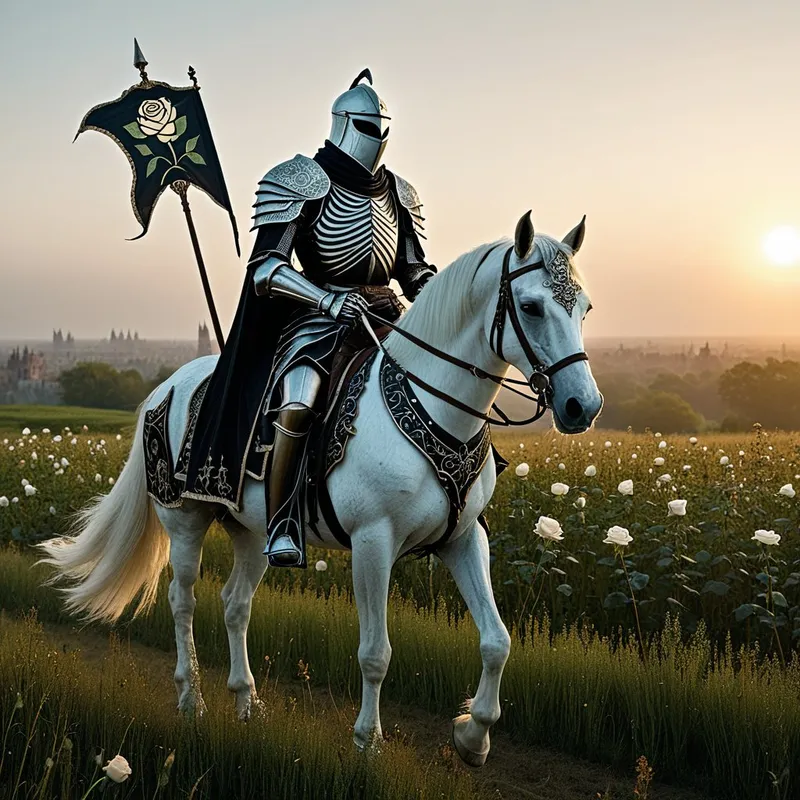
A skeletal horseman rides, not to destroy, but to clear the old ground. His scythe harvests the soul's withered stalks, making way for a new season of being.
The Tale of Death
Listen. The hour is the hinge between night and not-yet-morning, when the world holds its breath. The air is cold, tasting of iron and damp earth. This is the hour He rides.
He is not fury. He is not plague. He is the Horseman, clad in armor blackened by time, seated upon a steed the color of bone and moonlight. In His hand is no sword, but a scythe—its curve a silent promise of harvest. Before Him, the land lies still: a king in gilded robes has fallen to his knees, his crown rolling into the mud. A child looks up, not with terror, but with a profound, unsettling curiosity. A bishop clutches his rosary, his prayers now whispers against the inevitable wind.
He does not charge. He walks. His pace is the rhythm of a closing chapter, the final beat of a heart. Where the horse’s hooves touch the earth, they do not crush, but seem to press the soil into readiness. He passes the king, and the gilded robes seem to wilt, revealing the simple man beneath the title. He passes the child, whose eyes now see not a monster, but a strange, necessary gardener. He passes the bishop, and the beads in the old man’s hands grow still.
Before them all flows a river, wide and slow. On the far bank, the first sliver of sun cuts the horizon, painting the towers of a distant city in liquid gold. The Horseman rides to the water’s edge and stops. He turns His skull, not to look back at the figures in the field, but to acknowledge the sun. And as that new light touches His banner—a black field holding a single, perfect white rose—something impossible happens.
In the field behind Him, where the king knelt, a green shoot pushes through the cracked earth. Where the child stood, a butterfly tests its new wings on a thistle. The river itself seems to brighten, its waters carrying the reflected gold of the new day toward the sea. The Horseman does not cross. He becomes a silhouette against the dawn, a gateway already passed through. His work is not to dwell in the field of endings, but to open the way to the field of beginnings. The scythe was never for killing. It was for clearing.
Cultural Origins & Context
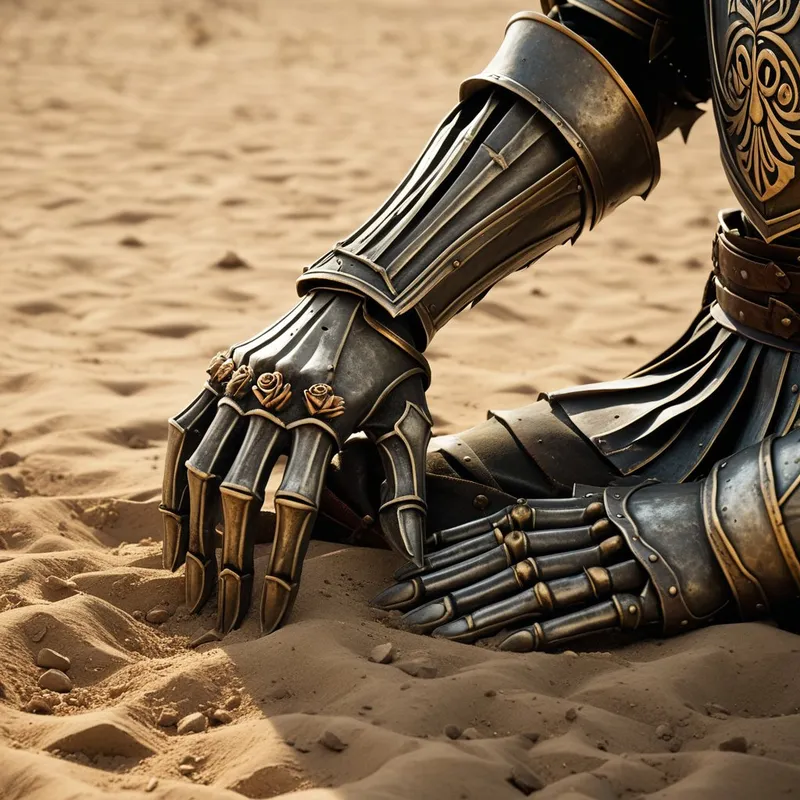
The figure of Death in the Tarot is not a product of a single culture, but a syncretic image born in the ferment of Renaissance Europe. The earliest known decks, like the Visconti-Sforza, depicted Death straightforwardly as a skeleton, an emblem of the Danse Macabre that haunted the medieval mind after the Black Death. This was a populist, leveling image: a reminder to prince and pauper alike of mortality's inevitability.
However, as the Tarot evolved from a card game into a tool for meditation and esoteric study, particularly within Hermetic and Kabbalistic circles of the 18th and 19th centuries, the card's meaning underwent a profound alchemy. No longer merely a literal memento mori, it became a pivotal station on the Fool's Journey. In this context, the myth was passed down not by bards, but by occultists and psychologists—from Eliphas Lévi to Carl Jung—who interpreted its narrative as an internal, psychic process. Its societal function shifted from enforcing social humility to mapping the individual's necessary confrontations with the unconscious.
Symbolic Architecture
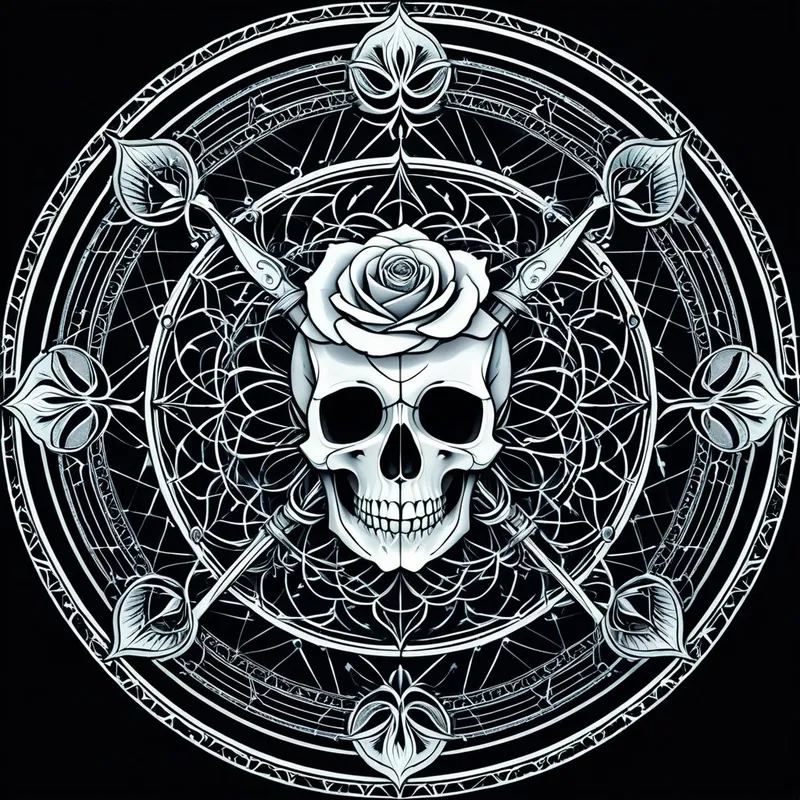
Psychologically, Death represents the inescapable archetype of transformation. The skeleton signifies the essential, stripped-down core of Self that remains when all identifications—ego, status, persona—are removed. The horse symbolizes the driving, instinctual energy of life itself, carrying this transformative principle forward.
Death is the psychopomp not of the body, but of the ego. It escorts outworn versions of the self to their necessary end.
The scythe is an instrument of harvest, not random destruction. It cuts down what has ripened and completed its cycle, making space for new growth. The figures in the field—king, child, bishop—represent aspects of the psyche (authority, innocence, faith) that must bow to this process. Most crucially, the rising sun and the white rose on the black banner symbolize the promise of renewal and purity that emerges from the dissolution. The card is a map of the ego's death and the Self's potential rebirth.
The Dreamer's Resonance
When this myth surfaces in modern dreams, it rarely appears as a literal skeleton. Instead, it manifests as profound, unsettling transitions: dreaming of a house you must leave forever, of teeth falling out, of a beloved landscape being flooded or cleared. There is a somatic quality of loss, a visceral sense of something being torn away.
This is the psyche undergoing a process of deintegration. The dreamer is not dying, but a rigid structure within them is. They may feel a deep anxiety, grief, or even numbness—the "field of cold earth" in the soul. This dream pattern signals that a significant complex, a way of being or believing, has reached its expiration date and the unconscious is initiating the clearing. The emotional turbulence is the resistance of the ego, the "king" who does not wish to kneel.
Alchemical Translation
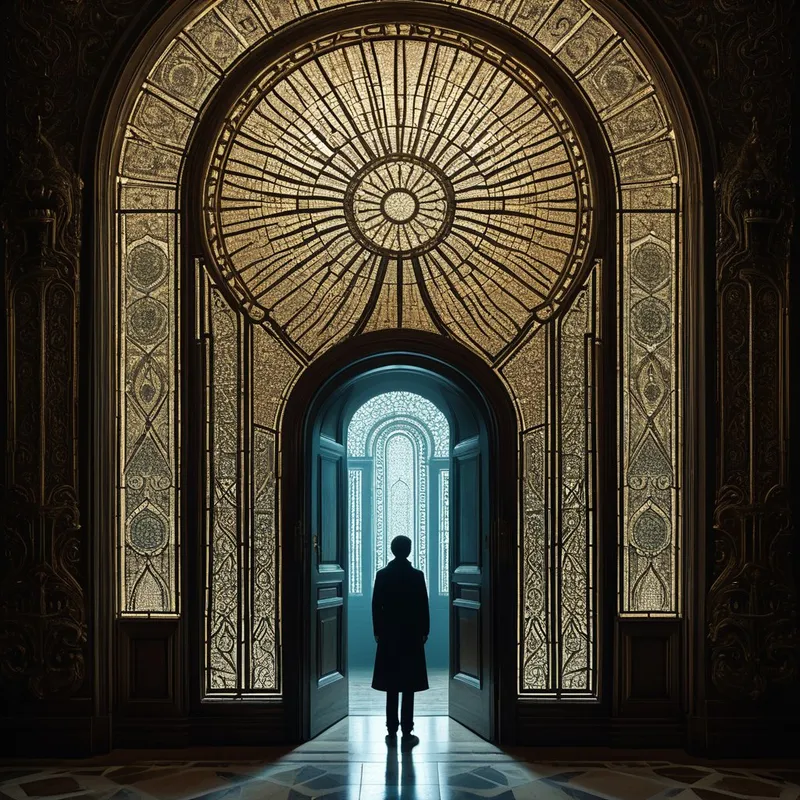
In the alchemical work of individuation, the Death card corresponds to the stage of Nigredo. This is the "dark night of the soul," where the base matter of the personality is broken down into its essential components. The myth models this psychic transmutation precisely.
The first step is the confrontation with the Horseman—the acknowledgment of an ending we did not choose. The subsequent "clearing of the field" is the often-painful work of letting go: releasing outdated identities, grieving lost paths, surrendering control. This is the application of the scythe.
The alchemical fire is not lit to destroy the metal, but to burn away the dross, revealing the gold beneath that was always there.
The triumph in the myth is not in avoiding the Horseman, but in witnessing what grows in His wake. The green shoot, the butterfly—these are the first signs of the Albedo, the emergence of a new consciousness from the fertile black soil of the old self's dissolution. For the modern individual, this translates to the profound liberation that follows a major life collapse. The career ends, the relationship shatters, the identity crumbles—and from that space, stripped bare, a more authentic, resilient, and integrated Self can begin to take root, facing the dawn of its own becoming. The river is crossed not by going back, but by allowing the old self to stay on the far bank, while you, essence intact, flow forward into a new shape.
Associated Symbols
Explore related symbols from the CaleaDream lexicon: