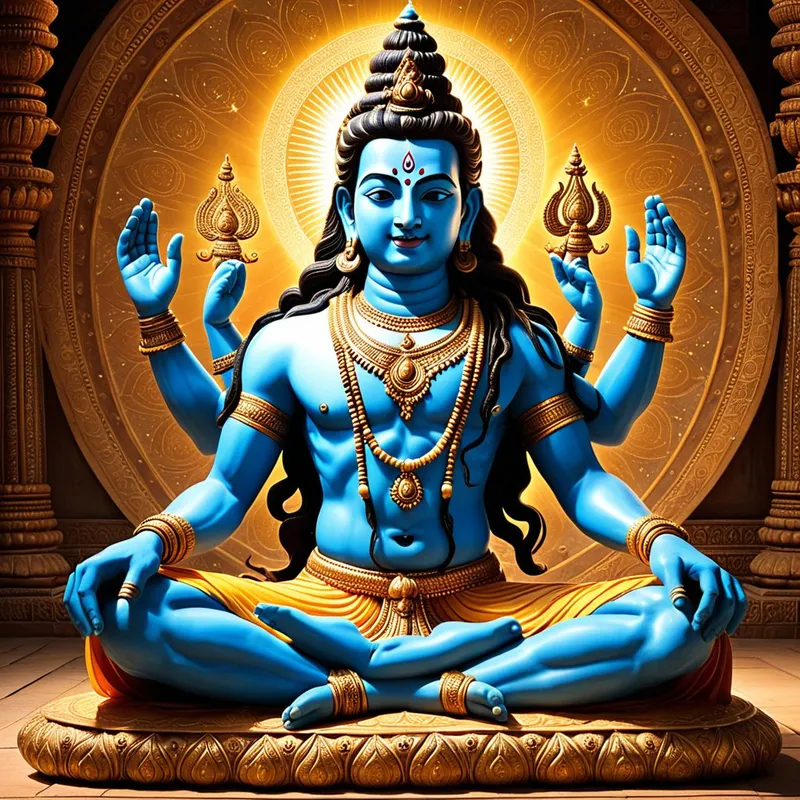
Darshan Myth Meaning & Symbolism
The sacred, reciprocal gaze between devotee and deity, where seeing and being seen becomes a conduit for grace and a mirror for the soul.
The Tale of Darshan
In the beginning, there was the gaze. Not a glance, fleeting and casual, but a gaze—deep, deliberate, and pregnant with the unspoken. This is the tale not of a hero’s quest, but of a moment. A moment when the veils of Maya grow thin, and the impossible becomes intimate.
Picture it: the air in the temple is thick with the scent of marigolds and sandalwood paste, a palpable haze of devotion. The great bell has just ceased its ringing, leaving a silence that feels like a held breath. A pilgrim, their feet dusty from a journey of a thousand miles, pushes through the crowd. Their heart is a drum against their ribs, not with fear, but with a terrible, beautiful longing. They have come for one thing only.
Before them, in the sanctum’s cool gloom, resides the murti. It is carved of dark stone, yet it seems to drink the flickering light of the oil lamps, holding it within. The deity’s eyes, wide-open and inlaid with silver or precious gems, do not look at anything in the room. They gaze into a forever-distance, into the heart of Brahman itself.
The pilgrim’s journey, their prayers, their very life, condense into this single, suspended second. They lift their own eyes. They do not merely look; they offer their entire being into that sacred line of sight. And then… it happens. A shift in the atmosphere, a subtle warming of the stone. It is not that the statue moves, but that its seeing becomes active. The distant gaze turns present. The silver eyes seem to gather the pilgrim’s form, their history, their silent plea. In that reciprocal meeting—the human seeing the divine, and feeling, knowing, themselves seen by it—a circuit is completed.
A silent lightning arcs across the gap between the mortal and the eternal. It carries no words, only a profound recognition. It is a grace that washes over the pilgrim not as a voice, but as a warmth in the chest, a sudden clarity behind the eyes, a quiet dissolution of a loneliness they had carried for a lifetime. The conflict was the separation; the rising action was the journey and the yearning; the resolution is this wordless, electrifying communion. The pilgrim steps back, their face wet with tears that are not of sorrow, but of a homecoming witnessed. The world is the same, yet utterly, irrevocably changed. For they have received Darshan.
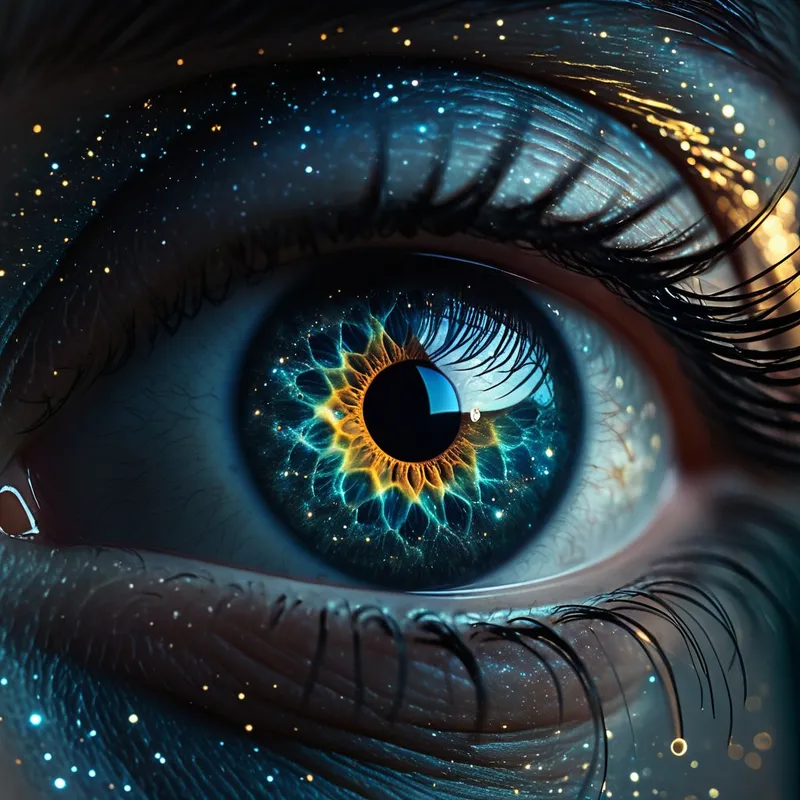
Cultural Origins & Context
Darshan is not a single myth with a fixed author, but a living, breathing concept woven into the very fabric of Hindu spiritual practice. Its origins are as ancient as the Vedas, where the deities are invoked to "see" and "be seen" by the devotee. It was passed down not just through epic poems like the Mahabharata or the Ramayana, but through the daily rituals of millions in temples, riverbanks, and household shrines.
The societal function of Darshan is multifaceted. It democratized access to the divine; one did not need philosophical training or priestly lineage, only the presence to stand and be seen. It structured temple architecture, where the central act is aligning the devotee's vision with the deity's gaze. It was also extended to enlightened sages and gurus, whose perfected "sight" was believed to have the power to awaken and transform disciples. Darshan was the primary mode of interaction with the sacred, a non-verbal transmission of blessing, authority, and connection that reinforced the community's shared reality and spiritual aspirations.
Symbolic Architecture
At its core, Darshan is a myth about the psychology of consciousness and relationship. The deity's gaze symbolizes pure, unconditioned awareness—the Self that sees without judgment, the objective psyche in its wholeness. The devotee represents the ego-consciousness, the part of us that feels separate, seeking, and incomplete.
The sacred gaze is not a beam of light cast upon an object, but a mirror held up to the soul’s own latent divinity.
The temple sanctum is the Self, the inner sanctum of the psyche. The journey to it is the arduous path of introspection. The crowd and the haze represent the distractions of the personal unconscious and the world of Maya. The reciprocal gaze is the moment of integration, where the ego consciously aligns with and is recognized by the greater Self. It symbolizes the shocking, grace-filled moment when we realize our seeking was, in fact, a being-sought. The "grace" transmitted is the psychic energy released when a fundamental inner split is healed.
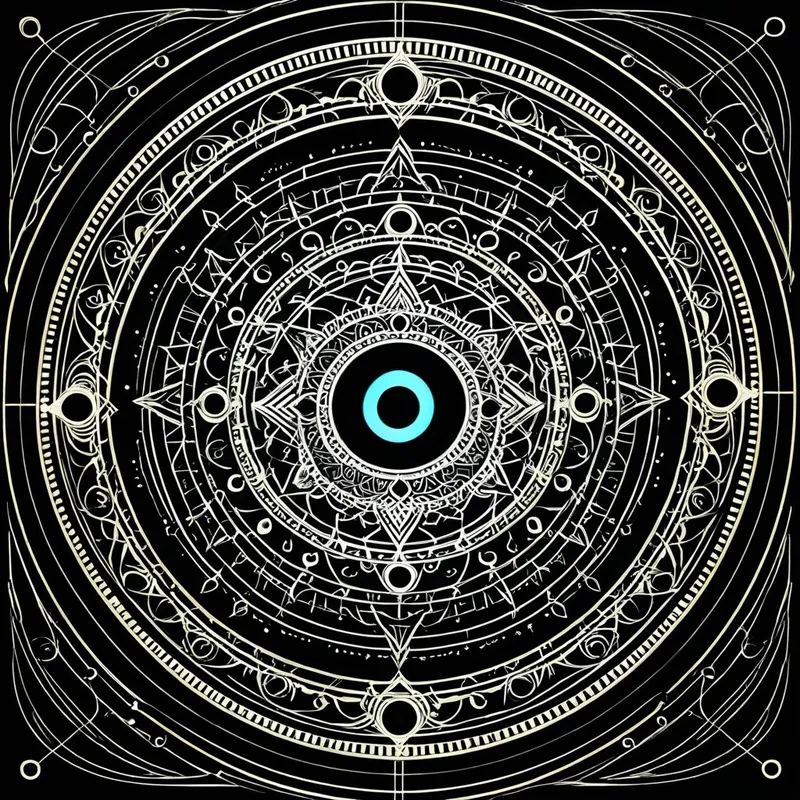
The Dreamer's Resonance
When this mythic pattern stirs in the modern dreamer, it often manifests not with Hindu iconography, but through the core somatic experience of being truly seen. One might dream of making eye contact with a statue in a park that slowly smiles, or of an animal—a deer or an owl—holding their gaze with an unsettling, knowing depth. Perhaps it is a dream of a forgotten family member in an old photograph whose eyes suddenly become vividly present, or of one's own reflection in a mirror winking back.
The psychological process is one of profound validation and exposure. The dreamer is undergoing a moment where a hidden, authentic part of the Self is seeking acknowledgment. The awe and fear in the dream mirror the ego's ambivalence: a desperate desire for wholeness, coupled with terror at dissolving into something greater. The somatic signature is often a tingling in the forehead or chest, a feeling of warmth, or the sensation of "pins and needles"—the body registering an energetic shift as a deeper layer of psychic reality breaks through into awareness.
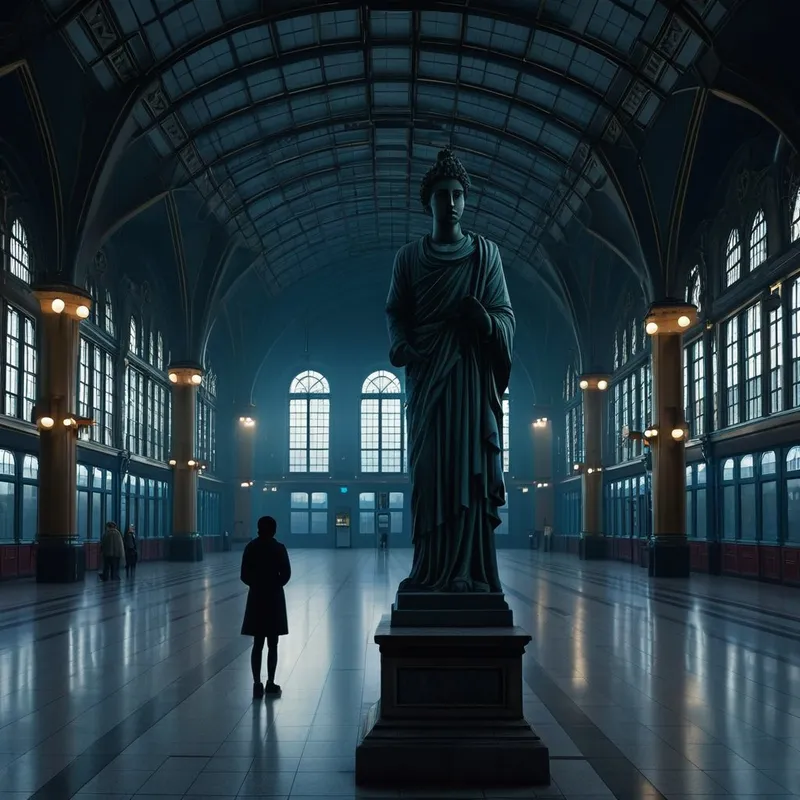
Alchemical Translation
The alchemy of Darshan models the individuation process perfectly. The initial state is nigredo, the blackness of separation and longing—the devotee feeling cut off from meaning. The pilgrim's journey is the albedo, the hard work of purification—engaging in therapy, spiritual practice, or shadow work to clear the path to the inner sanctum.
The moment of exchanged gaze is the rubedo, the reddening, the climax of the opus. It is the transcendent function in action: the ego and the unconscious (symbolized by the deity) meet, and from their confrontation arises a new, third thing—a conscious connection to the Self. This is not the ego becoming the Self, but the ego realizing its position within the Self's gaze.
Individuation is not about becoming God; it is about sustaining the gaze that allows God to become you.
For the modern individual, the "temple" is one's own inner life. The "deity" is the archetypal image of one's deepest potential and wholeness. The practice of Darshan translates to the courage to turn inward and look, and more terrifyingly, to be looked at by all that we are—the noble and the shadowed, the broken and the divine. The "grace" received is the enduring capacity for self-compassion, the quiet authority that comes from no longer fleeing one's own depths, and the ability to offer that same recognizing, transformative gaze to the world. It is the alchemical gold of integrated being.
Associated Symbols
Explore related symbols from the CaleaDream lexicon: