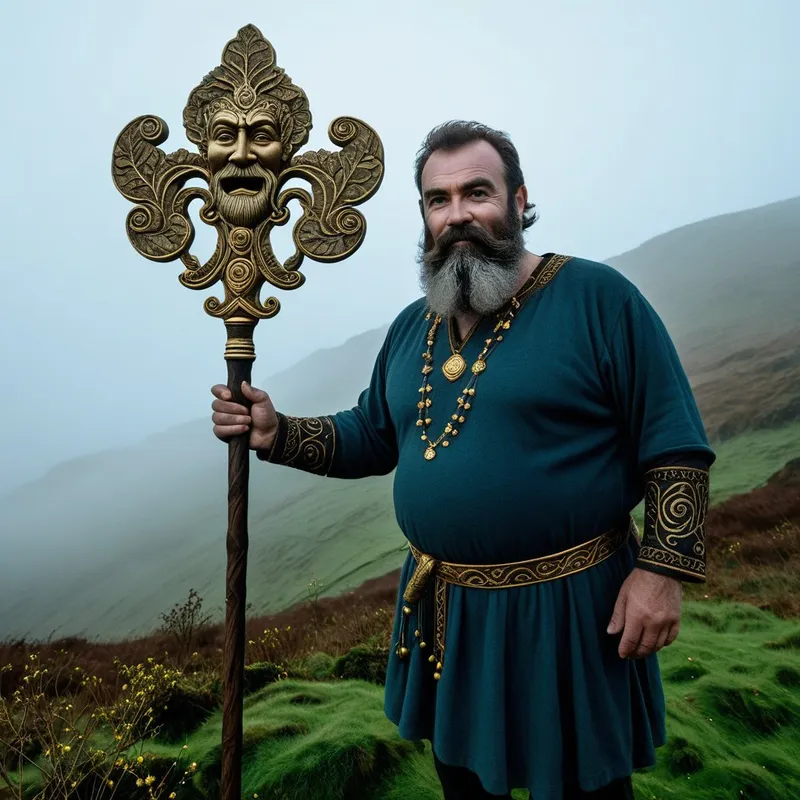
Dagda's Club Myth Meaning & Symbolism
The tale of the Dagda's mighty club, a weapon that kills with one end and resurrects with the other, embodying the totality of existence.
The Tale of Dagda's Club
Hear now the tale of the Dagda, the Good God, he whose belly was a cauldron and whose heart was the drum of the world. In the time when the world was younger and the veil between the Otherworld and our own was thin as morning mist, the Dagda walked the green hills of Éire. He was no slender youth, but a man of girth and great strength, his laughter booming like thunder, his sorrow deep as a well. And in his hand, he carried his club.
This was no ordinary weapon. It was a tree of power, hewn from the heartwood of an ancient oak that had witnessed the first sunrise. It was so vast that eight strong men could not lift it, yet the Dagda dragged it behind him on a wheeled cart, and the groove it carved in the earth became the first riverbed. The club had two ends, and herein lay its terrible and beautiful mystery.
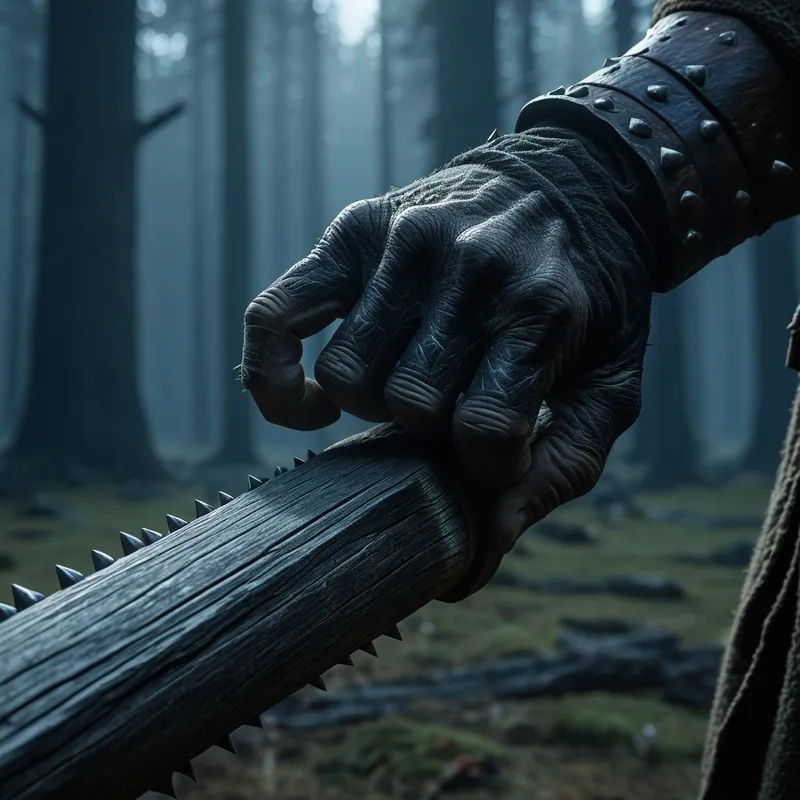
One end was broad and grim, studded with the iron of fallen stars. With this end, the Dagda could lay low a hundred warriors with a single sweep. It was the end of endings, the final word in any argument, the stroke that brought the silence of the grave. Its touch was cold certainty.
But the other end… the other end was smooth and pale as birch bark. With this end, the Dagda could touch the slain and call them back. The breath would return to their lungs, the light to their eyes. They would rise, not as shambling shades, but whole, remembering the darkness only as a forgotten dream. It was the end of beginnings, the hand that lifts the fallen seed from the soil.
The people whispered of it by their hearths. They said that in the great battle against the Fomorians, the sky itself wept blood. The Dagda stood in the heart of the carnage, his club a whirlwind. With the grim end, he broke the lines of the foe, a harvest of violence. And then, as the wails of his own people rose, he would turn the club. He would walk among the still forms of the Tuatha Dé Danann, and with the gentle end, he would nudge a shoulder, touch a brow. And like flowers after a frost, they would stir and open their eyes.
He never chose one end over the other. He wielded the totality. The club was not a weapon of war, but a tool of sovereignty—the terrible and gracious responsibility of holding the cycle of all things. To see the Dagda with his club was to see the world in one hand: the crushing weight of fate and the impossible, lifting grace of renewal, inseparable as the two sides of a single, mighty oak leaf.
Cultural Origins & Context
This myth emerges from the rich, oral tapestry of early Irish literature, primarily preserved within the Mythological Cycle. Our primary window is the text Lebor Gabála Érenn, compiled by Christian monks between the 11th and 12th centuries, who transcribed the ancient stories of the Tuatha Dé Danann. The Dagda’s club is a central attribute in his portrayal as the archetypal father-chieftain, the pater familias of the divine tribe.
The storytellers were the fili, the keepers of lore. In a society deeply interwoven with the land, cycles of the seasons, and the stark realities of life and death, this myth was not mere entertainment. It was a cosmological anchor. The Dagda, with his club and his great cauldron of plenty, represented the ideal of the sovereign: the one who protects the tribe (through the club’s destructive power) and ensures its continuity and nourishment (through its restorative power and his other attributes). The myth functioned to explain the nature of divine power—not as capricious, but as encompassing the full, often paradoxical, spectrum of existence necessary for cosmic and social order.
Symbolic Architecture
The club, or lorg mór (great staff), is a supreme symbol of paradoxical unity. It is the axis upon which the world turns, a literal embodiment of the coincidentia oppositorum.
The true sovereign does not choose between life and death, but holds the staff that commands both.
The destructive end symbolizes necessity, limit, and the cutting away of what has outlived its purpose. It is the winter that kills the old growth, the difficult truth that ends an illusion, the boundary that defines a self. Psychologically, it represents the necessary function of the ego to say "no," to end psychic states that threaten the whole.
The restorative end symbolizes grace, potential, and the irrepressible force of life. It is the spring that follows winter, the forgiveness that follows a hard truth, the resilience that emerges after a breakdown. It is the unconscious itself, the deep well of the psyche that constantly seeks renewal and healing, offering new beginnings from the compost of old endings.
The Dagda himself, wielding this totality, is the symbol of the integrated Self. He is not a warrior-god obsessed with victory, nor a healer-god afraid of conflict. He is both. His great size and appetite speak to an archetype of immense capacity—the psyche’s potential to contain and manage its own profound contradictions without being torn apart.
The Dreamer's Resonance
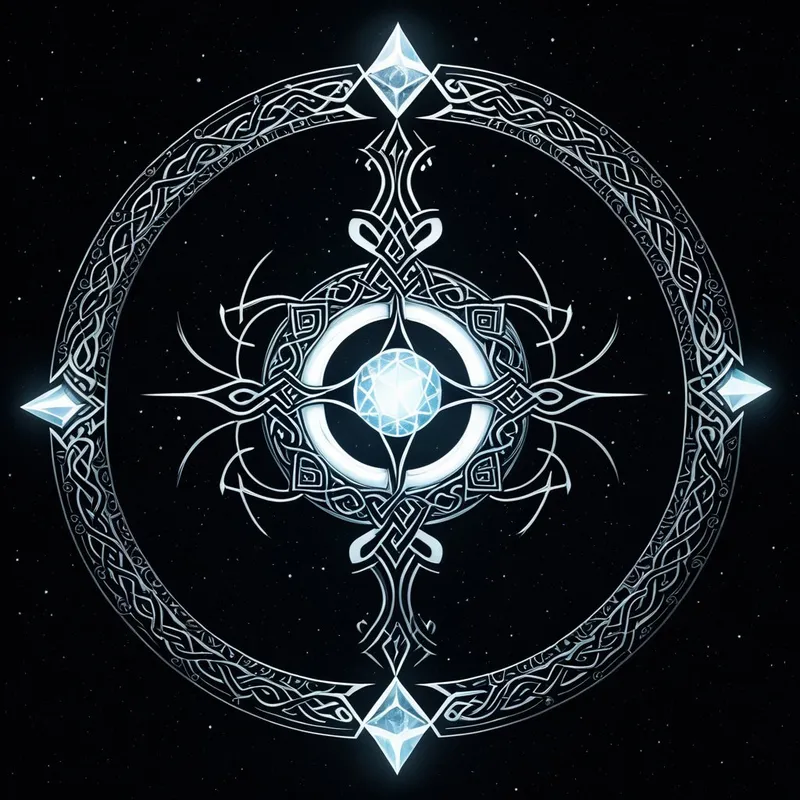
When this myth stirs in the modern unconscious, it often manifests in dreams of double-ended objects or profound dilemmas of choice. A dreamer may find a key that both locks and unlocks the same door, a pen that writes in both ink and light, or a simple stick that feels impossibly heavy yet vital.
Somatically, this can correlate to a feeling of being "stretched" between two poles—perhaps between career and family, security and freedom, a cherished identity and the call to change. The dream is not presenting a problem to be solved by choosing one side, but a tension to be held. The psychological process underway is one of integration. The ego is being confronted with its own one-sidedness, being forced to acknowledge a power or truth it has denied (the "other end" of the club).
If the destructive end is prominent in the dream, it may signal a necessary, if painful, ending is being orchestrated by the Self: the end of a relationship, a job, or an outmoded self-concept. If the restorative end is prominent, it may indicate a period of healing and retrieval is possible, a chance to revive a neglected talent or joy. The power of the myth appears when the dreamer awakens with the sense that these two movements are, somehow, part of the same process.
Alchemical Translation
The individuation journey is the slow, often arduous process of dragging our own "great club" into consciousness. We begin life wielding only one end. For some, it is the critical, discerning end that sets boundaries and makes distinctions. For others, it is the nurturing, accepting end that seeks connection and growth. We believe our chosen end is the whole tool.
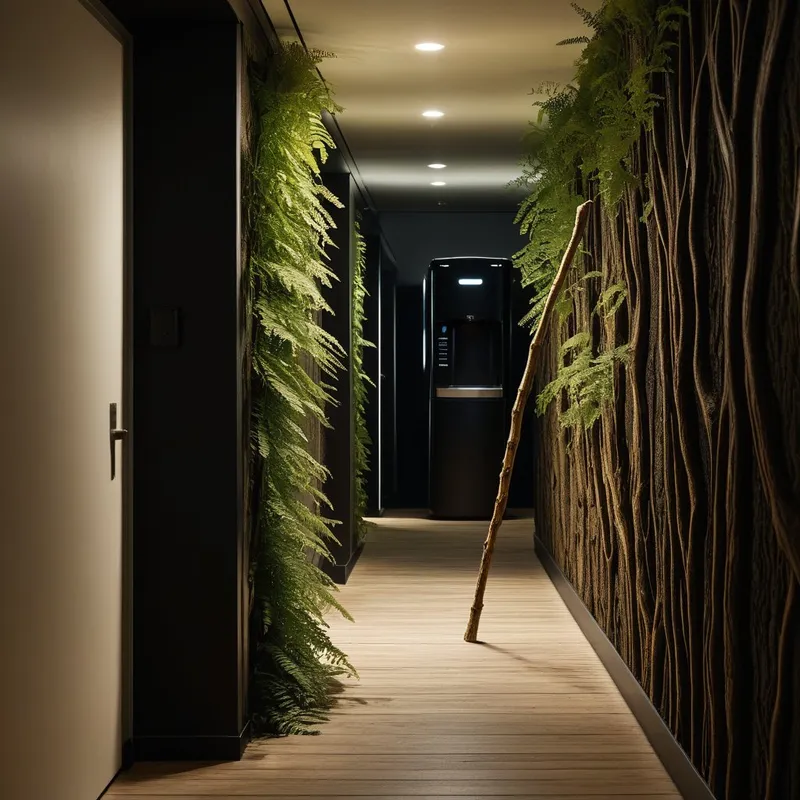
The alchemical work is to turn the staff around in your hands, to feel the weight of the end you have been dragging behind you, unknown and unused.
The first translation is Mortificatio—confrontation with the "grim end." This is the dark night of the soul, the depression, the failure, the crushing realization of our limits and shadows. It feels like pure destruction. Yet, in the myth, this end is part of the sacred object. The alchemist learns that this "killing" is not an enemy, but a function that clears the psychic field of what cannot continue.
The second is Vivificatio—the discovery of the "restorative end." After the necessary ending, often when we are exhausted and have ceased struggling, we stumble upon a resilience we didn't know we had, a new perspective, a forgotten love. This is not a return to the old, but a resurrection into a new configuration.
The ultimate transmutation is Coniunctio—the marriage of the ends. This is embodied by the Dagda, who uses both ends as the situation demands, without inner conflict. For the modern individual, this is the state of mature wholeness. One can deliver a hard truth with compassion (the healing end informs the critical blow). One can set a fierce boundary out of love for oneself and the other (the destructive act becomes an act of profound care). The club is no longer a weapon wielded against the world or the self, but the grounded staff of a sovereign psyche, walking the green earth, capable of both ending and beginning, because it knows they are one.
Associated Symbols
Explore related symbols from the CaleaDream lexicon: