
Cyparissus Myth Meaning & Symbolism
A youth beloved by Apollo accidentally kills his sacred stag. Consumed by grief, he is transformed into the cypress tree, a symbol of eternal mourning.
The Tale of Cyparissus
The sun over Delos was a molten coin, but in the green, whispering heart of Ceos, the light fell soft and dappled. Here dwelt Cyparissus, a youth of such haunting beauty that the very air seemed to still around him. His companion was no ordinary creature, but a stag of sacred majesty, a gift from the god Apollo himself. Its hide was not brown, but the color of fresh-fallen snow, and from its brow sprang antlers that gleamed like polished silver, each tine holding a captive star. They were inseparable. The boy would weave garlands of wildflowers for the stag’s noble neck, and the stag would lower its head to drink from the same clear spring as the youth, its breath misting the water beside his own.
One afternoon, the heat lay heavy upon the land. The silver stag had sought the deep, cool shade of a thicket to rest. Cyparissus, practicing with the hunting javelin Apollo had given him, saw a movement in the bushes. A shape, dark and stirring. His heart, trained to the thrill of the hunt but not yet tempered by its true consequence, leapt. He did not see the glint of silver. He did not hear the familiar, gentle snort. With a fluid motion born of divine tutelage, he cast the spear.
The sound that followed was not the thud of a quarry struck, but a soft, pained sigh. Pushing through the foliage, Cyparissus’s world dissolved. There lay his friend, the spear buried in its flank, the snowy coat already staining crimson around the wound. The stag’s great, liquid eyes held no accusation, only a profound and fading bewilderment. It looked at the boy, gave one last, shuddering breath, and was still.
A silence more terrible than any scream descended. Cyparissus fell to his knees, his hands hovering over the wound, unable to touch, unable to undo. The blood on his hands was not just blood; it was the shattered trust of a god, the murdered innocence of a bond beyond words. Apollo found him thus, days later, for the youth would not leave the corpse. He was curled beside the once-magnificent creature, his own life force ebbing in a torrent of grief so absolute it had become his only reality. Tears had carved permanent tracks through the dust on his cheeks. He begged not for forgiveness, but for an end—for his sorrow to have a form as eternal as its cause.
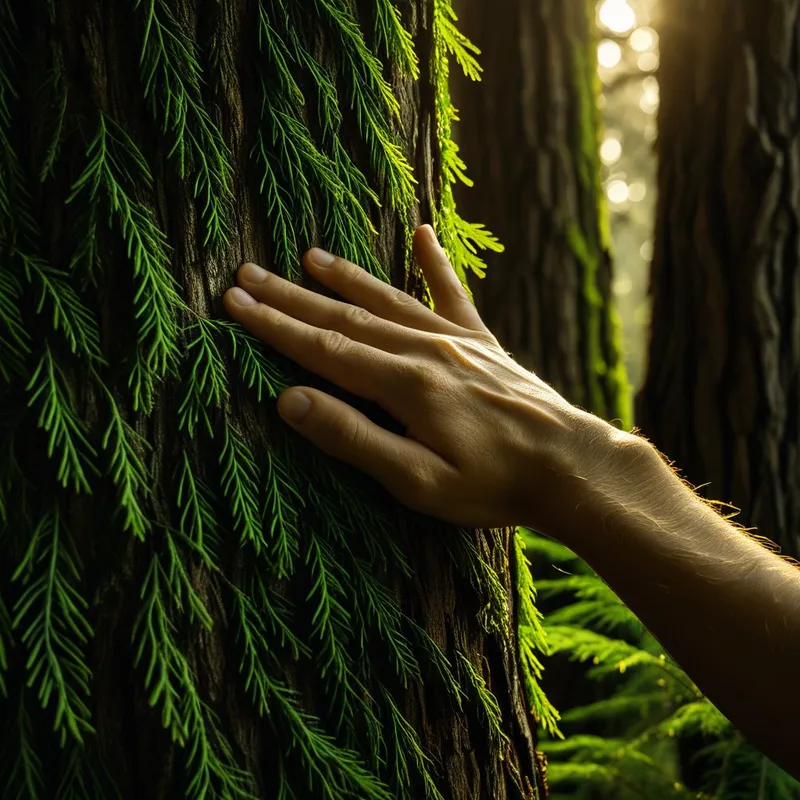
Apollo, the god of light and reason, looked upon this monument of human despair. He saw that comfort was impossible, that no divine word could lift this weight. And so, moved by a love that understood the necessity of the request, he granted the only solace left. As Cyparissus wept, his limbs grew heavy and stiff, his skin hardened into rugged bark. His flowing hair stiffened into dark, evergreen sprays. His body stretched toward the sky, becoming slender and tall. Where the youth had knelt, a new cypress tree now stood, its roots drinking from the same earth that held his friend, its peak a perpetual point of mourning against the horizon. Apollo’s voice was the wind in its branches: “You shall mourn forever, and be present with all who mourn.”
Cultural Origins & Context
The story of Cyparissus comes to us primarily through the Roman poet Ovid, in his epic compendium of transformations, the Metamorphoses. For Ovid, writing in the Augustan age, such myths were not mere fables but the foundational language of the world, explaining the origin of natural phenomena (in this case, the cypress tree) through the lens of intense human emotion. The myth fits within a specific subset of tales concerning the loves and losses of the gods, particularly Apollo, whose affections often led to tragic metamorphoses (see Daphne).
In the Greek and Roman worldview, the cypress tree was unequivocally associated with death, mourning, and the underworld. Its tall, dark, spire-like shape was like a finger pointing silently toward the realm of Hades. It was planted in graveyards, and its wood was used for funeral biers. The myth of Cyparissus provided an aition—a cause-origin story—for this deep-seated cultural symbol. It answered the question: “Why does this tree look so sorrowful?” by rooting the answer in a narrative of catastrophic personal grief. The story served as a cultural container for the profound and often isolating experience of loss, giving it a divine precedent and a permanent, natural form.
Symbolic Architecture
At its core, the myth of Cyparissus is not about an accident; it is about the psyche’s encounter with an unbearable truth of its own making. The sacred stag is more than a pet; it is a symbol of the numinous, the divine connection itself, made manifest in a form of innocent, trusting beauty. It represents a state of grace, a blessed companionship between the human and the transcendent.
To kill the sacred stag is to sever, through unconscious action, our own connection to the divine, to innocence, and to a part of our own soul we held dear.
Cyparissus’s javelin, a gift from Apollo, is crucial. It signifies how the very gifts of consciousness, skill, and agency (from the god of light) can, in a moment of misperception or unintegrated shadow, turn destructively upon what we love most. The resulting grief is not simple sadness; it is a totalizing identity. He becomes his grief. His plea for eternal mourning is the ego’s surrender to a pain so vast it demands to be made permanent. The transformation into the cypress is thus a paradoxical resolution. It is a psychic freezing, a petrification of the self at the moment of trauma. Yet, in this frozen form, he finds his purpose: to stand as an eternal witness. The cypress does not move on; it stands firm, a marker for the tomb, a companion to the bereaved. It symbolizes the part of the psyche that legitimately cannot and should not “get over” certain losses, but must instead integrate them as a permanent, dignified feature of the inner landscape.

The Dreamer's Resonance
When the archetypal pattern of Cyparissus stirs in the modern dreamer, it often manifests as dreams of profound, inconsolable guilt or grief. One might dream of accidentally causing the death of a beloved animal, a cherished friend, or even a symbolic representation of one’s own creativity or joy (the “silver stag”). The setting is frequently one of idyllic beauty shattered by a single, irreversible action.
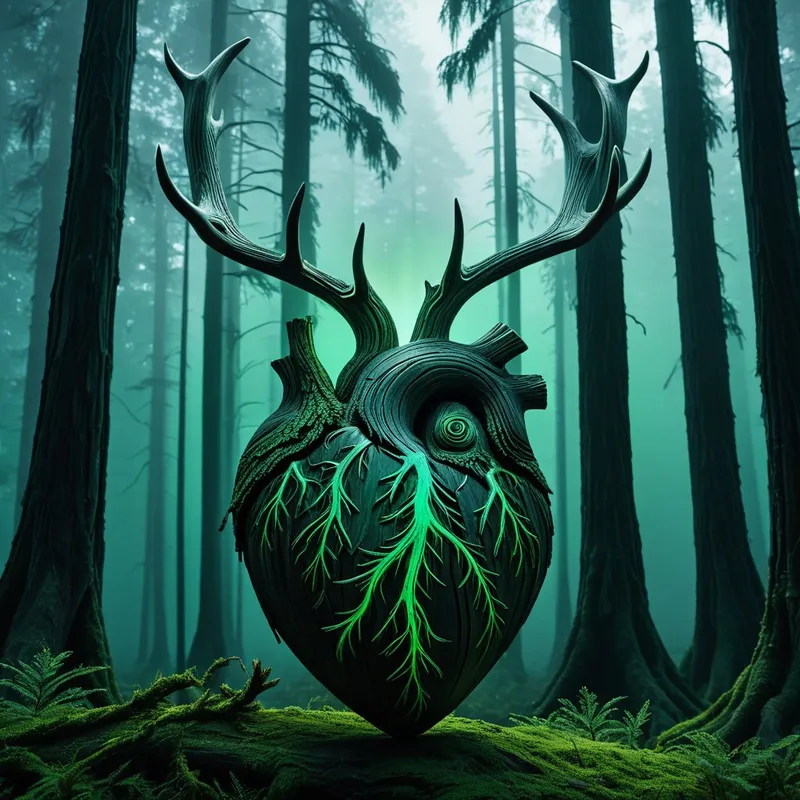
Somatically, the dreamer may awaken with a feeling of heaviness in the chest, a literal “heart of wood,” or a stiffness in the limbs—echoes of the arboreal transformation. Psychologically, this dream pattern signals a confrontation with a grief that has been perhaps intellectualized but not somatically and soulfully processed. It points to a “sacred wound”—a loss or a self-betrayal so central to identity that the ego feels it must become the monument to that loss, hardening around it. The dream is the psyche’s way of saying, “This sorrow has taken root. You have become rigid with it. It is time to see this frozen form not just as a prison, but as a sacred tree.”
Alchemical Translation
The alchemical journey modeled by Cyparissus is the transmutation of paralyzing guilt into sacred witness. The initial state is nigredo, the blackening: the catastrophic death of the sacred connection, the plunge into utter despair and self-condemnation. The ego, in its raw pain, wishes only for stasis—to become the monument to its own failure.
The alchemical fire is not the heat that melts, but the cold, enduring sorrow that slowly petrifies, creating a new and enduring form from the ashes of the old self.
Apollo’s transformation is the crucial catalyst. It represents a higher, ordering principle of the Self (the god within) that accepts the ego’s desperate solution and grants it form. This is not a healing that removes the wound, but a transfiguration of the wound itself. The ego’s wish to “mourn forever” is not denied; it is dignified and given a purpose in the greater ecology of the soul. The cypress tree is the lapis, the philosopher’s stone of this process. It is no longer a weeping boy, but a tree. Its roots draw nutrients from the decay of the past. Its evergreen nature shows that life, however altered, persists. Its verticality connects the underworld of grief with the sky of consciousness.
For the modern individual, the individuation task is not to “kill the cypress” or uproot it, but to recognize it, honor it, and understand its place in the inner grove. It is to move from being subject to the grief (“I am Cyparissus, the mourner”) to being the steward of the sacred tree (“I contain the cypress, the eternal witness”). This is the alchemical translation: from a identity consumed by loss, to a psyche that has integrated loss as a pillar of its own sacred architecture, offering shade and solemn beauty to all parts of the self that must, in their time, pass through the valley of shadows.
Associated Symbols
Explore related symbols from the CaleaDream lexicon: