
Crystal of Wisdom Myth Meaning & Symbolism
A divine artisan shatters his own creation to release its light, teaching that true wisdom is not a possession but a shared, living process of dissolution and return.
The Tale of Crystal of Wisdom
In the time before time was measured, in the Prima Materia, there worked a divine artisan. He was not a king or a warrior, but a maker, a shaper of essences. His realm was the Athanor, the celestial forge where the breath of stars cooled into potential and the music of the spheres vibrated in every atom.
For seven cycles of the great celestial wheel, he labored. He gathered the silence between thoughts and the fire of first inspiration. He distilled the clarity of mountain air and the patience of tectonic stone. With tools of intention and a furnace of concentrated will, he coaxed these intangibles into form. And from his forge, he drew it forth: the Crystal of Wisdom.
It was not large, but it contained universes. Its facets were not numbered, for they shifted with the observer's gaze, each plane a perfect mirror and a window into a different law of existence. Within its depths, the light of understanding did not merely shine; it was born, lived, and died in infinite cycles. To behold it was to know—to truly know—the secret name of the wind, the mathematics of grief, the blueprint of a blade of grass. It was perfect. It was complete. It was the answer to every question not yet asked.
The artisan placed it upon a pedestal of solidified light in the center of his forge. He sat before it, and for a time, he was content. He saw the patterns of creation and dissolution, the dance of opposites, the sublime geometry of the All. But a slow chill entered the Athanor. The celestial fires banked. The music of the spheres grew faint, heard only as a dim echo within the Crystal's perfect walls. He realized the truth: the Crystal did not share wisdom; it consumed it. It drew the living questions of the cosmos into itself and sealed them in silent, beautiful answers. The forge of creation grew cold, for why create when the perfect artifact of all knowledge sat gleaming, finished? The universe itself seemed to hold its breath, poised on the edge of eternal, static knowing.
A great conflict tore at the artisan’s spirit. To preserve the Crystal was to preserve perfection, but at the cost of the living, breathing, messy process of seeking. To let it exist was to condemn all becoming to a final, frozen state of been. A sorrow deeper than the void took root in him. He saw that the ultimate wisdom was not in the answer, but in the question that forever regenerates.
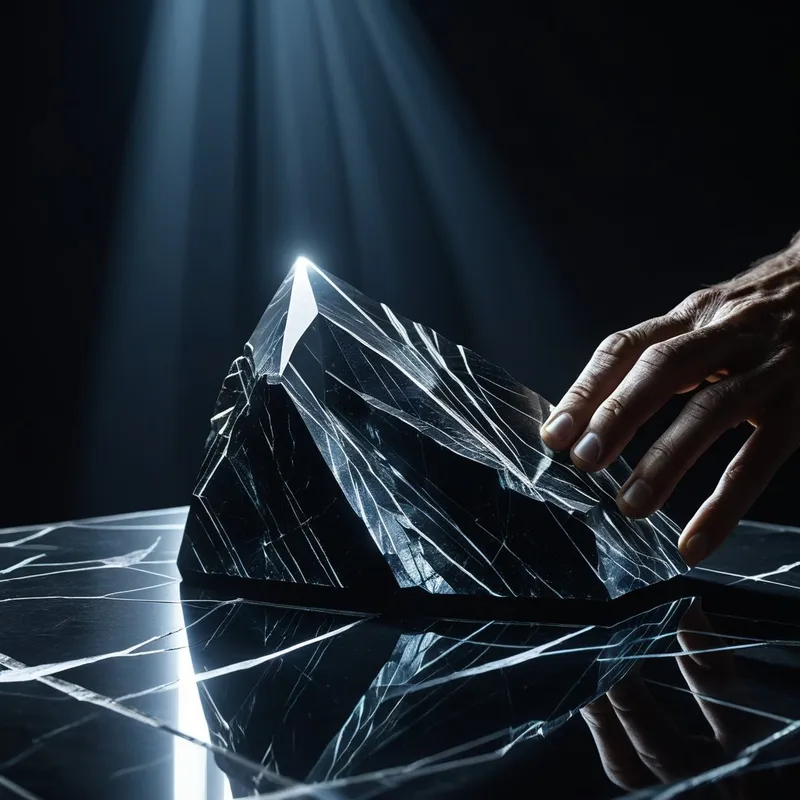
With a cry that was both a lament and a birth pang, he raised his own hand—the hand that had shaped it—and brought it down not upon the pedestal, but upon the Crystal itself.
There was no sound of shattering glass, but a great, silent unfolding. The Crystal did not explode into dust. It fractured along lines of inherent potential, breaking into twelve major shards and a constellation of countless sparks. The light within did not escape; it multiplied. It streamed out, not as a single beam of answer, but as a rainbow of inquiries, a diaspora of insights. One shard, glowing with blue fire, shot into the heart of a nascent star, seeding it with the law of combustion. A spark of green-gold light sank into the core of a barren planet, dreaming of forests. A facet holding the principle of compassion fell as a tear into the dust, waiting for life to evolve and discover it.
The artisan stood in his now-dark forge, empty-handed. The perfect silence was gone, replaced by the distant, chaotic, beautiful hum of a universe once again at work. He looked at his hands, scarred now with the light of the fracture, and he smiled. The cold was gone. The forge, though empty, felt warm with potential. He had not destroyed wisdom. He had planted it.
Cultural Origins & Context
The myth of the Crystal of Wisdom finds its roots not in a single historical alchemical text, but in the oral traditions of the guilds and Sodalitates that practiced the Magnum Opus across late medieval and Renaissance Europe. It was not a story for the public, but a teaching parable recited during the initiation of a new adept, often at the moment they first beheld the philosopher's stone—or its symbolic representation.
Told by the Magister in the dim, smoky light of the laboratory, its function was profoundly societal within the closed micro-culture of the alchemists. It served as a critical warning against the greatest sin of the seeker: spiritual avarice, or the desire to possess truth as an object. The culture valued process (processio) over product, the journey of the Anima over the boast of a material achievement. This myth enforced that ethos. It taught that the ultimate goal of the Work was not to own the Crystal, but to become the artisan who has the courage to shatter it—to internalize the wisdom so completely that one must give it away for it to be real.
Symbolic Architecture
The myth is a perfect map of the psyche's relationship with ultimate knowledge. The divine Artisan represents the unified Self, the potential for wholeness that exists prior to the ego's grasping. The Athanor is the total psyche—the container where the transformative work takes place.
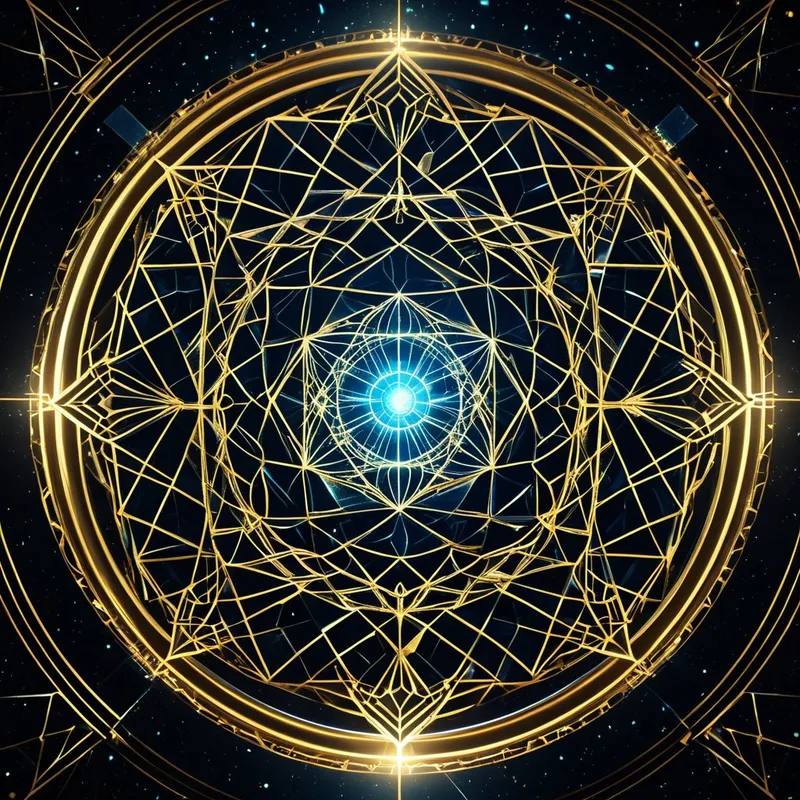
The Crystal itself is the ultimate symbol of the Mandala made literal. It is perfect order, total knowledge, and spiritual completion. Yet, in its static perfection, it becomes a prison.
The greatest wisdom understands that to hoard light is to live in shadow; the crystal must be shattered so the spectrum can be born.
The critical, transformative act is not creation, but willful fragmentation. This represents the psychological move from identification with the archetype (I am the Wise One) to service of the archetype (I channel wisdom for the world). The shattering is the dissolution of the ego's claim to enlightenment (Nigredo and Albedo), releasing the integrated contents of the Self back into the chaos of the world and the unconscious (Rubedo). The twelve major shards often correlate to the archetypal roles or modes of consciousness that must be developed and dispersed.
The Dreamer's Resonance
When this myth stirs in the modern unconscious, it often manifests in dreams of profound paradox. A dreamer may find a priceless, beautiful gem or a perfect technological device, only to feel compelled to break it or throw it into water. They may dream of a brilliant but cold, isolating light that must be diffused. The somatic experience is key: a tightness in the chest around the "treasure," followed by a release—often anxiety-provoking—upon its dissolution, culminating in a feeling of spaciousness and connection.
Psychologically, this signals a critical point in the individuation process. The dreamer has likely achieved a hard-won state of intellectual or spiritual understanding (a "breakthrough," a "theory of everything," a rigid self-narrative of healing). The psyche is now warning that this crystallized knowledge has become a defense, a stopping point. The dream is an imperative from the Self to perform the "shattering"—to question one's own dogma, to apply abstract wisdom to messy life, to teach vulnerably, to allow a perfect insight to be critiqued and changed. It is the process of moving from having the answer to embodying the question.
Alchemical Translation
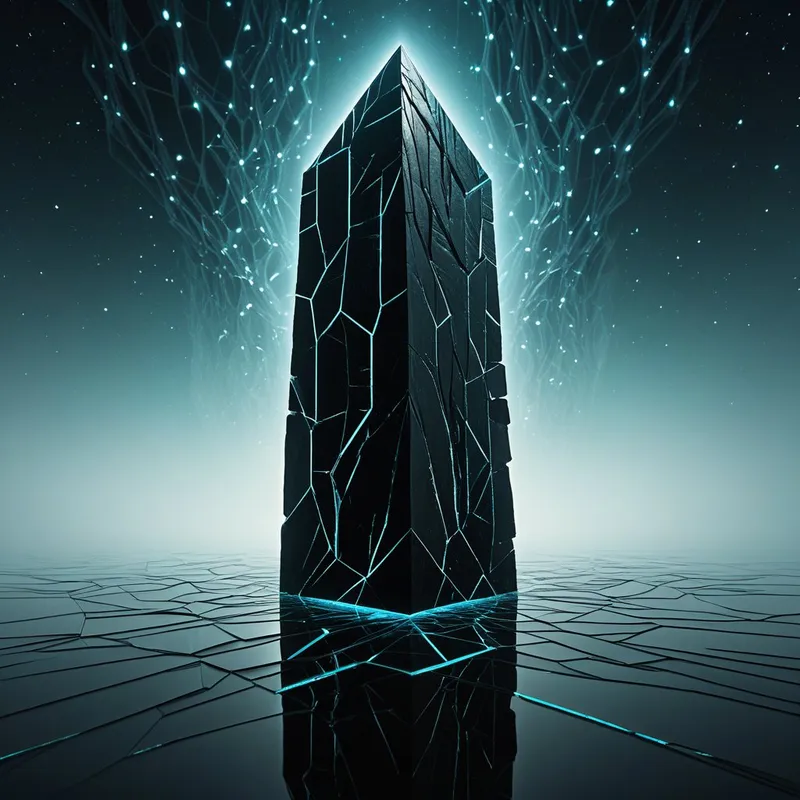
For the modern individual, the myth models the final, most terrifying stage of psychic transmutation: the sacrifice of the spiritual achievement to the human community. Our personal "Crystals of Wisdom" are many: the rigid identity we form after therapy ("I am healed"), the ideological framework we cling to ("I know the truth"), the artistic style we master and then repeat, the spiritual plateau where we feel "enlightened."
The alchemical translation is a threefold operation:
First, Recognize the Crystal. Identify where in your life knowledge has become static, where understanding has hardened into dogma, where your "wisdom" separates you or halts your growth. This is the Meditatio.
Second, Embrace the Sorrow of the Artisan. This is the painful, ego-dissolving realization that to move forward, your prized achievement must be deconstructed. This is the Nigredo of the spirit—the dark night where the light you've captured seems to be the only light there is.
Individuation is not crowned by finding the stone, but by grinding it to powder and drinking it, so the gold enters the bloodstream of the soul.
Finally, The Act of Willful Dispersion. This is the Rubedo. It is sharing your hard-won insight without claiming ownership, teaching while remaining a student, applying your philosophy in actions that may fail, allowing your perfect idea to be altered by collaboration. You do not lose the wisdom; you cease to be its curator and become its soil. The light is no longer in a gem you own, but in the eyes of those you've touched, and in the renewed, humble fertility of your own mind, ready once more for the unknown. The forge of the soul is relit, not by a contained fire, but by a thousand scattered sparks.
Associated Symbols
Explore related symbols from the CaleaDream lexicon: