Cinderella Myth Meaning & Symbolism
A girl, cloaked in ashes, finds her sovereignty through ancestral magic, a tree of grief, and a shoe of perfect fit.
The Tale of Cinderella
Listen, and I will tell you of a girl who lived in the ashes. Her true name was lost, swallowed by the cinders of the hearth where she slept, and so they called her Cinderella. Her mother, the light of her world, had sunk into the dark earth, leaving a hollow in the girl’s chest. Her father, in his loneliness, took a new wife with two daughters of her own, their hearts sharp as flint.
From that day, the sun ceased to shine in that house for the girl. Silk and laughter were for the stepsisters; for her, there was only the endless, grinding work—the lentils to sort from the ashes, the pots to scour, the fires to tend. Her fine clothes were taken, replaced by a gown of grey rags. She became a creature of the threshold, neither family nor servant, her skin and hair perpetually dusted with the grey powder of the hearth. The stepsisters mocked her, calling her “the dirty kitchen maid,” and their mother’s gaze was a winter frost.
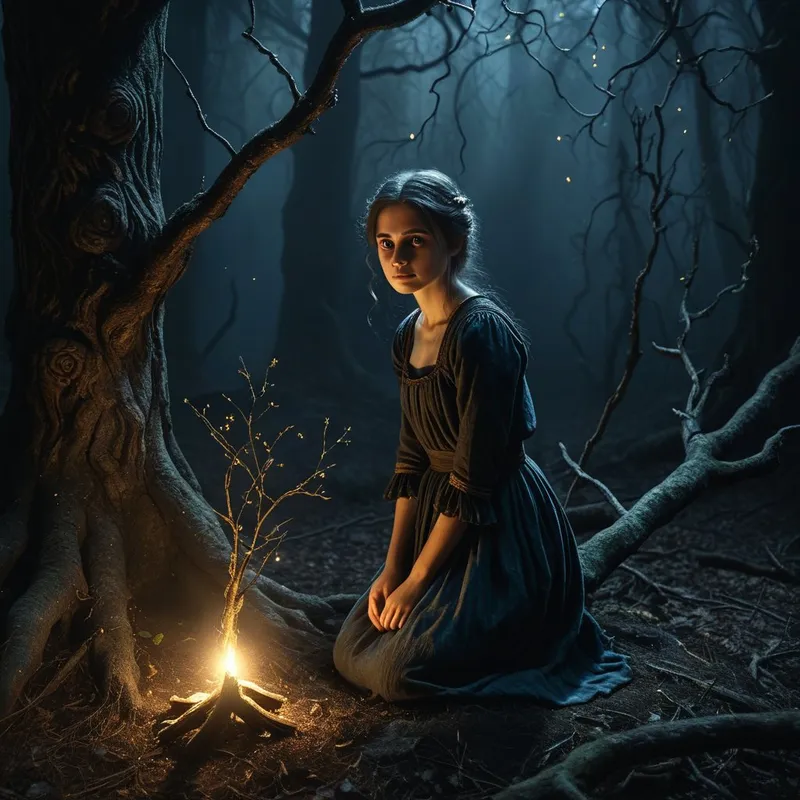
But on the grave of her true mother, where Cinderella wept until the earth was soft, a miracle took root. From her tears and the branch she planted there grew a mighty hazel tree. In its branches sat a snow-white bird, and when Cinderella came to weep and pray, the bird would throw down to her whatever she wished.
When the king proclaimed a three-day festival so his son might choose a bride, the house erupted in a frenzy of preparation. The stepsisters ordered Cinderella to curl their hair, polish their shoes, and fasten their gowns. “You, Cinderella?” they laughed when she asked to go. “You have no clothes, and you cannot dance. You belong with the ashes.” And they left her in the silent, empty house.
She went to the hazel tree. “Shake yourself, little tree, throw gold and silver down on me.” The white bird cast down a gown of gold and silver, with slippers embroidered with silk and silver. At the festival, she was a mystery. No one knew the radiant maiden. The prince would dance with no one else. But when the evening ended, she slipped away, vanishing into a pigeon coop. The prince was left holding only the night air.
The second night, the tree gave a dress more dazzling than the sun. Again, she captivated all, and again, she fled, this time up a pear tree in the garden, leaving the prince grasping at leaves.
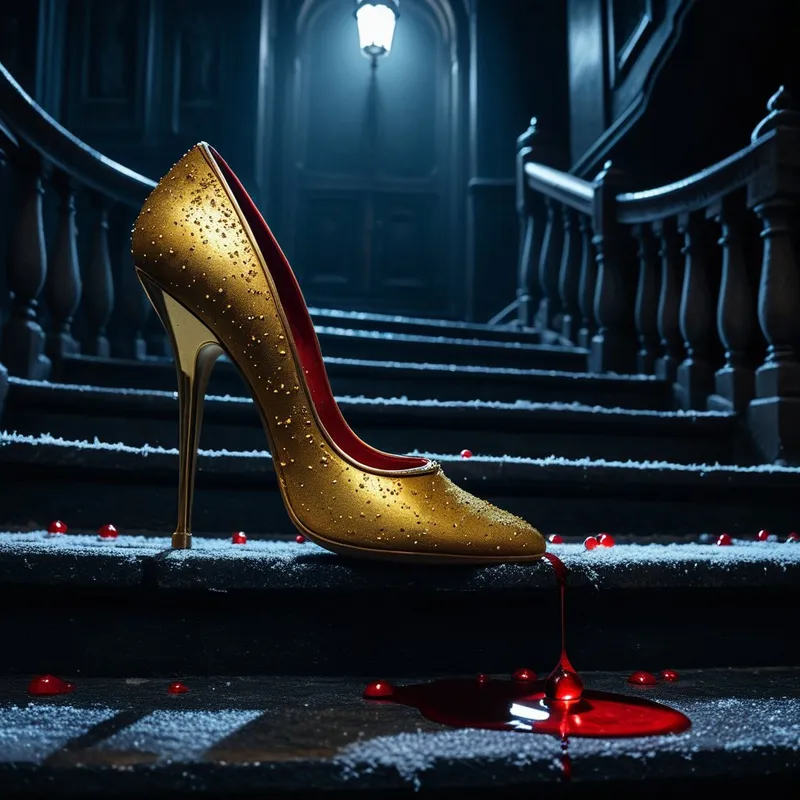
On the third night, the dress was as dark and shimmering as the starry sky, and her slippers were of spun gold. The prince, determined, had the staircase smeared with pitch. As she fled at midnight, one of the precious slippers stuck fast. The prince lifted it—a vessel of pure gold, small and impossibly delicate.
He took it on a quest, declaring he would marry the maiden whose foot fit this slipper. In the house of Cinderella, the first stepsister saw her chance. Her mother handed her a knife. “Cut off your toe,” she hissed. “When you are queen, you will no longer need to walk.” The girl did so, forced her mutilated foot into the slipper, and rode away with the prince. But as they passed the hazel tree, two doves cried: “Look, look, there is blood in the shoe! The foot is too long, the shoe too small, this bride is not the true one at all!” The prince saw the blood soaking through the gold and turned back.
The second stepsister then cut off her heel, silenced her pain, and slid her foot into the slipper. Again, the doves at the hazel tree sang their bloody truth, and the prince returned her.
“Is there no other daughter?” he asked. The father said, “Only my dead wife’s little stunted ash-girl, but she cannot be the bride.” The prince insisted. Cinderella washed the ashes from her face and hands. She sat down, drew her foot from its heavy wooden shoe, and placed it into the slipper of gold. It fit as if it had grown from her very flesh.
Then the doves from the hazel tree flew down and placed upon her head a golden crown. As they rode to the wedding, the doves flew again, this time to peck out the eyes of the two stepsisters, a blindness for their blindness, so they might live out their days in the darkness they had chosen.
Cultural Origins & Context
The tale we know as Aschenputtel is not a singular invention but a story woven from the deep, collective loom of the European oral tradition. Collected by the Brothers Grimm in the early 19th century, it is a artifact of a pre-industrial, agrarian society where the hearth was the literal and symbolic center of home life, and ashes represented both the death of the fire and the fertile potential for its rebirth. The tellers were often women, passing stories along the threads of kinship and domestic space, embedding lessons about endurance, the cunning of the oppressed, and the hope for a justice that worldly power seldom provided.
Its societal function was multifaceted: a moral fable about humility rewarded and cruelty punished, a fantastical escape for those bound by rigid social hierarchies, and a profound map of a psychological passage from degradation to sovereignty. The Grimms’ version, notably, is darker and more visceral than later sanitized adaptations—featuring self-mutilation, avian vengeance, and a heroine who is actively aided by the spirit of her dead mother, not a wand-waving fairy. This anchors the story not in whimsy, but in the stark, earthy realities of grief, ancestral memory, and a magic that springs directly from fidelity to the dead and to nature.
Symbolic Architecture
Cinderella is the archetypal orphan soul. The ashes are not merely dirt; they are the substance of incineration, of what has been burned away. To sit in them is to consciously inhabit the place of ruin, to be identified with the worthless residue of life’s fires. Yet, alchemically, ash is also prima materia—the base substance from which the new is born.
The hearth is the altar of the home, and she who tends the ashes tends the threshold between the living fire and the dead dust.
The hazel tree is the myth’s central axis. It is the literal growth from the mother’s grave, symbolizing how profound grief, when tended, can transform into a living, sustaining resource. It represents the ancestral help that becomes available when we honor our losses, not bypass them. The white bird is the active spirit of this help, the messenger between the rooted past and the present need.
The golden slipper is the symbol of sovereign fit. It cannot be won by force, pretense, or self-mutilation. The stepsisters’ hacking of their own flesh is a brutal metaphor for the psyche’s self-betrayal in order to fit a collective ideal. The slipper demands a perfect, effortless congruence between the inner truth of the bone and the outer form of destiny. The blood in the shoe is the undeniable truth of the soul crying out against a false life.
The Dreamer's Resonance
When this myth stirs in modern dreams, it often signals a profound process of reclamation. To dream of being covered in ash or soot may point to a felt sense of being devalued, obscured, or burdened by the “dirty work” of one’s life or psyche. Dreaming of a lost or ill-fitting shoe speaks directly to a crisis of identity and direction—a feeling of not being able to “step into” one’s rightful place.
The dream may present a helping figure—a deceased loved one, an animal, or a mysterious gift—symbolizing the emerging connection to inner resources or ancestral strength that the dreamer has forgotten. Conversely, dreams of cruel step-siblings or a neglectful parental figure often embody the internalized voices of criticism, comparison, or rejection that exile the dreamer to their own psychic hearth. The somatic sensation is often one of constriction (the tight shoe, the ashes) giving way, upon integration of the dream’s message, to a deep, grounded sense of relief and rightness—the feeling of the foot finally meeting its true sole.

Alchemical Translation
The Cinderella myth is a precise model of individuation. It begins in the nigredo, the blackening: the death of the mother (the original connection to life and love), the immersion in ashes (identification with worthlessness). The heroine does not initially fight her fate; she endures it, performing her tasks. This is the necessary stage of conscious suffering and acceptance of the shadow.
The journey to the hazel tree is the turning point—the active seeking of nourishment from the depths of one’s own grief. This is the albedo, the whitening, where the guiding spirit (the white bird) appears. The gifts from the tree are the emerging, radiant aspects of the Self (the Self) that have been buried. She wears them to the festival—the world of relationship and conscious expression—but must return to the ashes each night. The psyche cannot integrate its gold all at once; it must practice its new sovereignty.
The pitch on the stairs is the cunning of the unconscious, ensuring that a piece of our gold—our most essential truth—is left behind as the undeniable clue to our identity.
The final stage is the royal quest for the owner of the slipper, the rubedo or reddening. This is the conscious life’s search for the soul that fits. The false brides with their mutilated feet represent all the adapted, wounded personas we offer to the world. Their bloody failure is a brutal but necessary revelation. Only when the ash-girl presents her natural, unforced foot does the union occur. The crown from the doves signifies the bestowed authority of a Self that has integrated its orphanhood, its grief, and its magic. The blinding of the stepsisters is not a call for vengeance, but a stark symbolic truth: the attitudes of cruel envy and ruthless ambition ultimately lead to a psychic blindness, a permanent exile from seeing the true light of one’s own or another’s being.
Associated Symbols
Explore related symbols from the CaleaDream lexicon: