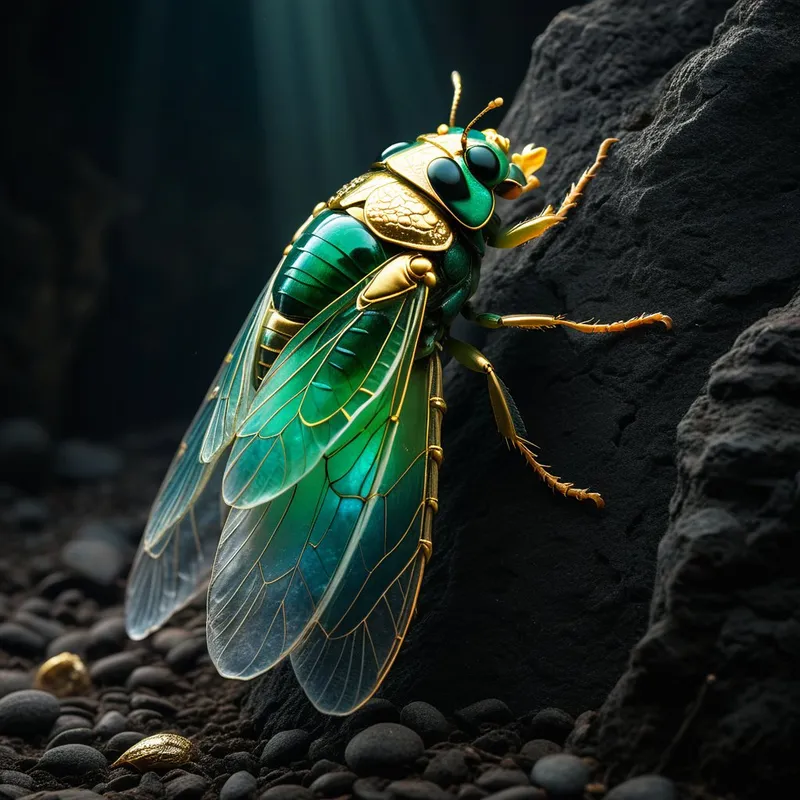
Cicada as Symbol of Rebirth Myth Meaning & Symbolism
An ancient symbol of immortality, the cicada emerges from the earth, shedding its shell in a powerful metaphor for the soul's rebirth and transcendence.
The Tale of Cicada as Symbol of Rebirth
Listen. In the deep, silent dark beneath the weight of the world, a creature waits. It is not born of light, but of patient earth. For years—three, seven, seventeen—it knows only the press of soil, the taste of root-sap, the endless, dreaming dark. This is the nymph, a creature of potential, a soul in gestation.
Above, the world of men turns. Dynasties rise and fall like the tides of the Yellow River. Scholars seek wisdom, emperors seek eternity, and all living things bow to the inexorable turn of the seasons—growth, decay, death. A profound longing hums in the human heart, a melody of mourning for all that is lost to time. The court musician plucks his guqin, and the notes fall like autumn leaves.
Then comes the summer rain. It soaks deep into the earth, a celestial summons. In the dark, the nymph feels the ancient call. A terrible, necessary restlessness stirs its carapace. It must ascend. With a slow, deliberate agony, it begins to climb, clawing through the labyrinth of roots and stone toward a light it has never seen but knows in its very essence.
It breaches the surface at dusk. The air is cool, heavy with the scent of wet loam and night-blooming jasmine. It finds a stalk of bamboo, a temple column in its miniature world, and secures itself. The great labor begins. A crack appears along its back, a fissure in the old world. From within, a new form, soft and pale and vulnerable, struggles free. It is a birth, a violent, graceful emergence. The empty shell—the exuviae—clings to the stalk, a ghost of what was, a testament to the ordeal.
As the first rays of dawn gild the eastern mountains, the new creature unfolds wings of the finest, most delicate gauze. They dry, hardening into panes of mica that catch the light. And then, it sings. Not a song of hunger or mating, but a pure, piercing hymn to the sun, a declaration of existence forged in darkness and realized in light. It sings for the brief, glorious span of its aerial life, a life that is, itself, a brilliant echo of the long darkness that made it possible. To the listening human below, it is the sound of life itself, wrested from the jaws of the earth.
Cultural Origins & Context
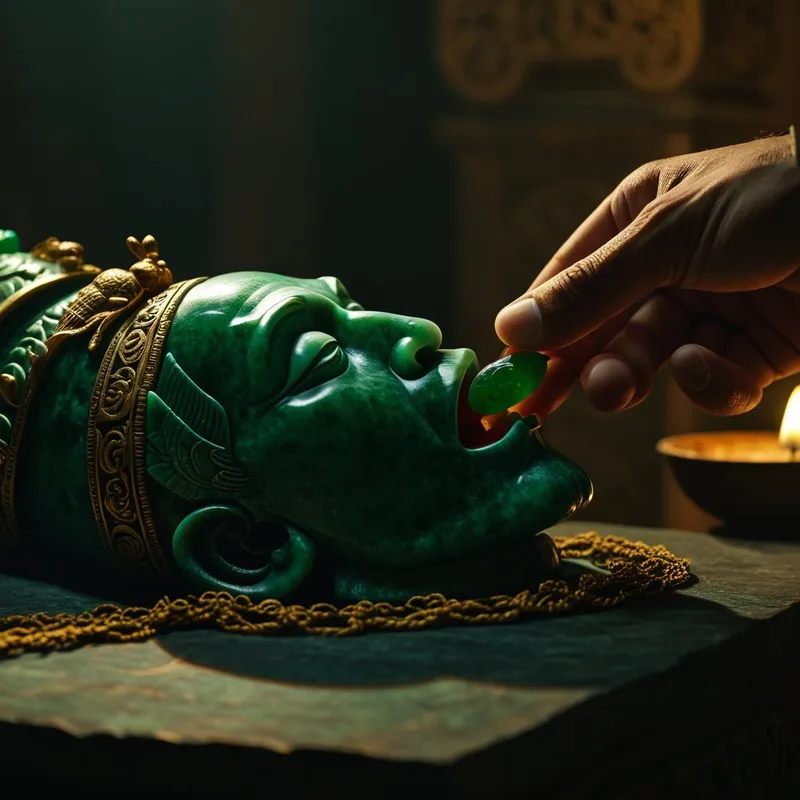
This was not a myth told of a distant god, but a symbol observed in the very fabric of the natural world and woven into the spiritual tapestry of ancient China. Its origins are as old as the Hongshan and Liangzhu cultures, where jade cicadas were placed upon the tongues of the deceased as early as 3500 BCE. The cicada’s life cycle provided a perfect, observable metaphor for concepts central to Chinese thought: cyclical renewal, spiritual purity, and the hope for life beyond the grave.
The symbol was championed by scholars and nobility. For the Confucian literati, the cicada was a model of virtuous conduct—it subsisted on dew, symbolizing purity and austerity, and its song emerged high in the trees, representing the lofty, unwavering voice of the principled official. In Daoist alchemy, its dramatic metamorphosis mirrored the practitioner’s own quest for xian, or immortality, through inner transformation and shedding the mortal coil. The cicada amulet, often carved from precious jade or white marble—stones of heaven and purity—became a crucial funerary object, a silent prayer and a concrete symbol of the soul’s intended journey from the tomb’s darkness to a luminous new state of being.
Symbolic Architecture
The cicada is a tripartite symbol, an archetypal map of the soul’s journey. Its architecture is built upon three distinct phases, each rich with psychological meaning.
First, the Long Descent. The nymph’s protracted subterranean existence represents the necessary period of incubation, withdrawal, and unconscious development. This is the “dark night of the soul,” the depression, the fallow period, or the extended hardship that feels like burial. It is not meaningless suffering, but the gathering of essence.
To be buried is not to be ended; it is to be planted. The long darkness is the womb of the winged self.
Second, the Shedding. The emergence and molting is the critical act of psychic death and rebirth. The old identity—the protective shell that once served a purpose—becomes a prison. The crack is the crisis, the moment of unbearable tension that forces a breakthrough. Leaving the exuviae behind is the act of releasing an outgrown ego, a former way of being, despite the terrifying vulnerability that follows.
Third, the Aerial Song. The brief, sun-drenched adult life symbolizes the conscious realization and expression of the transformed self. The song is not lengthy, but it is potent and full-throated. It represents the period of clarity, purpose, and authentic expression that follows a profound inner transformation—the life lived after the rebirth.
The Dreamer's Resonance
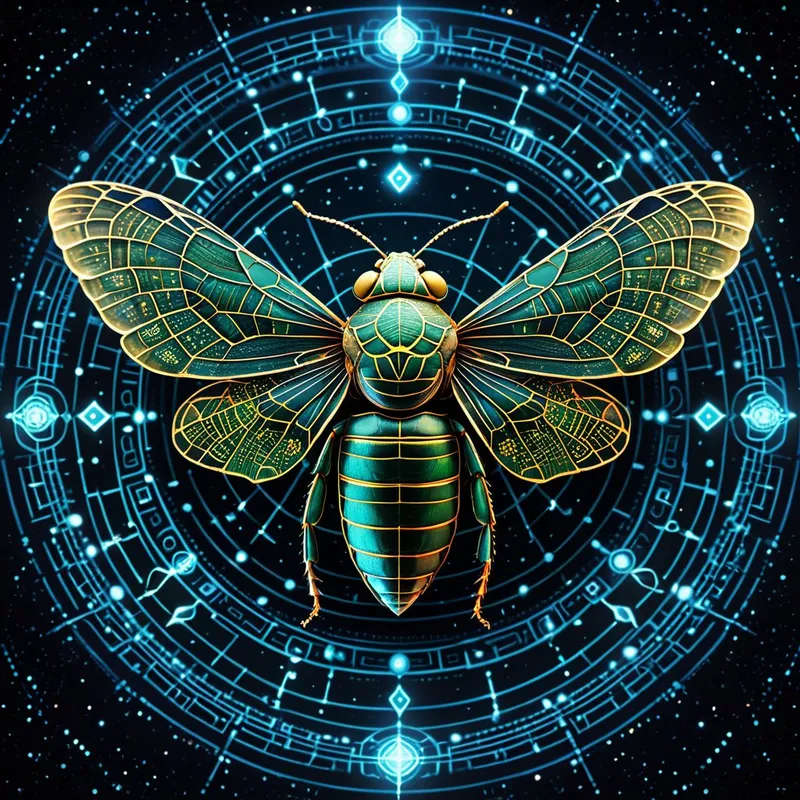
When the cicada pattern emerges in modern dreams, it signals that the dreamer is in the grip of a profound somatic and psychological metamorphosis. Dreaming of being underground, trapped, or surrounded by earth points directly to the nymph stage—a feeling of being stuck, depressed, or in a prolonged period of unconscious processing. The body may feel heavy, sleep may be deep and troubled, mirroring the somatic reality of incubation.
Dreams of cracking shells, tearing skin, or struggling to emerge from a confining space are the psyche’s enactment of the shedding. These can be anxious, even claustrophobic dreams, reflecting the real-life tension of needing to abandon a secure but limiting identity—a job, a relationship, a self-concept. The vulnerability felt upon emergence might manifest as dreams of nakedness or exposure.
Finally, dreaming of cicadas singing, or of having translucent wings, or of viewing the world from a great height, indicates the nascent awareness of the transformation nearing completion. It is the psyche’s promise of liberation and expression. The song in the dream is the call of the authentic self, beginning to find its voice after the long silence.
Alchemical Translation
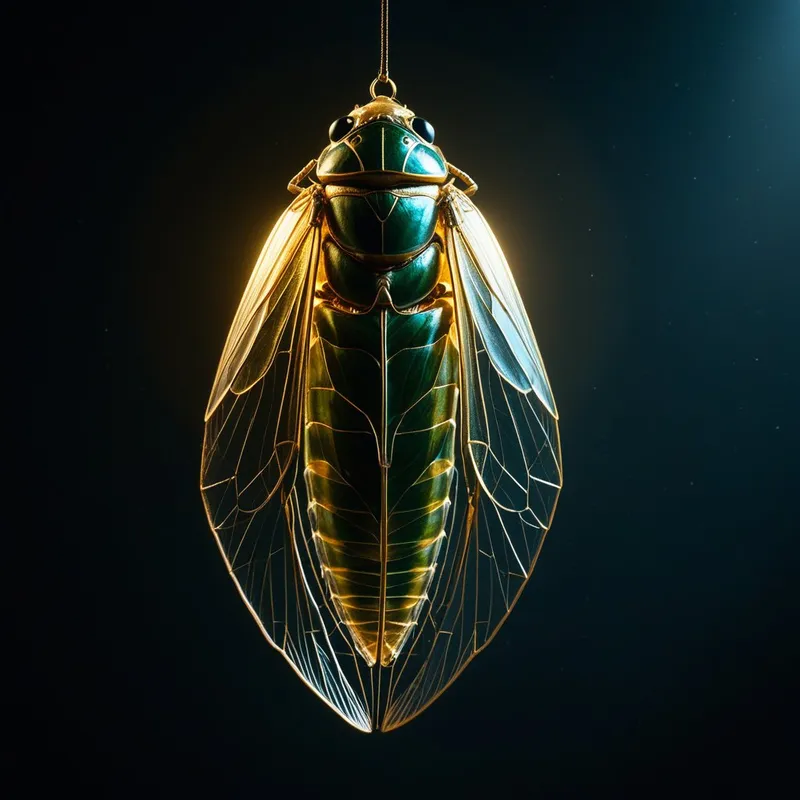
The cicada’s myth provides a flawless model for the alchemical process of individuation—the Jungian journey toward psychic wholeness. The entire cycle is a map of nigredo, albedo, and rubedo translated into biological poetry.
The long underground phase is the nigredo. The conscious ego is dissolved, plunged into the prima materia of the unconscious. All certainties are broken down. The modern individual might experience this as a burnout, a failure, a loss so total it forces a re-evaluation of everything. This is not a mistake in the path; it is the path. The psyche is composting the old self to feed the new.
The shedding at dawn is the albedo. In the pale light of emerging consciousness, a distinction is made. The individual must consciously participate in their own rebirth. This is the hard, active work of therapy, shadow integration, and letting go. One must choose to crack the shell and step out, acknowledging the ghost of the old self (the exuviae) but no longer identifying with it.
The shell you leave behind is not your tombstone, but your first monument. It marks the place where you chose to become.
The winged life and song are the rubedo. This is the integration, where the gold is produced. The insights gained in the dark are brought into the light of day and given form—in creativity, in renewed relationships, in a life lived with deeper authenticity. The song is brief because this conscious realization is not a permanent state, but a glorious phase in the ongoing cycle. Soon enough, new depths will call, and the cycle will begin anew, each turn at a higher level of complexity and understanding. The cicada teaches that to be human is to be perpetually in metamorphosis, forever leaving behind who we were to become who we are.
Associated Symbols
Explore related symbols from the CaleaDream lexicon: