Chiltepin Pepper Myth Meaning & Symbolism
A myth of a humble, fiery berry born from divine sacrifice, teaching that the soul's most potent medicine is often hidden within its sharpest sting.
The Tale of Chiltepin Pepper
Listen. Before the Fifth Sun found its rhythm, when the world was still damp with the breath of the gods, there was a hunger. Not in the bellies of men, for they were not yet, but in the very soul of the earth. It was a hunger for fire that was not wildfire, for heat that was not of the sun alone, but a spark of life itself—pungent, defiant, and vital.
In the highest heaven, Xiuhtecuhtli sat upon his throne of living ember. He watched the green world below, lush but silent, a garden without song or strife. It was beautiful, but it was asleep. It lacked the tonalli—the animating heat of the spirit—to truly awaken. The other gods offered grand solutions: new rivers, brighter stars, fiercer beasts. But Xiuhtecuhtli, whose essence was the hidden fire in the heart of the flint, knew a subtler truth. The greatest power is often the smallest, and it must be earned, not given.
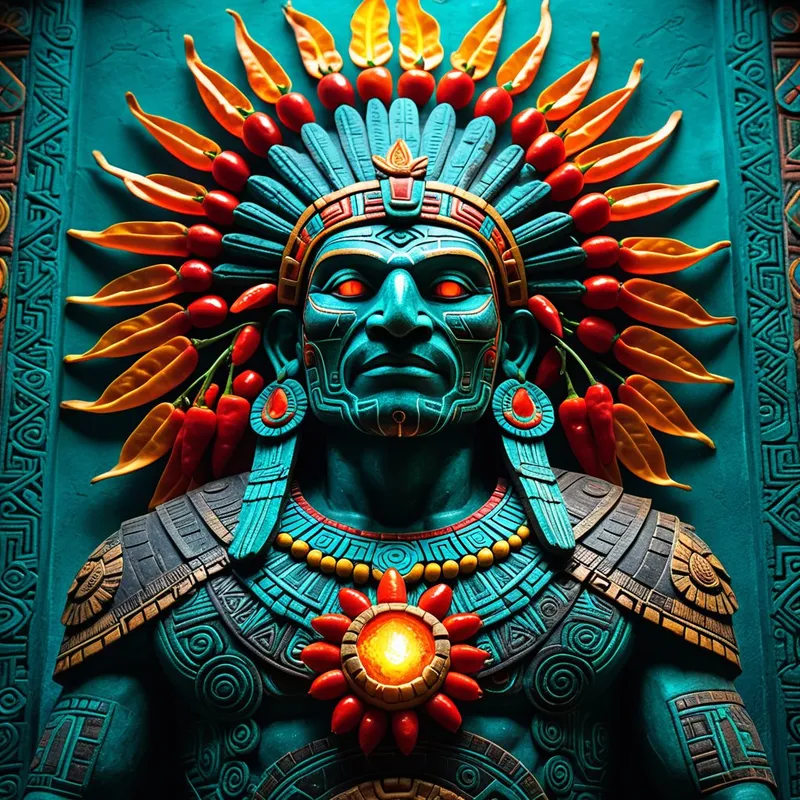
He descended not on a bolt of lightning, but as a warm, dry wind that rustled the leaves of the wild chiltepin bush. It was a humble, thorny thing, bearing hard, green berries. To it, he whispered a covenant. “I will give you the soul of the sun and the sting of the scorpion,” he breathed, his voice like cracking stone. “But to hold it, you must first know sacrifice. You must be pierced.”
And so, the Fire Lord did not bestow; he wounded. From his own turquoise finger, he drew a single drop of his divine blood—a liquid more gold than red, hotter than magma, brighter than dawn. This drop did not fall like rain. It fell like a dying star, a precise and piercing point of light. It struck not the fruit, but the very core of the thorny bush, searing into its woody heart.
The bush did not cry out. It contracted. Every thorn seemed to sharpen, every leaf to curl in a spasm of ecstatic pain. The transformation was not gentle. The small, hard berries shriveled, their skins tightening, becoming thin as a serpent’s scale. Then, from within, a glow began—a deep, resentful red that pulsed like a minute heart. The air around the bush shimmered with a new heat, a spicy perfume that bit the nostrils and brought immediate, smarting tears to the eyes of any spirit that drew near.
Where the divine blood had mingled with the sap of the bush, the first true Chiltepin ripened. It was tiny, no larger than the pupil of an eye, but within it swirled the entire mystery: the scorching gift of Xiuhtecuhtli and the enduring, thorny resilience of the wild earth. It was not a food. It was an event. A catalyst. When the first humans finally walked the world and found these blazing berries, they did not merely taste them. They encountered them. The fire woke them up. It cleared the fog from their senses, connected them to the heat of their own blood, and taught them that vitality often wears the mask of pain. The Chiltepin did not grow in cultivated fields; it hid among rocks and thorns, a secret held by the earth, waiting to be discovered by those willing to brave its sting for its sacred spark.
Cultural Origins & Context
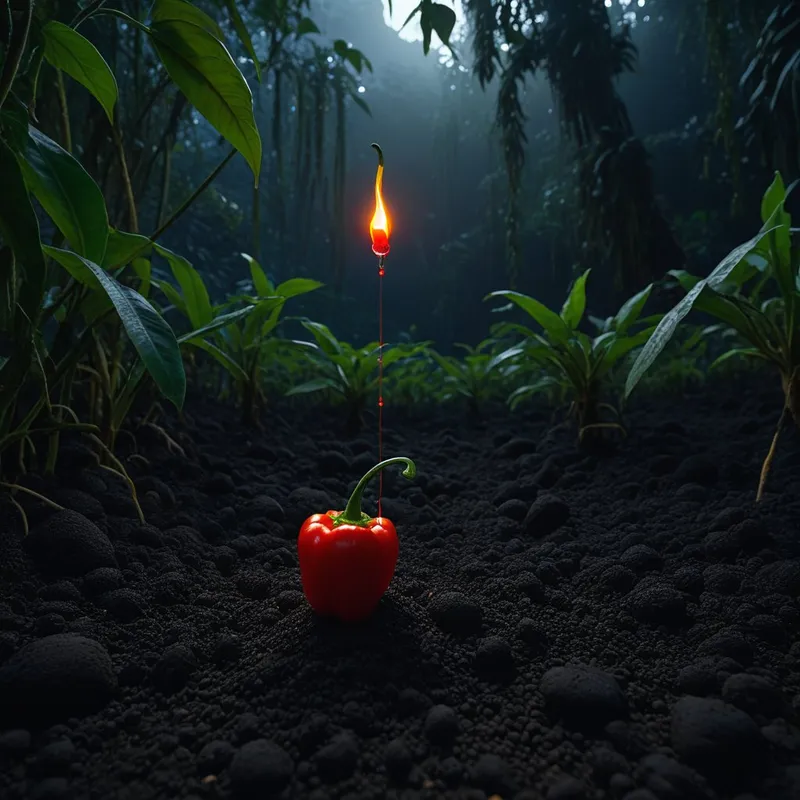
This narrative is woven from the threads of Nahua cosmology, where the concept of tonalli (animating heat/spirit) and the sacred nature of fire were paramount. The Aztec, or more accurately the Mexica, did not have a single, codified “myth of the Chiltepin” as we might find for maize or the sun. Instead, its story is embedded in a broader cultural understanding of chili peppers (chilli) as a fundamental, sacred force.
Chiltepin, the wild progenitor of all domesticated peppers, held a special place. It was called chiltecpin or chiltepin, from Nahuatl chilli (pepper) and tecpin (flea), a humble name for a potent being. Its mythology is less a formal epic and more a pervasive folk understanding, passed down by tlamatinime (wise ones) and mothers alike. It functioned as an etiological tale explaining the pepper’s fierce heat and wild nature, but more importantly, it served as a philosophical object lesson. It taught that the most essential spices for life—both physical and spiritual—are not easily won. They are gifts born from a divine principle of sacrifice (nextlahualli) and are often hidden in the rough, untamed places, both in the landscape and within the self.
Symbolic Architecture
At its core, the Chiltepin is an archetypal symbol of concentrated, transformative power residing in a state of perceived wounding or hardship. Its small size belies its immense effect, mirroring how the smallest, most pointed insights can catalyze the greatest psychic shifts.
The soul’s most potent medicine is not found in the sweet fruit of comfort, but in the tiny, searing berry that grows among thorns.
The thorny bush represents the protective, often painful structure of the ego or the complex. It is defensive, sharp, and untamed. The divine blood of Xiuhtecuhtli is the piercing influx of spirit—a moment of profound insight, trauma, or awakening that seems to wound the very structure of our being. The myth posits that this piercing is not destruction, but the necessary precondition for ensoulment. The heat of the pepper is the tonalli released by this union: the awakened life force, the fiery consciousness that comes only after the shell of ignorance or numbness has been penetrated.
The Chiltepin, therefore, is not merely a symbol of pain, but of pain alchemized into vitality. It represents the psychological truth that our sharpest edges and most intense sensitivities—the parts of ourselves we often hide or deem too much—may be the very vessels holding our sacred fire.
The Dreamer's Resonance
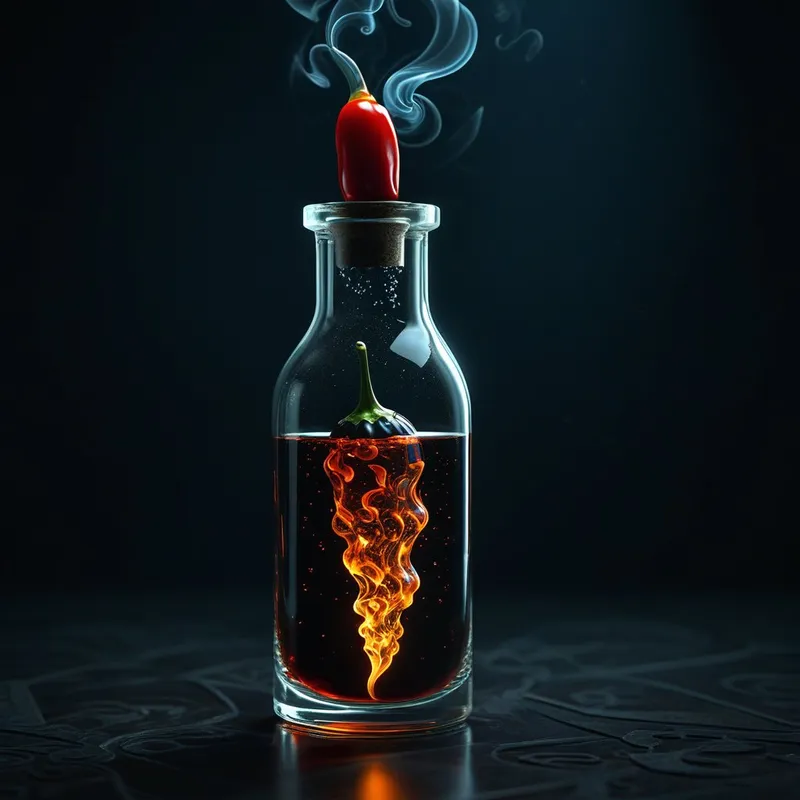
When the pattern of the Chiltepin myth arises in modern dreams, it signals a somatic and psychological process of awakening through pointed intensity. One might dream of finding a tiny, brilliantly glowing object in a dark, thorny thicket. Or of being pricked by a minute pin or thorn that then causes their entire body to flood with warm, radiant light.
This is the psyche working with a “hot” complex—a deeply charged emotional knot. The dream is not advocating for avoidance of this pain, but suggesting that within its very center lies an activating energy. The somatic sensation is often one of sudden, acute awareness—a “sting” of truth that disperses psychic numbness. The dreamer is going through the process of the divine blood-drop: a piercing insight or feeling is attempting to impregnate a defended, perhaps arid, area of their inner landscape with the fire of authentic feeling and spirit. The resistance (the thorns) and the resulting heat are part of the same transformative event.
Alchemical Translation
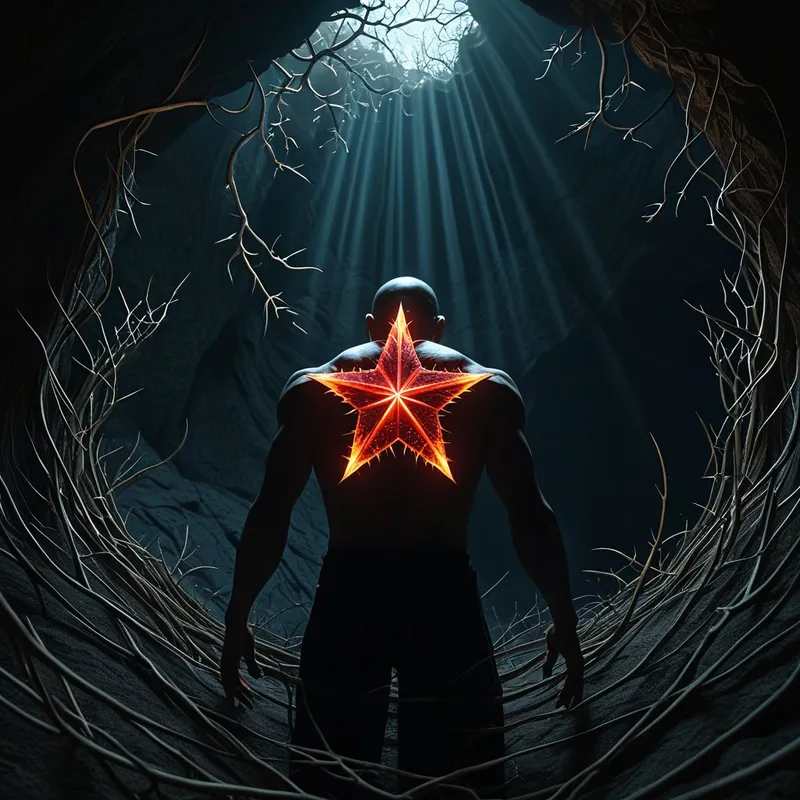
For the modern individual on the path of individuation, the Chiltepin myth models the opus of psychic transmutation: the integration of the wound as the seat of power.
The initial state is the “green world”—a life that may be lush on the surface but lacks authentic, awakened spirit. It is pleasant but asleep. The call comes as a divine discontent, a hunger for real tonalli. The heroic task is not to slay a dragon, but to submit to the sacred wounding: to allow the piercing truth of one’s own nature—the grief, the anger, the passionate intensity one has suppressed—to strike at the heart of one’s defensive structures.
Individuation demands we taste our own Chiltepin: to consciously ingest the searing truth of our shadow and discover, to our astonishment, that its fire is what makes us truly alive.
This is the mortificatio and calcinatio of alchemy—the burning away of the “green,” unripe ego. The tiny, red, fully realized pepper is the rubedo, the reddening—the symbol of achieved integration and passionate, embodied consciousness. The myth teaches that our wholeness does not come from cultivating only what is sweet and palatable. It comes from bravely foraging in the wild, thorny patches of our psyche, finding those concentrated, fiery kernels of our deepest truth, and having the courage to let them season our entire being. We do not become whole by avoiding our sting, but by recognizing it as the signature of our sacred, untamed spark.
Associated Symbols
Explore related symbols from the CaleaDream lexicon: