Children of Lir Myth Meaning & Symbolism
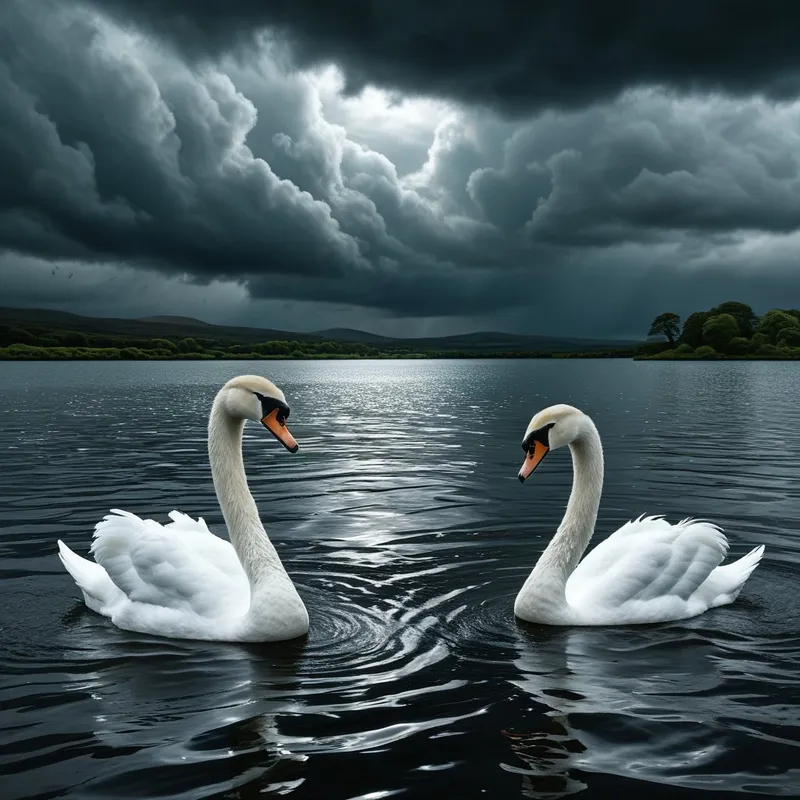
Four royal children are transformed into swans by a jealous stepmother, enduring nine centuries of exile on wild waters before finding final release.
The Tale of Children of Lir
Hear now a tale of the Tuatha Dé Danann, in the time when they ruled from their shining mounds. In the kingdom of the Lir, there was a king named Bodb Derg, wise and fair. To his dear friend Lir, he gave his own foster-daughter, Aobh, in marriage. Great was Lir’s joy, for Aobh bore him twins, a son and a daughter named Fionnuala and Aodh. Then came two more sons, Fiachra and Conn. Their laughter was the music of the sidhe, and their father’s heart swelled with a love as deep as the ocean.
But sorrow is the shadow of great joy. Aobh died, leaving Lir’s hall in silence. To mend his friend’s heart, Bodb Derg gave him Aobh’s sister, Aoife, to wed. At first, Aoife seemed to love the children, but a poison took root in her soul—a bitter, green jealousy for the love Lir lavished upon them. It festered in the dark of her heart until it bloomed into a wicked plan.
One summer’s day, she took the children to bathe in the lake of Derravaragh. The water was cool, the sun was warm. “Come, my darlings,” she said, her voice sweet as mead, “the water will refresh you.” But as they waded in, she drew forth a druid’s wand of dark rowan. Her words were not a blessing but a curse, a spell of transformation that tore through their human forms. Before their father’s eyes, their skin became down, their arms became wings, and their cries became the haunting music of the wild swan.
Yet the magic was flawed by a flicker of remorse, or perhaps by the sheer power of Lir’s love, which even her spell could not wholly deny. “You will be swans,” Aoife declared, her voice trembling, “for nine hundred years. Three hundred on the Lake of Derravaragh, three hundred on the stormy Sea of Moyle, and three hundred on the waters of Irrus Domnann by Erris. Only when a king from the north weds a queen from the south, and the sound of a Christian bell breaks your enchantment, will you be free. And though you have the forms of swans, you shall keep your human minds, your speech, and your song, which will be of such sweetness that all who hear it will be lulled into a peace deeper than sleep.”
And so it began. Lir found his children transformed, and his grief was a storm that shook the heavens. Aoife was punished, turned into a demon of the air. But the children were bound. For three centuries, they lived on their home lake, singing songs of such piercing beauty that warriors laid down their swords to weep. Then, driven by the geas, they flew to the cold, merciless Sea of Moyle, where they endured tempests and loneliness, clinging to each other as the only warmth in a world of salt and gales. Finally, they came to the western sea, waiting, always waiting.
Centuries flowed like water. Kings rose and fell, bronze gave way to iron, and new tales were told. Then, in the time of the new faith, a bell rang out from the chapel of a woman named Mochaomhóg. The sound, pure and clear, shattered the ancient magic. The swans’ feathers fell away like snow, revealing four ancient, withered human forms—beings who had lived through the age of gods into the age of mortals. With their last breaths, they were baptized, and their souls, finally released from their immortal exile, took flight from their crumbling bodies. They were buried together, as they had lived, and a cairn of stones was raised over them, marking where a story of love and endurance at last found its rest.
Cultural Origins & Context
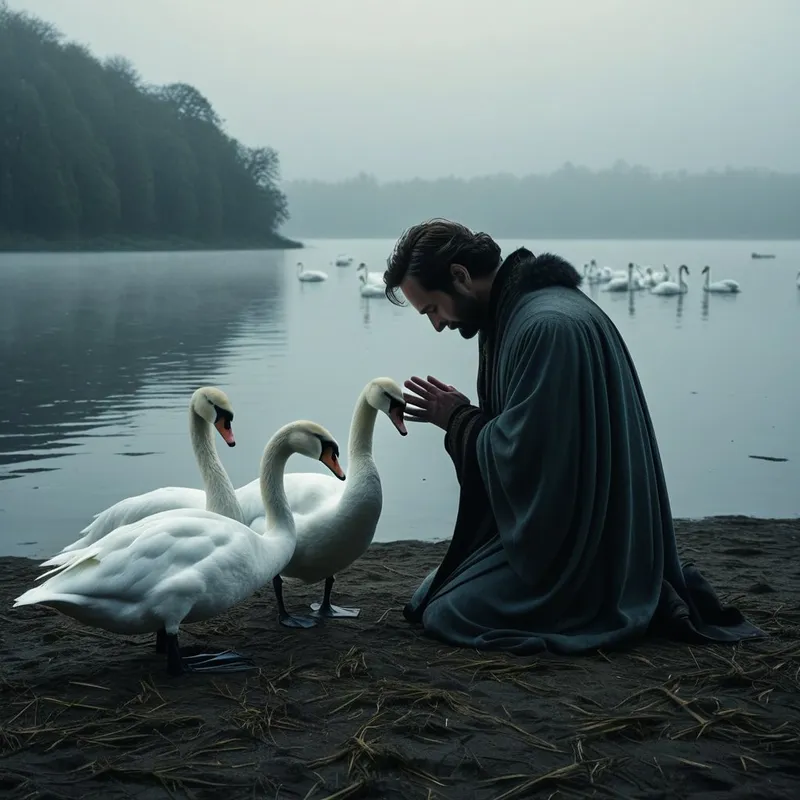
This myth is a cornerstone of the Mythological Cycle of early Irish literature. It was preserved not on stone, but in the fluid, living memory of the filid, the poet-historians who were the keepers of lore. Written down by Christian monks in manuscripts like the Lebor Gabála Érenn and later in the 17th-century Annals of the Four Masters, the tale bears the fingerprints of both its pagan heart and its scribal custodians. The integration of the Christian bell as the instrument of release is a classic example of syncretism, weaving the new faith into the ancient tapestry.
Societally, the story functioned as more than entertainment. It was a foundational narrative about the consequences of kin-strife and jealousy, vital in a culture built on complex fosterage and kinship ties. It also served as an aetiological myth, giving poetic reason for the haunting beauty of swan song and connecting specific Irish landscapes—Lakes Derravaragh, the Straits of Moyle—to the divine and tragic past of the Tuatha Dé Danann. It explained the passing of the old order of gods, whose time was measured in centuries, giving way to the mortal, historical world.
Symbolic Architecture
At its core, the myth is a profound map of the psyche forced into exile. The children represent the innocent, integrated Self—the potential of the soul in its wholeness—struck by the shadow of the Anima in its possessive, jealous aspect (Aoife). Their transformation is not into beasts, but into liminal beings: swans, creatures of two realms, air and water. They retain human consciousness (mind) but are trapped in an instinctual, migratory form (body).
The swan is the soul in exile: conscious of its origin, bound to an alien form, singing of a home it cannot reach.
The three-hundred-year cycles are not random. They chart a descent into deeper and deeper waters of experience: from the familiar inland lake (the personal unconscious), to the harsh, isolating sea straits (the collective shadow), and finally to the remote western ocean (the edge of the known world, the brink of dissolution). This is the soul’s necessary journey through the layers of its own suffering to achieve purification. The enduring bond between the siblings is the thread of consciousness itself—the ego-complex that, however battered, refuses to fragment, holding the psyche together through its long night.
The Dreamer's Resonance
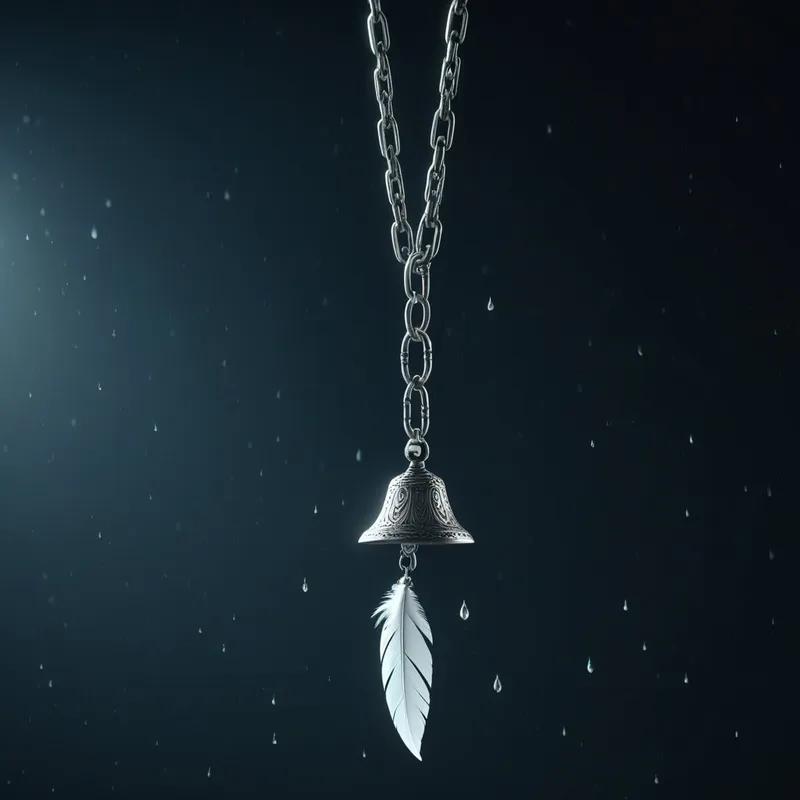
When this myth stirs in the modern dreamer, it often signals a profound experience of psychological exile. To dream of being a swan with a human mind, or to hear unearthly, sorrowful song over water, is to feel the somatic truth of transformation that has gone awry. You are not what you were, nor are you what you appear to be. This is the dream signature of a Self adapting to a harsh new reality: a sudden illness, a traumatic loss, a forced migration, or a betrayal that has altered the very landscape of one’s life.
The dream may carry the chill of the Sea of Moyle—the feeling of being exposed, isolated, and buffeted by forces beyond your control, yet clinging to some core identity (the sibling-swans). It speaks to the endurance of consciousness through periods of immense suffering, where the only “action” possible is to stay afloat and stay connected to your inner companions (one’s own sub-personalities or core values). The dream is not about solving the exile, but about witnessing it, about feeling the full, aching truth of the condition as a necessary stage in a longer alchemy.
Alchemical Translation
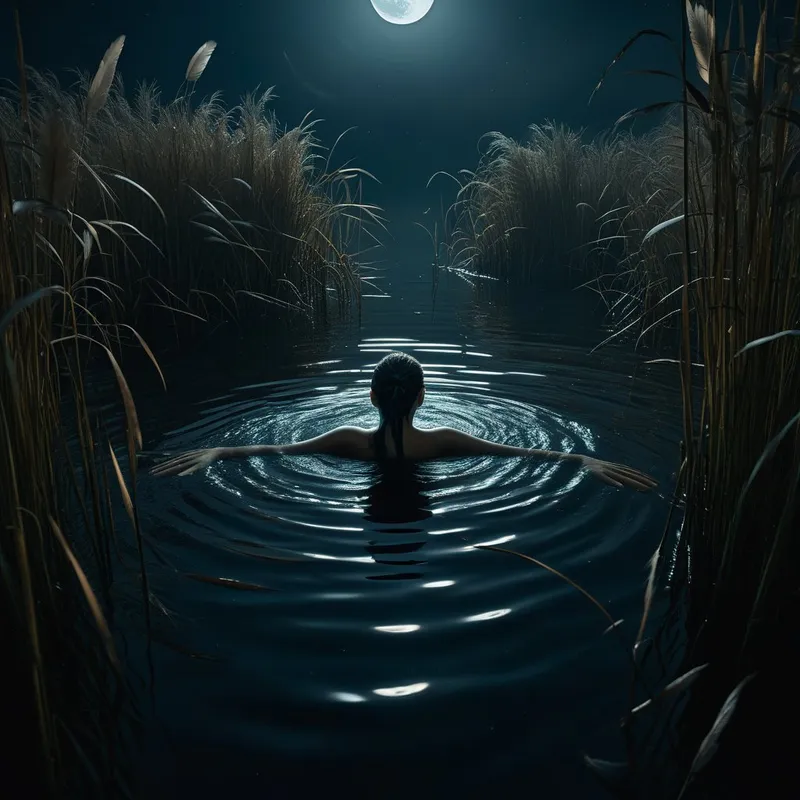
The psychic process modeled here is the magnum opus, specifically the long, tortuous stage of nigredo. The children are the prima materia—the original soul-stuff—subjected to the corrosive waters of fate and betrayal. Their nine-century journey is the ultimate test of patience, the primary virtue of the alchemist. They do not fight, they do not conquer; they endure. They transmute their suffering into song, the unconscious lament becoming a conscious art that brings peace to others.
Individuation is not an ascent to a sunlit peak, but a willing exile into the cold sea of all you are not, until only the essential, enduring note of your being remains.
For the modern individual, the myth teaches that profound transformation often requires a seeming regression. To become whole, parts of us must be “swanified”—rendered strange, instinctual, and separated from our familiar shore. The curse, paradoxically, is the container for the transformation. The final release by the bell is not a heroic rescue, but a synchronicity—the meaningful convergence of inner readiness (their completed term) and outer, numinous reality (the new faith, the bell). It symbolizes the moment when the endured suffering finally crystallizes into a new form of consciousness, one so refined it can only be housed in a mortal body briefly before passing into the transcendent. The struggle’s end is not a return to the old kingdom, but a final, graceful dissolution of the form that carried the soul through its long, necessary night.
Associated Symbols
Explore related symbols from the CaleaDream lexicon: