Calcinatio Myth Meaning & Symbolism
The myth of the soul's trial by sacred fire, where all that is superfluous is burned away, leaving only the indestructible essence.
The Tale of Calcinatio
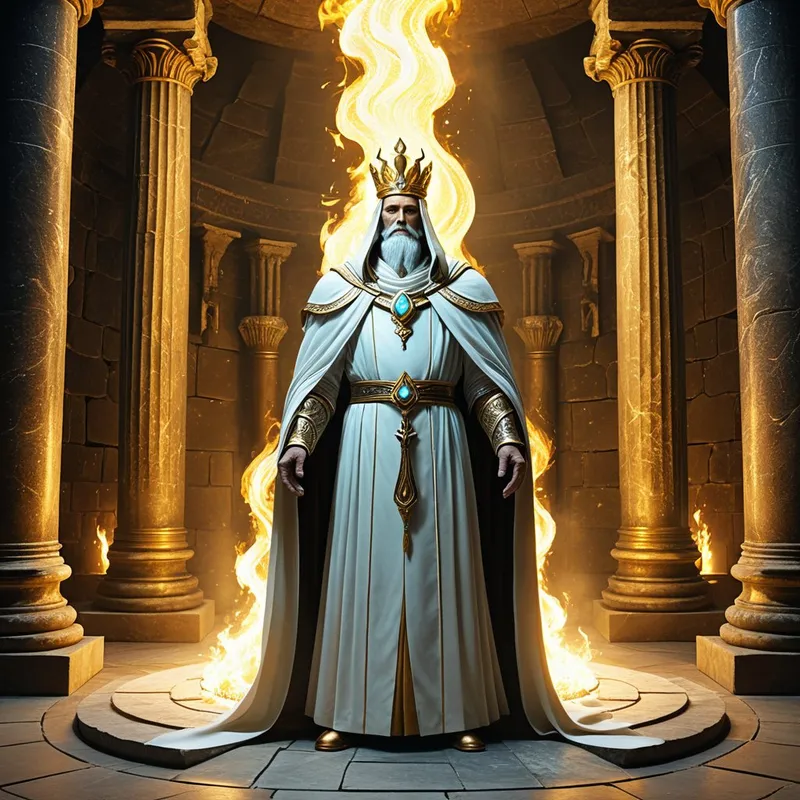
Listen, and hear the tale of the First Fire. It was not born in a hearth, nor struck from flint. It was born in the heart of the Prima Materia, the dark and formless chaos that was all and nothing. Within that swirling murk slept the Anima Mundi, the World Soul, bound in chains of leaden doubt and shrouded in a thousand veils of illusion.
A voice spoke from the silence that precedes stars. It was the voice of Sulfur, the spirit of will. "To be known," it declared, "one must be refined. To be refined, one must endure the flame." And so, the First Furnace was kindled—not with wood, but with divine necessity. Its fire was not orange, but a searing, blinding white, the color of truth itself.
The Anima Mundi was brought before this inferno. The heat was not of the skin, but of the spirit; it did not warm, it revealed. The first to burn were the gaudy garments of pride, which crackled and vanished in puffs of acrid smoke. Then wept the waters of sentimentality and clinging attachment, hissing as they boiled away into empty air. The comforting lies one tells oneself, the stories of blamelessness, the brittle identities of tribe and title—all caught fire, burning with a low, blue flame that left only grey powder.
The process was agony. It was the agony of exposure, of being stripped utterly bare. The soul, it seemed, was being destroyed. Its form blackened, cracked, and crumbled. Observers in the myth, the lesser elemental spirits, wailed and turned away, believing the work a catastrophe, a beautiful thing reduced to cinder and ash.
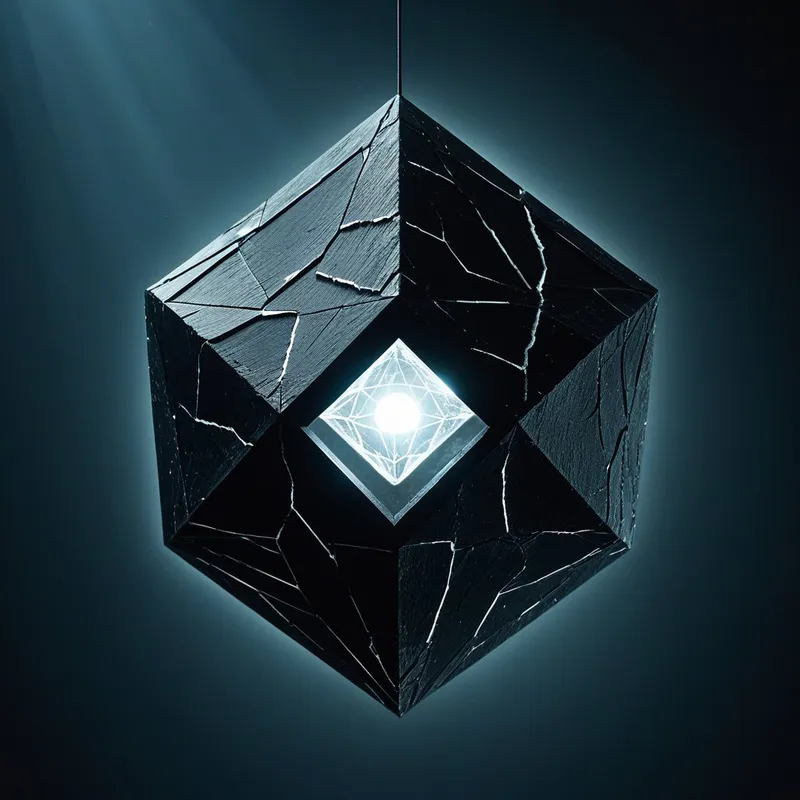
But Sulfur watched, unwavering. The fire burned for an age, until all movement ceased, and only a still, blackened lump remained in the crucible of fate. The furnace died. In the profound silence and cooling dark, a sound emerged: a faint, clear chime. A hairline fracture appeared on the blackened surface. Then another. From within the dead shell, a light glowed—not the borrowed light of the fire, but a native, immaculate, white radiance. The calcined soul had not been destroyed. It had been simplified. All that could be burned, was burned. What remained could not be consumed by any flame. This was the White Stone, the first true substance, born of fire and suffering.
Cultural Origins & Context
The myth of Calcinatio is not a story with a single author, but a core operative principle woven into the fabric of Western esoteric thought, crystallizing most distinctly in the symbolic texts of Medieval and Renaissance alchemy. It was passed down not by bards to a crowd, but by adepts to initiates, encoded in cryptic manuscripts, enigmatic woodcuts, and laboratory notes that were as much spiritual diaries as chemical recipes.
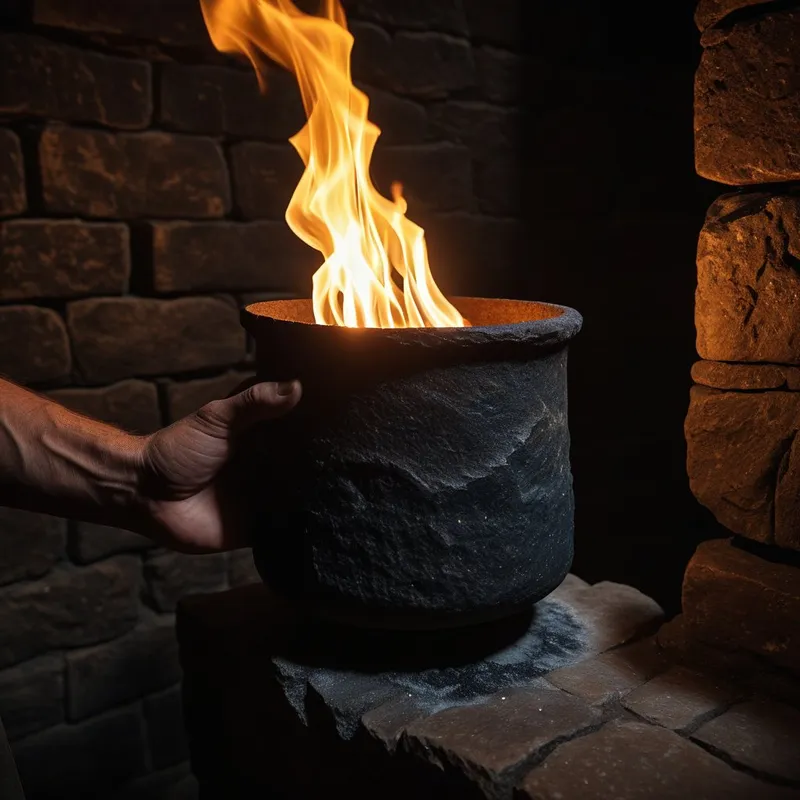
Its societal function was dual. Exoterically, it described a physical process: the roasting of an ore or substance in a crucible to drive off volatile components, leaving a dry, powdery calx. Esoterically, and more importantly, it provided a sacred map for the ultimate societal rebellion: the individual's journey toward spiritual autonomy. In a world dominated by rigid religious and feudal hierarchies, the alchemist's laboratory became a clandestine chapel where one could pursue a direct, unmediated confrontation with the divine within matter and, by analogy, within the self. The myth taught that true authority comes not from external crown or cross, but from surviving the inner furnace.
Symbolic Architecture
At its heart, Calcinatio is the archetypal ordeal by fire. Its symbols are stark and absolute: the Crucible, the White Fire, the Calx, and the revealed White Stone.
Psychologically, the fire represents the heat of intense, inescapable affect—consuming rage, searing shame, the fever of obsession, or the dry heat of profound depression. It is any emotional or psychological state that feels annihilating. The matter subjected to this fire is the complex, often inflated, persona-ego structure—the "false self" built from identifications, defenses, and compulsive behaviors.
The fire does not create the essence; it removes everything that is not the essence.
The burning away of the "volatile" components symbolizes the dissolution of neurotic attachments, infantile fantasies, and outmoded ways of being. The resulting calx—the dry, dead, ash-like state—is a critical psychological stage: the feeling of being barren, empty, and devoid of life force after a major crisis. It is the "dark night of the soul," where all previous meaning has been incinerated. The miracle of the myth is that this state is not the end, but the necessary precondition for discovering the indestructible, simple core—the authentic Self that exists beyond egoic identification.
The Dreamer's Resonance
When the myth of Calcinatio stirs in the modern unconscious, it announces a season of psychic combustion. The dreamer may not see a literal alchemist, but they will feel the fire.
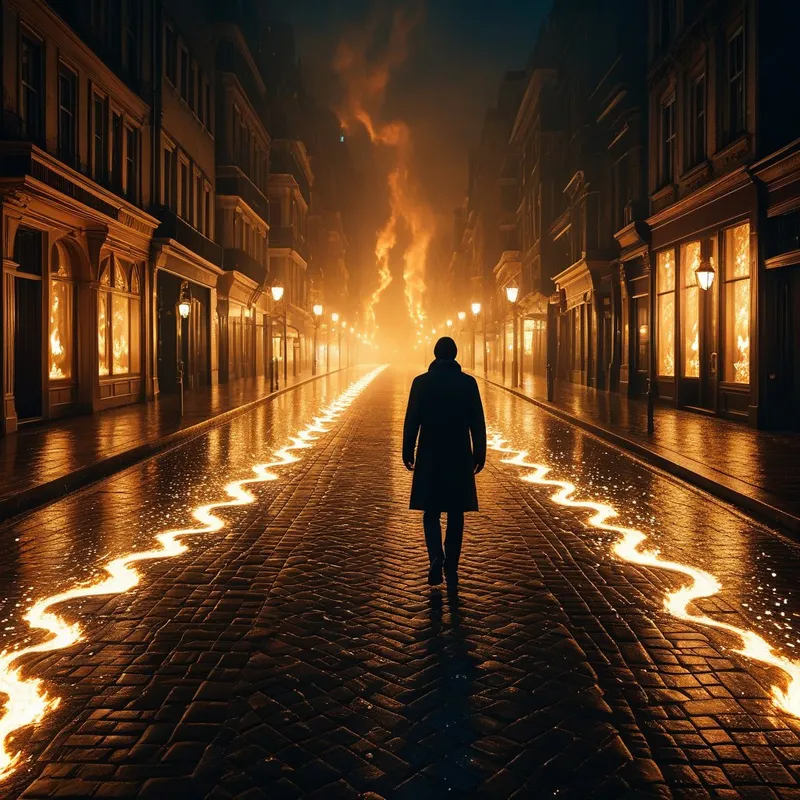
Dreams of houses burning down, particularly childhood homes, signal the forced purification of foundational psychic structures. Dreams of fever, of being too hot, or of walking through flames point to somatic manifestations of this inner process. More subtly, dreams of objects—a prized book, a piece of jewelry, a photograph—turning to ash in one's hands speak to the painful, involuntary devaluation of what was once cherished. Recurring dreams of deserts, barren landscapes, or piles of grey dust embody the calx stage: the emotional aridity and sense of lifelessness that follows a period of intense psychological heat.
The body often echoes this in waking life: skin inflammations, fevers, or a chronic feeling of being "burned out" are the somatic whispers of Calcinatio. The dreamer is undergoing a profound detoxification of the spirit, where complexes and psychic toxins are being violently expelled. The process feels destructive because, from the ego's perspective, it is.
Alchemical Translation
For the modern individual seeking wholeness, the myth of Calcinatio models the first, most brutal phase of psychic transmutation: the confrontation with one's own shadow through the medium of suffering. Individuation does not begin in calm reflection, but often in the crucible of crisis.
The alchemical instruction is not to avoid the fire, but to learn its purpose. This translates to the psychological courage to fully inhabit one's suffering—the rage, the grief, the humiliation—without immediately seeking to numb it or blame an external cause. It is to allow the neurotic solutions to burn themselves out. The person clinging to a toxic relationship must let the fantasy of its salvation be incinerated. The achiever who identifies with success must let the persona of the "winner" turn to ash. The caregiver who burns with resentment must allow the martyr to be consumed.
The goal is not to become fireproof, but to discover what part of you already is.
The triumph of the myth is the realization that the fire was not an enemy, but a ruthless redeemer. The "White Stone" that emerges is the dawn of self-knowledge stripped of illusion. It is the quiet, unshakable confidence that comes from knowing what you are made of, having seen everything else burn away. It is the foundation of true resilience, for you have met the worst of yourself and found, at the center, something that cannot be destroyed. From this calcined ground, the real work of rebuilding a conscious life—the subsequent alchemical stages of Solutio, Separatio, and Coniunctio—can authentically begin.
Associated Symbols
Explore related symbols from the CaleaDream lexicon: