Cain's Mark Myth Meaning & Symbolism
After murdering his brother Abel, Cain is cursed to wander the earth, marked by God not for destruction, but as a sign of paradoxical, terrifying protection.
The Tale of Cain's Mark
Listen. Before kings, before temples, before the great scattering of tongues, there was a family in the raw dawn of the world. The air smelled of turned earth and animal musk. There were two brothers. Cain, the firstborn, was a son of the soil. His hands were calloused from wrestling life from the stubborn ground, his offering the fruits of his labor and sweat. Abel, the younger, was a keeper of flocks. His world was of moving wool and warm breath, his offering the firstlings of his fold, their fat still rich with life.
They brought their gifts to the Yahweh. Smoke rose from Abel’s altar, a sweet savor that climbed straight to the heavens. But from Cain’s offering, the smoke hung low and sullen, rejected. A cold fire ignited in Cain’s heart. His face, once open like a furrowed field, fell and hardened into a cliff of resentment.
Yahweh’s voice came to him, not as thunder, but as a whisper in the blood. “Why are you angry? Why has your face fallen? If you do well, will you not be accepted? And if you do not do well, sin is crouching at your door. Its desire is for you, but you must rule over it.”
But the whisper was drowned out by the roaring in Cain’s ears. He spoke to Abel, his voice deceptively calm. “Let us go out to the field.” The sun was high, casting short, stark shadows. In that open space, with only the sky as witness, the crouching beast pounced. Cain rose up against his brother and killed him. The earth, which he had worked, drank his brother’s blood.
Then came the Voice again, now a question that echoed in the sudden, terrible silence. “Where is Abel your brother?”
Cain’s reply was the first lie, wrapped in a defiance that chilled the very air. “I do not know. Am I my brother’s keeper?”
And the Voice laid bare the crime: “What have you done? The voice of your brother’s blood is crying to me from the ground. And now you are cursed from the ground, which has opened its mouth to receive your brother’s blood from your hand. When you work the ground, it shall no longer yield to you its strength. You shall be a fugitive and a wanderer on the earth.”
Terror, true and absolute, finally broke through Cain’s defiance. His punishment was worse than death—eternal rootlessness. “My punishment is greater than I can bear!” he cried. “Behold, you have driven me today away from the ground, and from your face I shall be hidden. I shall be a fugitive and a wanderer on the earth, and whoever finds me will kill me.”
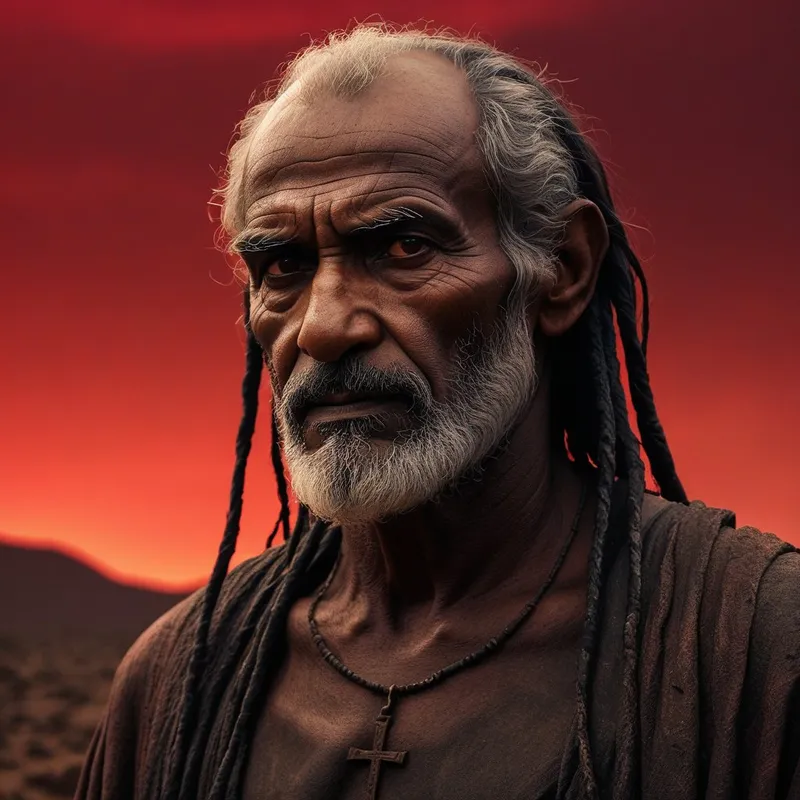
Then came the mark. Not as a punishment added, but as a terrifying grace. Yahweh said, “Not so! If anyone kills Cain, vengeance shall be taken on him sevenfold.” And Yahweh put a mark on Cain, lest any who found him should attack him. The text does not describe it. It was simply there—a sign, a seal, a warning etched upon his very being. Then Cain went away from the presence of the Yahweh and dwelt in the land of Nod, east of Eden, a builder of cities in the wilderness of his own making.
Cultural Origins & Context
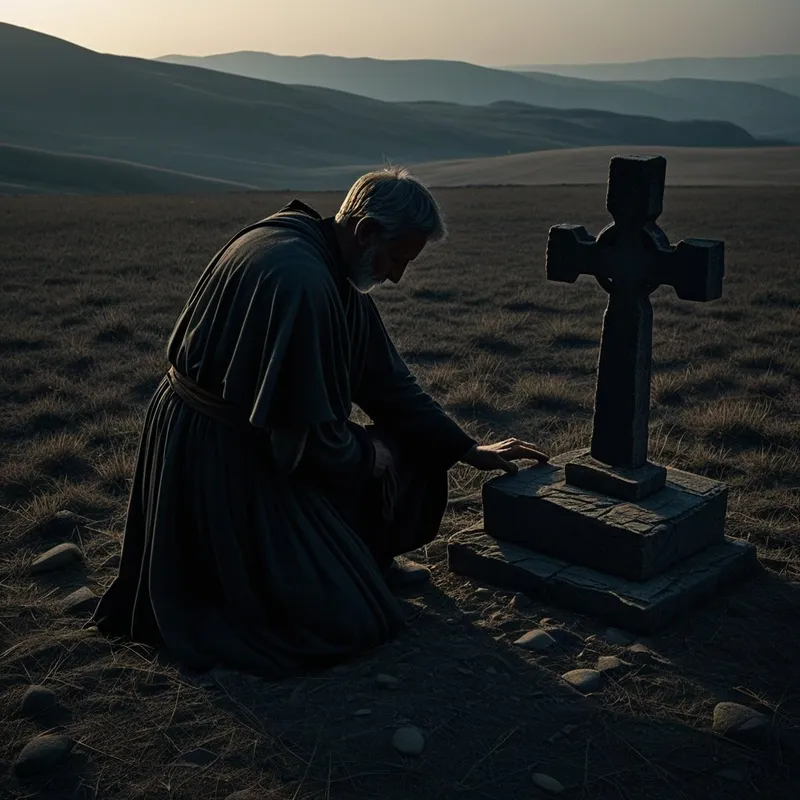
This story is found in the fourth chapter of Genesis, part of the Torah. It is a foundational etiological narrative from the Yahwist tradition, likely composed during the monarchic period of ancient Israel. Its function was profound and multifaceted for a tribal, agrarian society.
It was not merely a moral tale about murder. It explained the origins of fratricidal strife, the existential condition of the farmer struggling against unforgiving land, and the archetype of the nomadic outcast. It established the sacredness of blood and the principle of divine vengeance (lex talionis), setting a boundary against the chaos of cyclical blood feuds. The mark itself is a masterstroke of theological ambiguity. Passed down orally and then scribally, this story served as a dark mirror for a people often seeing themselves as wanderers, wrestling with their own capacity for jealousy and violence, and seeking to understand the mysterious, often terrifying, nature of a God who both curses and protects.
Symbolic Architecture
The myth of Cain is the psyche’s first confrontation with the shadow after the fall from unconscious unity (Eden). Cain represents the ego born into a world of comparison and differential favor. His offering—the fruit of his labor—is the persona, the cultivated self we present for approval. Its rejection is the devastating experience of the ego when its best effort is deemed insufficient, sparking the primal envy that fuels the shadow.
The first murder is not of a stranger, but of the brother. The shadow’s primary target is always the aspect of the self that is perceived as more whole, more accepted, more in grace.
Abel is Cain’s lost innocence, his own capacity for simple, accepted being. To kill him is to attempt to murder the part of oneself that makes one’s own inadequacy felt. The ground that rejects Cain is the inner landscape now poisoned by guilt; it can no longer nourish the old, naive identity.
The mark is the central, paradoxical symbol. It is the brand of the outcast, the visible stigma of his crime—his shadow made manifest for all to see. Yet, in the same divine breath, it becomes a sacred sign of protection. It is the burden of consciousness itself. To be marked is to be forced to carry the knowledge of one’s own darkness, and in that carrying, to be granted a terrible, unique identity. One is not destroyed by one’s sin, but is condemned to live with it, transformed by it. The mark seals the individual in their solitude, making them both repellant and untouchable, cursed and sacred.
The Dreamer's Resonance
When this myth stirs in the modern dreamer, it signals a profound encounter with the guilty, exiled parts of the self. One may dream of being branded, of having a visible stain or tattoo one cannot hide, reflecting acute shame or the fear of being “found out.” Dreams of wandering in a featureless landscape (Nod) speak to a sense of psychic rootlessness, of having lost one’s inner compass or belonging after a moral or emotional failure.
The dream figure of the vengeful pursuer is the super-ego’s relentless self-punishment. The appearance of a silent, accusing brother-figure (an Abel) points to a repressed aspect of the dreamer’s own vitality or integrity that has been “killed” through neglect, betrayal, or self-sabotage. Somatic sensations might include a heaviness in the limbs (the curse of the ground), a burning or itching on the forehead (the site of the mark), or a feeling of being watched by an unseen, judgmental presence. The dream process is one of confronting the crime one denies—“Am I my brother’s keeper?”—and beginning to hear the blood crying from the ground of one’s own soul.

Alchemical Translation
The alchemy of Cain’s myth is the transmutation of the curse into the covenant. The initial stage is nigredo: the blackening, the murderous act, the descent into guilt and exile. The ego is shattered against the reality of its own shadow. The wandering is the necessary separatio, the isolation where the old, naive self dies.
The mark is the coniunctio oppositorum—the conjunction of opposites—etched on the skin of the soul. It is where the curse of self-knowledge meets the grace of preservation.
The process of individuation here demands carrying the mark consciously. One must not seek to erase the stigma of past failure or innate darkness, but to recognize it as the very sign that defines and protects one’s unique journey. To build a city in Nod, as Cain did, is the ultimate alchemical act: to create meaning, structure, and culture not from innocence, but from the acknowledged experience of one’s own flawed, violent, yet divinely-protected nature. The mark ceases to be only a brand of shame and becomes a talisman of hard-won identity. The wanderer is not redeemed back into the garden, but is forged into a different kind of being—one who bears the weight of consciousness, and in that bearing, finds a sacred and solitary purpose.
Associated Symbols
Explore related symbols from the CaleaDream lexicon: