Branwen Myth Meaning & Symbolism
A tale of a goddess-bride whose mistreatment sparks a cataclysmic war, exploring the cost of broken bonds and the sovereignty of the soul.
The Tale of Branwen
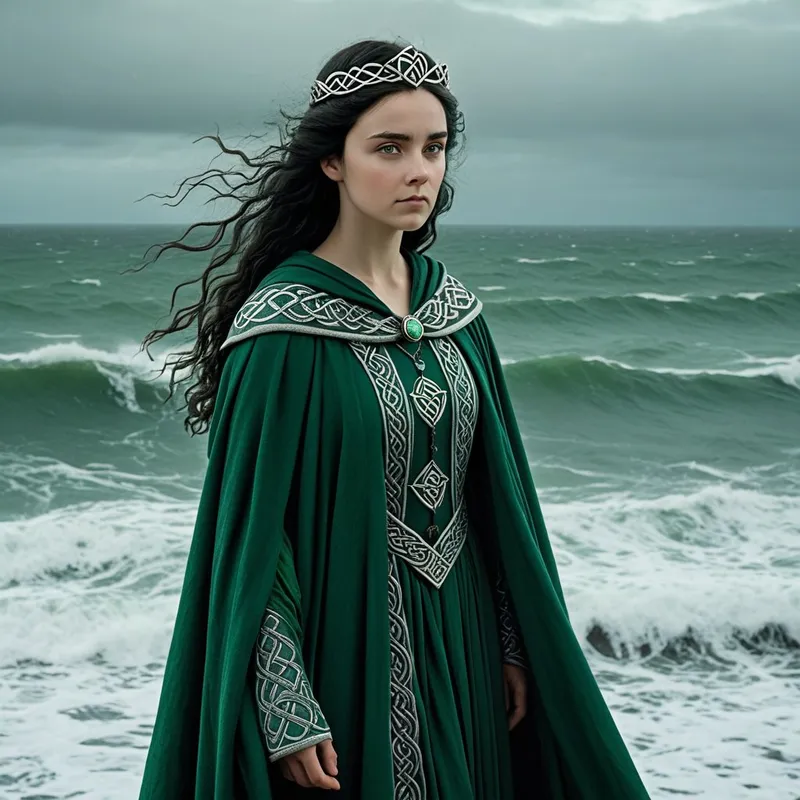
Listen, and hear the tale that begins with a feast and ends with a wasteland. In the time of giants and kings, when the island of the Mighty was whole, there lived Bran the Blessed. His sister was Branwen, whose name means “White Raven” or “Blessed Breast,” and she was the most beautiful woman in the world, her fairness a beacon across the sea.
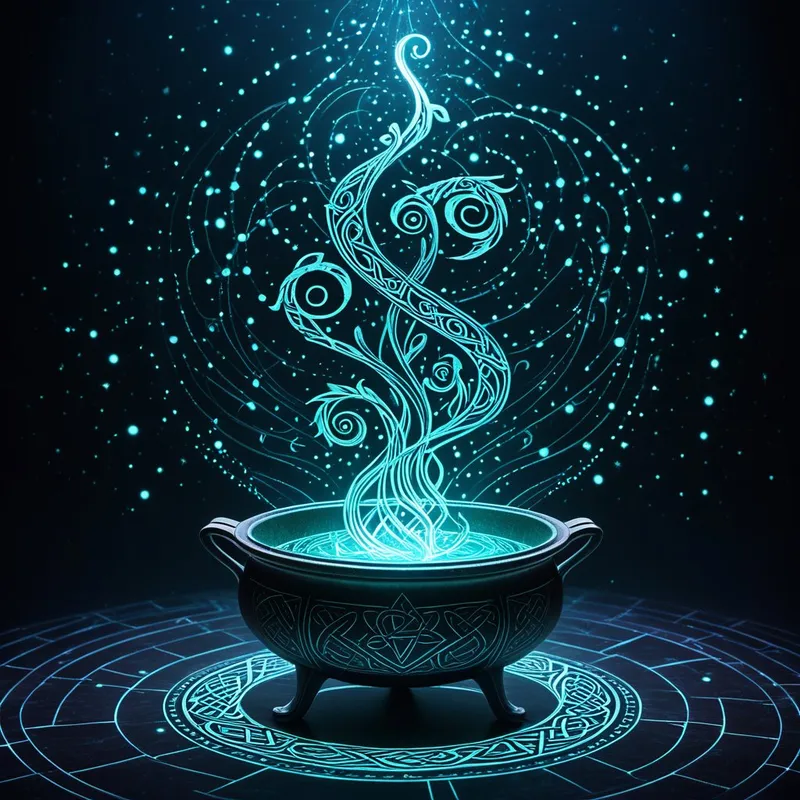
From across the grey waves came Matholwch, seeking an alliance. He saw Branwen and desired her, not merely as a wife, but as a living treaty, a bond of flesh and blood between two lands. Bran, for peace and prosperity, agreed. The wedding was a grand affair on the shores of Wales, a celebration that shook the earth with joy. But a shadow fell. Efnisien, furious he was not consulted, erupted in a spiteful fury. He mutilated Matholwch’s horses, a sacrilege that turned the wedding feast to ashes. To appease the insulted Irish king, Bran offered a fortune in silver and a magical cauldron that could restore the dead to life—though they would return mute, forever silent.
Branwen sailed to Ireland as a queen. For a year, she was beloved, and she bore Matholwch a son, Gwern. But the memory of the insult festered in the hearts of the Irish. Whispers grew that Branwen’s family had shamed them. The love curdled to contempt. Matholwch, swayed by his court, cast her from the royal chambers. He condemned her to the kitchens, a slave-queen, and each day the butcher would box her ears, a public, brutal humiliation. The once-white raven was caged in soot and sorrow.
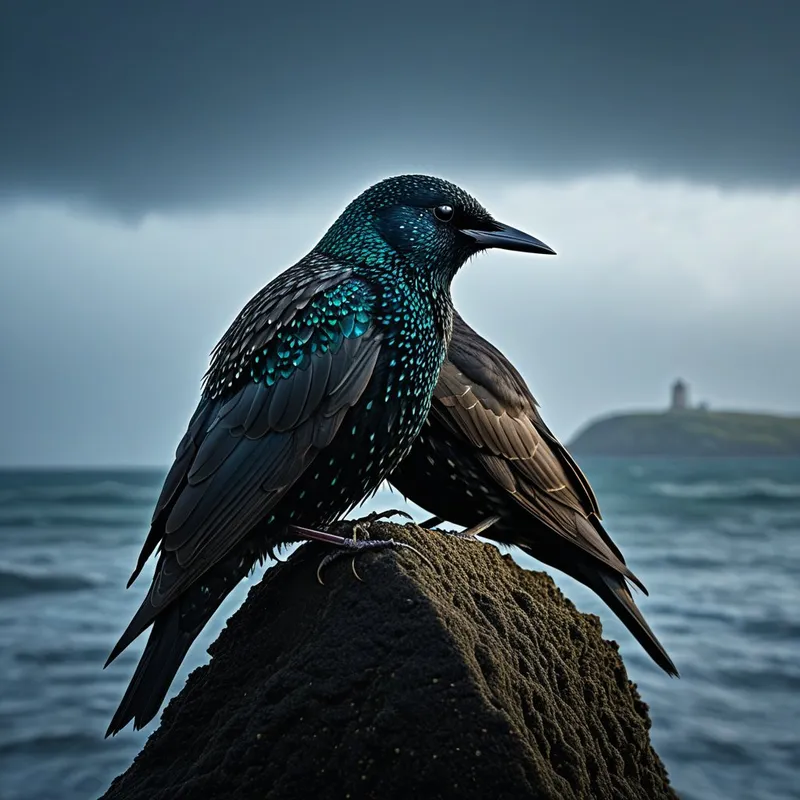
For three years she endured, the weight of a broken treaty upon her shoulders. In her isolation, she performed a feat of desperate cunning. She tamed a starling, teaching it to recognize her brother Bran. She tied a letter to its leg, a silent scream etched on parchment, and sent the bird across the churning sea. The starling found the giant king, perched on his shoulder, and delivered its message.
Bran’s wrath was a continental shift. He waded across the Irish Sea, his warriors in ships beside him, a forest of spears rising from the water. The Irish, terrified, sued for peace. They offered the kingship to young Gwern, a bridge of new blood. In the hall of reconciliation, Efnisien’s poison erupted once more. Seemingly in a gesture of affection, he cast the boy Gwern into the roaring fire. The hall exploded into a storm of steel.
The war was total. The Irish used the magical cauldron, reviving their dead as mute soldiers. Seeing this, Efnisien sacrificed himself, hiding among the corpses and bursting the cauldron from within, his own heart breaking with the vessel. In the end, only seven of Bran’s men survived, and Bran himself was mortally wounded by a poisoned spear. He ordered his head cut off and carried to the White Hill in London, where it would forever guard the land.
And Branwen? She was rescued, brought back to the shores of Wales. Standing on the land of her birth, looking out at the ruins of two kingdoms shattered for her sake, her heart broke. “Woe is me that I was ever born,” she cried. “Two good islands have been laid waste because of me.” And with a great sigh, her spirit left her. They buried her beside the river Alaw, a queen returned to the earth that bore her.
Cultural Origins & Context
This story is part of the Second Branch of the Mabinogi, preserved in 14th-century manuscripts but echoing a far older, pre-Christian oral tradition. It was the lore of the bards, a foundational narrative for the Brythonic peoples of Wales and Cornwall. This was not mere entertainment; it was a societal compass. The tale functioned as a dire warning about the sacred nature of alliance, the catastrophic cost of dishonor (sarhaed), and the fragile sovereignty embodied in the royal bride. Branwen is a goddess of sovereignty in the old Celtic sense—the land and the king’s right to rule are mirrored in her condition. Her mistreatment is not a personal tragedy but a geopolitical and spiritual curse that unravels the natural order, demanding a terrible, cleansing justice.
Symbolic Architecture
Branwen is the archetypal Sovereignty Goddess betrayed. She represents the soul’s capacity for connection, love, and bridging worlds—the essential anima function that seeks to unite opposites. Her journey is one of sacred value desecrated.
The soul, when used as currency in a bargain of power, will eventually demand a reckoning that bankrupts the treasury of the self.
The mutilation of the horses by Efnisien is a primal sin against the pact. Horses symbolize vitality, nobility, and the journey itself. To harm them is to sabotage the future before it begins, injecting a toxin of resentment into the bond. The magical Cauldron of Rebirth is a profound symbol. It offers life, but a maimed one—a resurrection without voice or soul. It is the false solution, the compulsive, unconscious repetition that does not heal but perpetuates the conflict. Efnisien’s final act, destroying it from within, is the necessary, violent sacrifice of the toxic pattern itself.
Bran’s decapitation and oracular head signifies the transition from physical, brute-force kingship to a timeless, witnessing consciousness—a guardian wisdom that persists beyond the collapse of the kingdom.
The Dreamer's Resonance
To dream in the pattern of Branwen is to feel the profound somatic weight of a betrayed covenant. It may manifest as dreams of being trapped in a menial or degrading role in a vast house (the kitchen), of sending messages that never arrive, or of witnessing a beloved child-figure (Gwern) being destroyed by a chaotic, spiteful force within one’s own family psyche (Efnisien).
The body may register this as a constant, low-grade humiliation—a tightness in the jaw or ears, a slumping of the shoulders under an invisible burden. Psychologically, the dreamer is processing a deep violation of trust where their intrinsic value was exchanged for a strategic gain, leaving them feeling used and abandoned. The starling represents the first, fragile movement of the authentic self crying out for witness, a nascent instinct toward self-rescue that must be trained and sent forth with immense patience.
Alchemical Translation
The alchemy of Branwen is the transmutation of the used soul into the sovereign soul. It models the individuation process of reclaiming one’s value from the prison of a transactional identity.
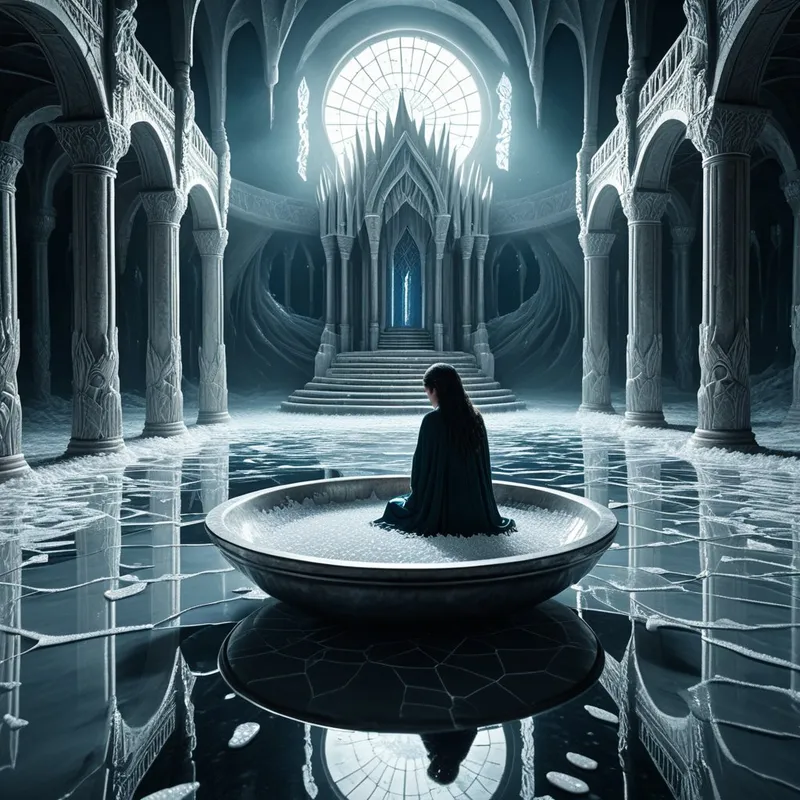
The initial conjunctio (the marriage) is an ideal, a psychic projection of wholeness. The betrayal (the kitchen) is the necessary nigredo, the blackening, where the ideal is crushed and the individual is forced into the crucible of suffering. This is not a punishment, but the precondition for depth.
The cauldron that revives the mute dead is the unconscious complex we cling to—the old story of victimhood that keeps us alive but silent. It must be shattered from the inside.
Efnisien, the shadow of rage and insult, is ultimately the agent of this shattering. In psychological work, this is the moment of fierce, perhaps ugly, self-advocacy—the bursting forth of long-suppressed anger that finally breaks the cycle of toxic repair. The survival of the seven companions (a complete, magical number) represents the core, integrated aspects of the self that remain after the apocalyptic conflict.
Branwen’s final heartbreak and death upon return are crucial. The old identity—the goddess-bride, the peace-weaver—cannot survive the journey. It must be mourned and laid to rest. The new sovereignty is not a triumphant return to glory, but a sober recognition of the cost and a release from the burden of having been the cause. Her burial beside the river signifies a reintegration into the flow of life, her essence returned to the source, no longer a pawn in the wars of others but part of the enduring, nourishing land itself. The individuated self is not the queen on a foreign throne, but the sacred ground upon which one finally stands alone, whole, and free.
Associated Symbols
Explore related symbols from the CaleaDream lexicon: