
Bowl of the Buddha Myth Meaning & Symbolism
A mythic tale of the Buddha receiving an empty bowl from the gods, transforming it into a vessel of boundless spiritual nourishment for the world.
The Tale of the Bowl of the Buddha
Listen now, and let the mists of time part. Before the Tathagata walked the dusty roads of the Magadha, he sat beneath the [Bodhi tree](/myths/bodhi-tree “Myth from Buddhist culture.”/), his body a battleground, his mind a cosmos being born. For forty-nine days and nights, he dwelt in the diamond clarity of [Bodhi](/myths/bodhi “Myth from Buddhist culture.”/). [The earth](/myths/the-earth “Myth from Hindu culture.”/) trembled. Mara’s armies fled. And when he arose, [the world](/myths/the-world “Myth from Tarot culture.”/) was new, and he was utterly empty.
He had no possessions, not even a vessel for food. For seven weeks, he wandered, sustained by the light of his own realization. But the time came to teach, to turn the [Dharma Wheel](/myths/dharma-wheel “Myth from Buddhist culture.”/). To walk among humanity, he would need to eat as they ate, to receive alms as a mendicant monk. Yet he had no bowl.
The story whispers that four merchant brothers, Tapussa and Bhallika, offered him honey and cakes. But with what would he receive them? The heavens themselves took notice. From the four directions, the Cāturmahārājika devas descended. Their forms were majestic, clad in celestial armor, yet their faces were softened by profound reverence. In their hands, they carried not weapons, but bowls. One of lapis lazuli, one of gold, one of silver, and one of simple, dark stone.
They offered these glorious vessels to the Awakened One. [The Buddha](/myths/the-buddha “Myth from Buddhist culture.”/), in his boundless compassion, accepted none. To accept one would be to show favor, to stir jealousy in the heavenly realms. Instead, he took all four. And then, a miracle of humility: he placed one inside the other, and with a gentle pressure, they fused into a single bowl. Not of lapis, gold, or silver, but of the plain, unadorned stone. A vessel that contained the essence of all four, yet appeared as the most common of things.
This was the first Pātra. Empty, it was offered. Empty, it was received. And from that day forward, as the [Buddha](/myths/buddha “Myth from Buddhist culture.”/) walked from village to kingdom, this bowl was never truly empty. It was filled with the coarse rice of the poor farmer, the sweet fruit of the devoted laywoman, the simple gruel of a king seeking merit. Each offering, received without discrimination, was transformed within that stone vessel into the sustenance of the [Sangha](/myths/sangha “Myth from Buddhist culture.”/) and the living [Dharma](/myths/dharma “Myth from Hindu culture.”/) itself. The bowl became a symbol of the path: empty, yet capable of holding everything; receiving all, yet attached to nothing.

Cultural Origins & Context
This myth, found in various forms in the Vinaya Pitaka and later commentarial literature, is far more than an origin story for a monastic implement. It emerged in the early centuries of the Buddhist community, as the Patimokkha was being codified. The alms bowl, or pātra, was—and remains—the most personal and essential possession of a fully ordained bhikkhu or bhikkhuni. It defined their identity as one who lives on the generosity of others, embodying non-attachment and trust.
The tale was told by monks to novices, a narrative anchor for the profound symbolism of their daily alms round. It served a crucial societal function, legitimizing the practice of almsgiving. It showed that even the highest celestial beings considered it an honor to offer a vessel to the Buddha, thus elevating the act of a layperson placing food into a monk’s bowl to a sacred transaction, a field of merit. The myth bridges the transcendent moment of enlightenment and the immanent, physical necessity of the human body, grounding the sublime in the ritual of the everyday.
Symbolic Architecture
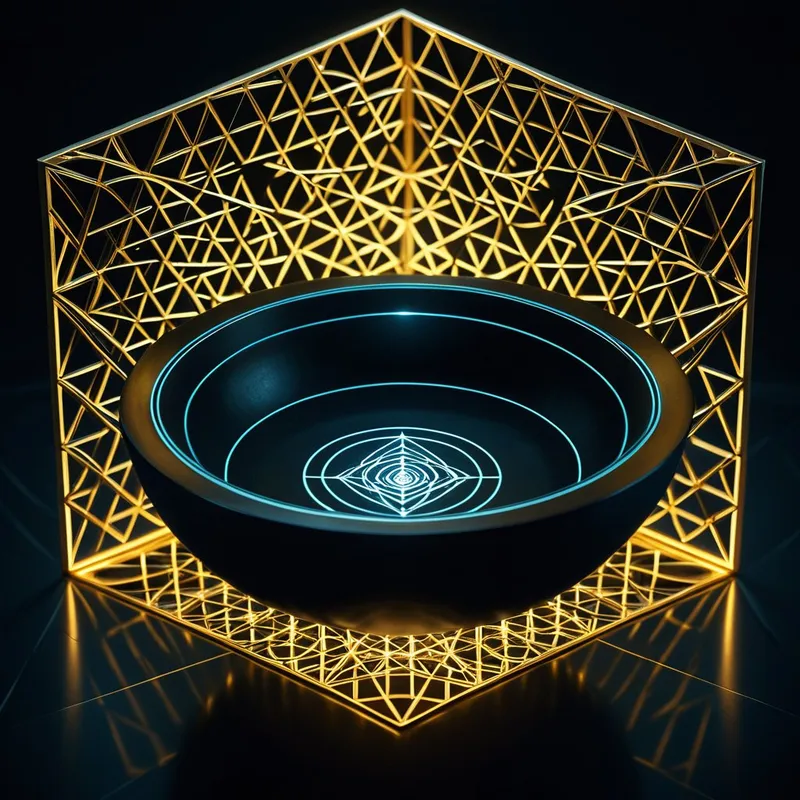
The [Bowl](/symbols/bowl “Symbol: A bowl often represents receptivity, nourishment, and emotional security, symbolizing the dreamer’s needs and desires.”/) of the [Buddha](/symbols/buddha “Symbol: The image of Buddha embodies spiritual enlightenment, peace, and a quest for inner truth.”/) is a master [symbol](/symbols/symbol “Symbol: A symbol can represent an idea, concept, or belief, serving as a powerful tool for communication and understanding.”/) of the [psyche](/myths/psyche “Myth from Greek culture.”/)’s fundamental orientation toward [reality](/symbols/reality “Symbol: Reality signifies the state of existence and perception, often reflecting one’s understanding of truth and life experiences.”/). It is not a [symbol](/symbols/symbol “Symbol: A symbol can represent an idea, concept, or belief, serving as a powerful tool for communication and understanding.”/) of accumulation, but of sacred receptivity.
The ultimate vessel is not defined by what it holds, but by its perfect, willing emptiness. It is the precondition for receiving grace, knowledge, and sustenance.
The Four Bowls from the Lokapālas represent the totality of the worldly [cosmos](/symbols/cosmos “Symbol: The entire universe as an ordered, harmonious system, often representing the totality of existence, spiritual connection, and the unknown.”/)—the four directions, the elements, the [spectrum](/symbols/spectrum “Symbol: A continuum of possibilities, representing diversity, transition, and the full range of existence from one extreme to another.”/) of [human](/symbols/human “Symbol: The symbol of a human represents individuality, complexity of emotions, and social relationships.”/) experience from the base ([stone](/symbols/stone “Symbol: In dreams, a stone often symbolizes strength, stability, and permanence, but it may also represent emotional burdens or obstacles that need to be acknowledged and processed.”/)) to the refined (gold). The Buddha’s refusal to choose one is a [rejection](/symbols/rejection “Symbol: The experience of being refused, excluded, or dismissed by others, often representing fears of inadequacy or social belonging.”/) of partiality, of favoring one [aspect](/symbols/aspect “Symbol: A distinct feature, quality, or perspective of something, often representing a partial view of a larger whole.”/) of reality over another. His act of merging them into one simple [stone](/symbols/stone “Symbol: In dreams, a stone often symbolizes strength, stability, and permanence, but it may also represent emotional burdens or obstacles that need to be acknowledged and processed.”/) bowl is the alchemical coincidentia oppositorum—the unification of opposites into a transcendent, common form. The stone speaks of groundedness, humility, and the essential, unadorned [nature](/symbols/nature “Symbol: Nature symbolizes growth, connectivity, and the primal forces of existence.”/) of mind.
The bowl’s [emptiness](/symbols/emptiness “Symbol: Emptiness signifies a profound sense of void or lack in one’s life, often related to existential fears, loss, or spiritual quest.”/) is its primary [virtue](/symbols/virtue “Symbol: A moral excellence or quality considered good, often representing inner character, ethical principles, or spiritual ideals in dreams.”/). It symbolizes Śūnyatā itself—the liberating realization that all phenomena are empty of independent, permanent self. A full bowl is limited, defined, and complete. An empty bowl is boundless, undefined, and pregnant with potential. It is the mind free of preconceptions, the [heart](/symbols/heart “Symbol: The heart symbolizes love, emotion, and the core of one’s existence, representing deep connections with others and self.”/) free of conditions, ready to receive [truth](/symbols/truth “Symbol: Truth represents authenticity, honesty, and the quest for knowledge beyond mere appearances.”/) as it is.
The Dreamer’s Resonance
When the image of this sacred bowl surfaces in modern dreams, it often signals a critical phase in what depth psychology calls the receptivization of [the ego](/myths/the-ego “Myth from Jungian culture.”/). The dreamer may be exhausted by striving, by the effort to fill themselves with achievements, identities, or knowledge. The psyche presents the bowl as an antidote.
To dream of receiving an empty bowl can feel like a disappointment or a profound relief. Somatically, it may correlate with a feeling of hollow openness in the gut or chest—not as anxiety, but as a strange, peaceful vacancy. Psychologically, the dreamer is being initiated into a new relationship with their own needs and the world’s offerings. It asks: Can you hold space without needing to fill it? Can you accept what comes without demanding what you want?
To dream of offering into a bowl, especially the Buddha’s bowl, points to the integration of one’s own “gifts”—not just talents, but one’s wounds, vulnerabilities, and raw experiences—into a container of higher meaning. The act of offering transforms the giver, signaling a readiness to contribute one’s particular life to a transpersonal process.

Alchemical Translation
The myth models the complete arc of psychic transmutation, or individuation. It begins with the Empty Ego (the Buddha with no bowl). This is not a state of poverty, but of supreme attainment—the ego has been dissolved in the fire of enlightenment, leaving a pure, receptive consciousness.
The Conflict of the Four represents the psyche’s fragmented state—the competing complexes, the inner voices of king, warrior, merchant, and laborer (the four directions). The ego, still identified with one complex (choosing one bowl), creates inner strife and partiality.
The alchemical work is not to destroy these four, but to submit them to a greater unifying principle. The pressure that fuses the bowls is the conscious, disciplined application of attention—meditation itself.
The Fused Stone Bowl is the nascent Self. It is humble, grounded, and common, yet it secretly contains the richness of all psychic life. It is [the vessel](/myths/the-vessel “Myth from Alchemical culture.”/) of the individuated personality. The final, ongoing stage is the Alms Round—the lived life. Here, the transformed Self moves through the world, receiving experiences (the alms) without greed or aversion. Each experience, whether bitter or sweet, is metabolized within the container of awareness into wisdom and compassion, nourishing the individual and, by extension, the world around them. The bowl is never permanently full or empty; it is in a constant, sacred cycle of receiving, transforming, and emptying again—the very rhythm of a conscious life.
Associated Symbols
Explore related symbols from the CaleaDream lexicon: