Bodhi Myth Meaning & Symbolism
The story of a prince's renunciation, struggle, and ultimate awakening beneath a sacred tree, illuminating the path from ignorance to enlightenment.
The Tale of Bodhi
Beneath a sky heavy with the promise of stars, in a land caught between the scent of jasmine and the dust of sorrow, there walked a man who was once a prince. His name was Siddhartha, but the crown was a memory, and the silks were now the rough cloth of a wanderer. For years, he had walked the earth’s razor edge, seeking an answer to the great wound of existence: the relentless cycle of birth, aging, sickness, and death that held all beings in its grip. He had sat at the feet of masters, his mind becoming a vast, empty plain. He had pushed his body to the brink of annihilation, his ribs like a cage beneath his skin, believing freedom lay in the denial of the flesh. Yet the answer remained hidden, a whisper just beyond the hearing of his soul.
Exhausted, his body a testament to failed paths, he came to the banks of the Niranjana River. A village woman named Sujata saw not a failed ascetic, but a being of luminous potential. She offered a bowl of sweet milk-rice. He accepted it, a simple act that shattered the dogma of self-punishment. Strength, not weakness, flowed back into his limbs. He knew then that the truth was not in extremity, but in a middle way.
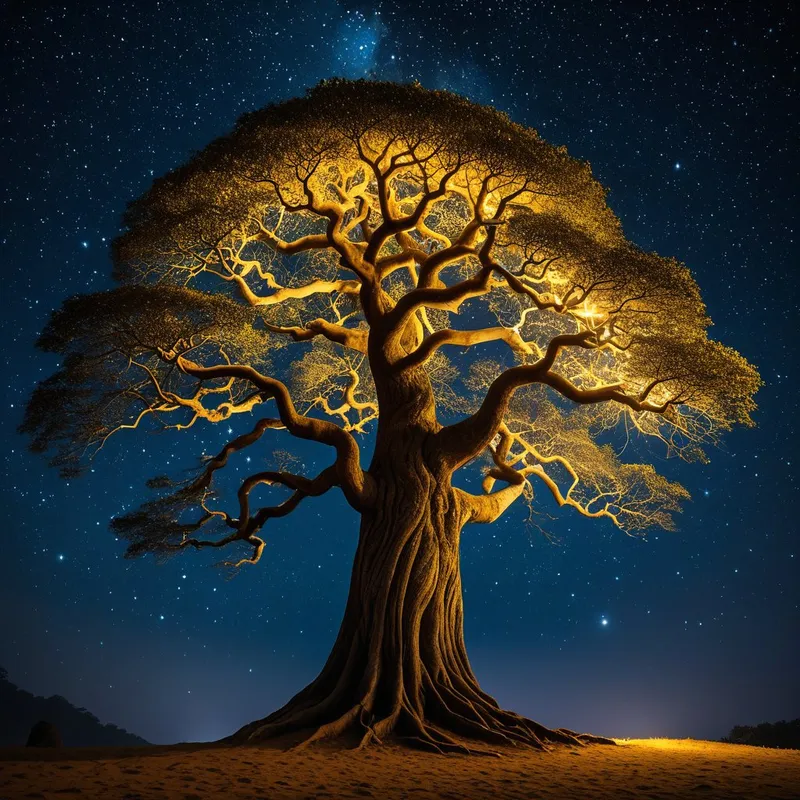
With renewed resolve, he crossed the river and found a seat beneath a great, spreading pipal tree. He made a vow, as solid as the earth beneath him: “Though only my skin, sinews, and bones remain, and my blood and flesh dry up and wither away, I will not stir from this seat until I have attained full awakening.” The air grew still. The tree’s heart-shaped leaves ceased their rustling. He turned his attention inward, diving into the depths of his own mind.
Then came the assault. Mara, the lord of illusion and desire, the great deceiver, rose in fury. This was his domain—the realm of clinging, fear, and sensory delight—and a mortal sought to break its chains. Mara unleashed his army: visions of terrifying demons with weapons of flame and claw, seductive daughters whispering promises of sensual bliss, and waves of doubt that hissed, “Who are you to claim such knowledge?” The seated figure remained unmoved, his mindfulness an unshakable pillar. In a final gambit, Mara demanded a witness to his right to the seat of enlightenment. Siddhartha reached down and touched the earth. The very planet, Bhumi, thundered her response, validating his countless lifetimes of virtue. Mara’s host vanished like mist in dawn light.
Alone again beneath the tree, his gaze turned to the ultimate truths. In the first watch of the night, he perceived his past lives, the endless procession of forms he had taken. In the second watch, he saw the law of karma governing all beings, rising and falling according to their actions. In the final watch, as the morning star Venus pierced the velvet dark, he penetrated the Four Noble Truths: the reality of suffering, its cause in craving, its cessation, and the path leading to its end. The last vestiges of ignorance burned away. The cosmic knot of dependent arising unraveled in his understanding. At that moment, he was no longer Siddhartha the seeker. He was the Buddha. The Bodhi tree itself seemed to shimmer, its every leaf a testament to the awakening that had occurred in its shelter.

Cultural Origins & Context
The story of the Bodhi is not a singular, frozen myth but the living heart of the Buddhist tradition, originating in the Gangetic plains of India in the 5th century BCE. It is the central narrative of the historical Buddha, Siddhartha Gautama. Initially transmitted orally by the Sangha, it was a foundational story recited to inspire renunciants and lay followers alike. Its primary function was paradigmatic: it established the model for the path to liberation (Nirvana). It moved from oral recitation into canonical texts like the Suttas and later, elaborate artistic depictions in places like Nalanda and the caves of Ajanta. The tale served to validate the Buddha’s authority as a teacher, illustrate the efficacy of the Middle Way, and provide a potent symbol—the Bodhi tree itself—for devotion and contemplation. It is a myth of historical aspiration, a map etched not in geography, but in consciousness.
Symbolic Architecture
The myth of Bodhi is a masterful blueprint of the psyche’s journey from fragmentation to wholeness. Every element is a living symbol.
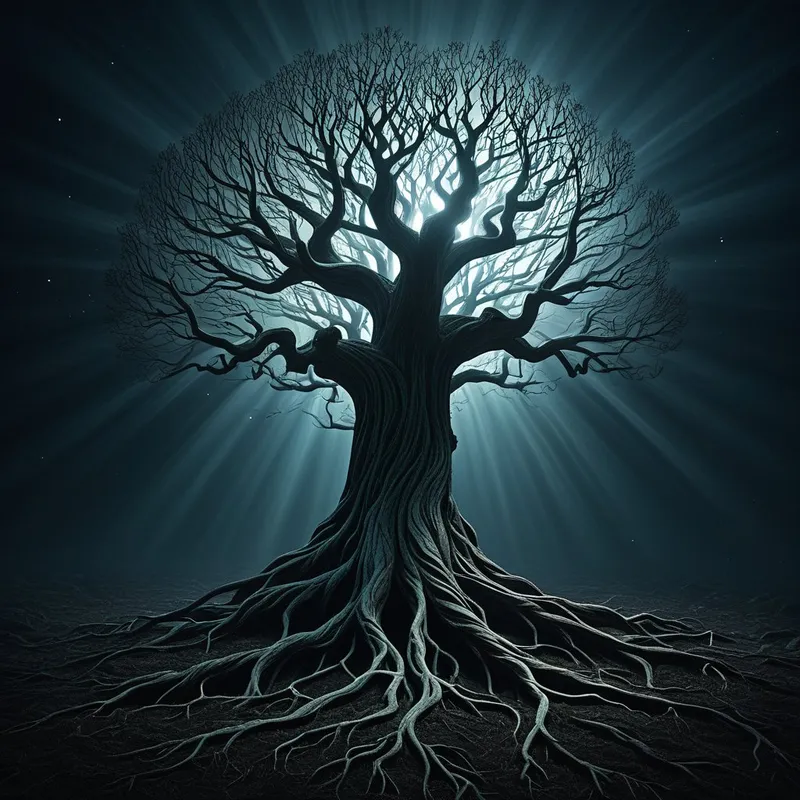
The Bodhi tree is not merely a location; it is the axis mundi of the self, the rooted, living center where the chaos of the personal and collective unconscious can be confronted and integrated.
Siddhartha represents the ego-consciousness that has become acutely aware of life’s inherent suffering (dukkha) and is driven to seek beyond conventional answers. His extreme asceticism symbolizes the psyche’s misguided attempt to transcend the human condition by violently rejecting one half of reality (the body, the world). Sujata’s offering is the crucial intervention of the nurturing, life-affirming principle—the Self’s insistence on balance and wholeness. The seat beneath the tree is the sacred, immovable point of centered awareness from which true observation can occur.
Mara is the personification of the entire personal and collective shadow. He is not an external devil, but the sum total of our psychological resistances: our cravings, fears, arrogance, and deep-seated attachments to identity and comfort. His defeat via the “touching the earth” (Bhumisparsha Mudra) is profoundly significant. It represents grounding consciousness in reality, in embodied experience, and in the accumulated truth of one’s own lived journey. Victory comes not by fighting the shadow with its own weapons, but by bearing witness to a deeper, more authentic ground of being.
The Dreamer's Resonance
When the archetype of Bodhi stirs in the modern dreamer, it often heralds a profound psychological crisis and potential rebirth. One may dream of being trapped in a sterile, mechanistic city (the palace of worldly life) and feeling a desperate, wordless pull toward a distant, luminous tree in a wild landscape. Another may dream of being assailed by chaotic, frightening figures—not monsters, but distorted versions of colleagues, family members, or aspects of the self—while trying to remain focused on a simple, central task like lighting a candle or holding a stone.
Somatically, this process can feel like a painful unraveling. The dreamer may experience a period of intense anxiety, insomnia, or a sense of meaninglessness—the “dark night of the soul” that precedes the dawn of Bodhi. It is the psyche’s equivalent of Mara’s assault, where repressed contents and outdated identities rise up for a final, desperate battle against the emerging, more authentic self. The dream imagery calls for the cultivation of that seated, earthy witness within—the part that can observe the internal storm without being destroyed by it.
Alchemical Translation
The alchemy of Bodhi is the transmutation of leaden, suffering-bound consciousness into the gold of liberated awareness. It is the individuation process in its most distilled form.
The enlightenment under the tree is not an acquisition of something new, but the realization of what has always been present, obscured by the slag of conditioned thought and reactive emotion.
For the modern individual, the “Middle Way” is the psychological path of holding tension without collapsing into opposites. It is the work of acknowledging one’s shadow (Mara) without identifying with it, and honoring one’s humanity (Sujata’s nourishment) without being enslaved by it. The “seat” of awakening is the cultivated capacity for mindful self-observation, the inner space where one can watch the play of thoughts and feelings without immediately being drafted into their drama.
The final “touching the earth” is the ultimate integration. It is the moment when transcendent insight (prajna) becomes fully embodied, grounded in compassion (metta) and right action in the world. The awakened one does not float away into abstraction; they become more fully, compassionately human. The alchemical gold is this unified state: a consciousness that is both fully awake to the ultimate nature of reality and fully engaged in the relative world with wisdom and care. The myth of Bodhi thus remains an eternal map, not to a physical place, but to the uncharted territory of our own deepest nature, waiting to be realized beneath the Bodhi tree of our own attentive heart.
Associated Symbols
Explore related symbols from the CaleaDream lexicon: