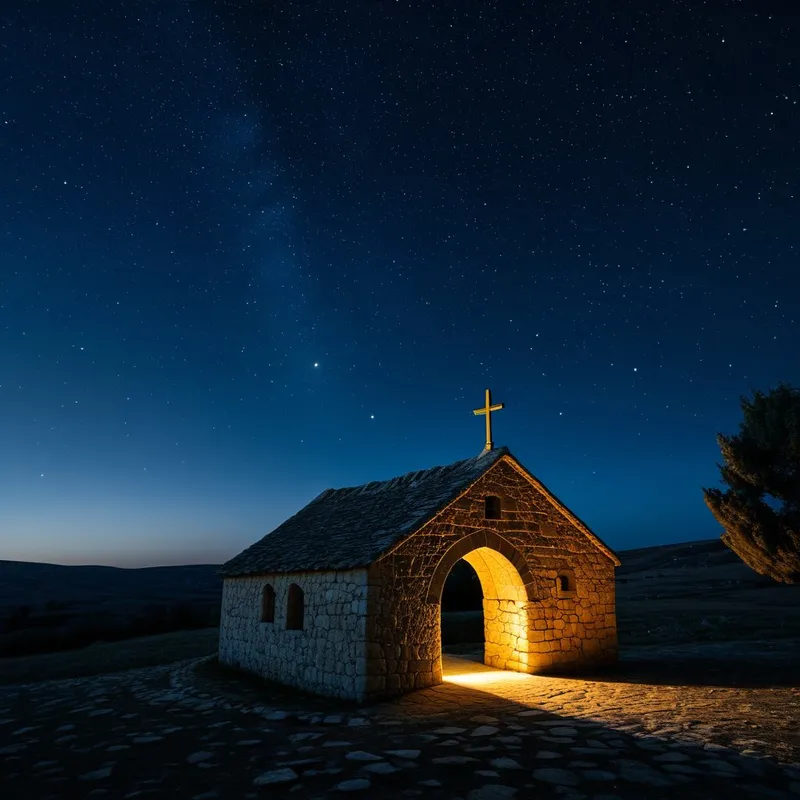
Bethlehem stable Myth Meaning & Symbolism
In a forgotten stable, a child is born under a star, heralding a new world not in palaces, but in the quiet heart of the mundane.
The Tale of Bethlehem stable
Listen. The world was heavy, a stone waiting to be rolled away. Empires carved their names in granite, and kings slept in beds of gold, yet the air was thick with a silent longing, a hunger no feast could satisfy. The heavens themselves held their breath.
In those days, a decree went out from Caesar Augustus, a ripple of imperial will that reached even the forgotten corners. And so a man named Joseph, of the line of David, traveled from Nazareth to the city of David, which is called Bethlehem. With him was his betrothed, Mary, great with child. The journey was dust and ache, the road crowded with the displaced.
They arrived under a cloak of twilight, the small city swollen beyond its walls. Door after door was shut, the inns full of noise and commerce. No room. The phrase became a refrain, a closing against them. The night deepened, and the pangs of birth began, urgent and inescapable. The world had no space for this event.
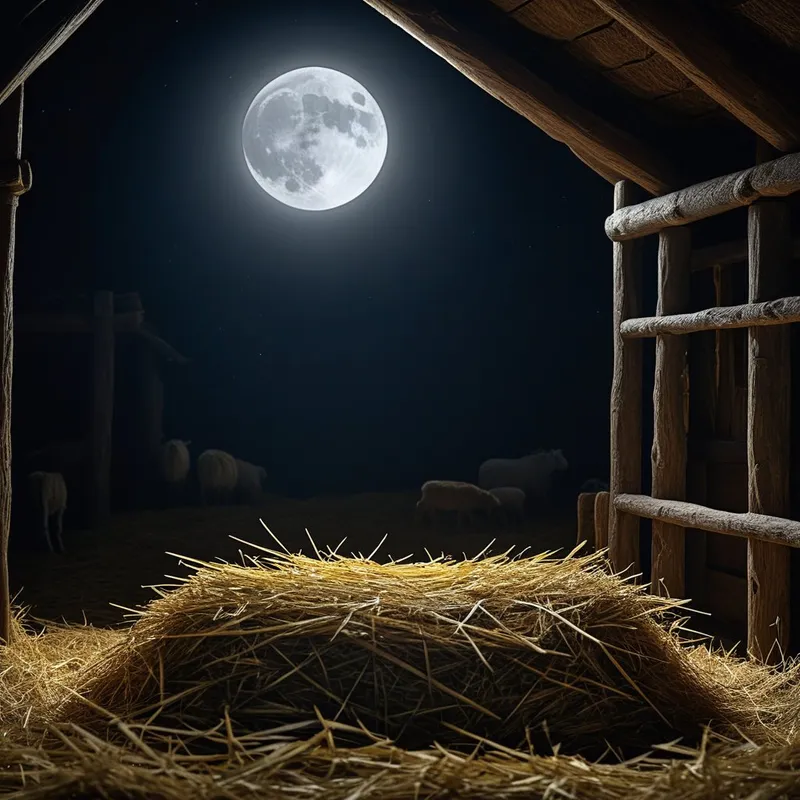
But on the outskirts, where the scent of earth and animal was strong, there was a stable. A cave or a lean-to, a place of hay and warmth and quiet breath. Here, where beasts of burden rested, they found shelter. Here, in the absence of a human bed, a manger was lined with clean straw. And there, in that humble hollow, beneath the patient gaze of creatures, Mary brought forth her firstborn son. She wrapped him in simple cloths and laid him in the manger.
Above, the held breath of heaven was released. A star, fierce and singular, burned a hole in the fabric of the night, its light a silent trumpet call. In the fields nearby, shepherds keeping watch over their flocks were seized not by fear, but by a dazzling awe as the glory of the Shekinah shattered the ordinary dark. A message rang out: "Be not afraid; for behold, I bring you good news of a great joy which will come to all the people; for to you is born this day a Savior." And the sign was given: a babe, wrapped, lying in a manger.
They came, these rough-handed men, and found the sign to be true. They saw the child in the feeding trough, the mother, the silent guardian Joseph. And in that stable—amidst the scent of hay and animal, under the watchful eye of the star—the universe pivoted. The Word was made flesh not in a palace, but in the place where the most basic needs are met. The new world began not with a fanfare in the city square, but with a first cry in the quiet, sacred dark of a stable.
Cultural Origins & Context
This narrative, found in the Gospel of Luke, emerged within a Hellenistic Jewish community several decades after the events it describes. It was not a historical report in the modern sense, but a theological story told to answer a profound question: How did the Messiah enter the world? Its function was identity-forming and polemical.
Told among communities who were often poor, marginalized, and living under Roman occupation, the story performed crucial cultural work. It directly subverted the imperial narrative of power. Caesar’s decrees moved populations, but God’s decree moved the heavens. True kingship was revealed in vulnerability, not in opulence. The primary audience—early Christians—would hear a powerful reassurance: God’s action is often hidden from the centers of power, revealed instead to the humble (the shepherds, who were often considered ritually unclean and unreliable) and occurs in the most unexpected, "unclean" places. The story was passed down orally within worship and teaching before being crystallized in text, serving as a foundational myth that defined the character of the divine as one of radical humility and solidarity.
Symbolic Architecture
The stable is the central, transformative symbol. It represents the vas, the sacred vessel of alchemy, the humble container where the impossible transformation occurs.
The most profound alchemy does not require a golden crucible, but a heart made vessel.
The manger is a symbol of profound inversion. It is a feeding trough, a place where creatures consume to sustain physical life. Here, it cradles the one who will be called "the bread of life." The place of consumption becomes the place of ultimate offering. The angels appearing to shepherds signify that this revelation bypasses religious and social elites; the "good news" is first for the outcast and the laborer. The star represents the cosmos itself recognizing and bowing to a new order, a divine pattern imprinting itself on earthly reality.
Psychologically, the stable is the neglected, forgotten, or "animal" aspect of the self—the instinctual, the humble, the unadorned psyche. It is the shadowy inner space we deem unfit for anything sacred. The myth insists that the birth of the Self, the emergence of conscious wholeness, must occur here, in this rejected place. The palace of the ego, the "inn" that is full of noise and persona, has no room for this transformative event.

The Dreamer's Resonance
When this mythic pattern stirs in the modern dreamer, it often manifests as dreams of finding something precious—a child, a gem, a work of art—in a dumpster, a garage, a basement, or a neglected room in one's own house. The somatic feeling is one of simultaneous awe and incongruity; a sacred discovery amidst the mundane or the discarded.
This dream signals a critical psychological process: the ego is being confronted with the location of its own renewal. The dreamer may be intellectually seeking growth through external achievements (the "inns" of career, status, perfected self-image), but the psyche is directing them inward, to the stable. This is the place of raw instinct, forgotten potentials, and unprocessed humiliations. The process underway is the painful yet necessary acceptance that wholeness will not be found in further polish of the persona, but in the courageous visitation and sanctification of the inner "lowly" places. There is a labor happening here—the birth pangs of a new attitude.
Alchemical Translation
The myth of the Bethlehem stable is a perfect map for the alchemical stage of nigredo, where the base material is broken down in darkness, leading to the albedo of new birth.
The journey to Bethlehem under imperial decree is the conscious life forced into a crisis, a census of the soul that demands we return to our origins (the city of David). The "no room at the inn" is the necessary failure of the ego's projects to house the Self. This rejection forces the psyche into the stable—the humble, animalistic, unconscious substratum.
The birth of consciousness requires a manger: a humble, receptive hollow in the substance of the world, where spirit takes on the flesh of reality.
Here, in that acceptance of lowliness, the divine child archetype is born. This is the nascent, vulnerable, yet transformative new potential within. The shepherds—representing the instinctual, guiding functions of the psyche—are the first to acknowledge it. The star is the guiding light of intuition, confirming the meaning of the event from the transpersonal realm.
For the modern individual, the alchemical translation is clear: your transformation, your true becoming, will not be announced in the bright lights of your curated life. It will whisper its arrival in your moments of humility, in the acceptance of your limitations, in the forgotten corners of your past, and in the raw, unprocessed material of your pain. You must go to your Bethlehem, be turned away from the inns of expectation, and kneel in the stable of your own humble reality. There, and only there, does the new consciousness take its first breath.
Associated Symbols
Explore related symbols from the CaleaDream lexicon: