Baiame the Sky Father Myth Meaning & Symbolism
The story of the All-Father who shaped the world, gave the Law, and departed, leaving humanity to walk in his sacred footprints.
The Tale of Baiame the Sky Father
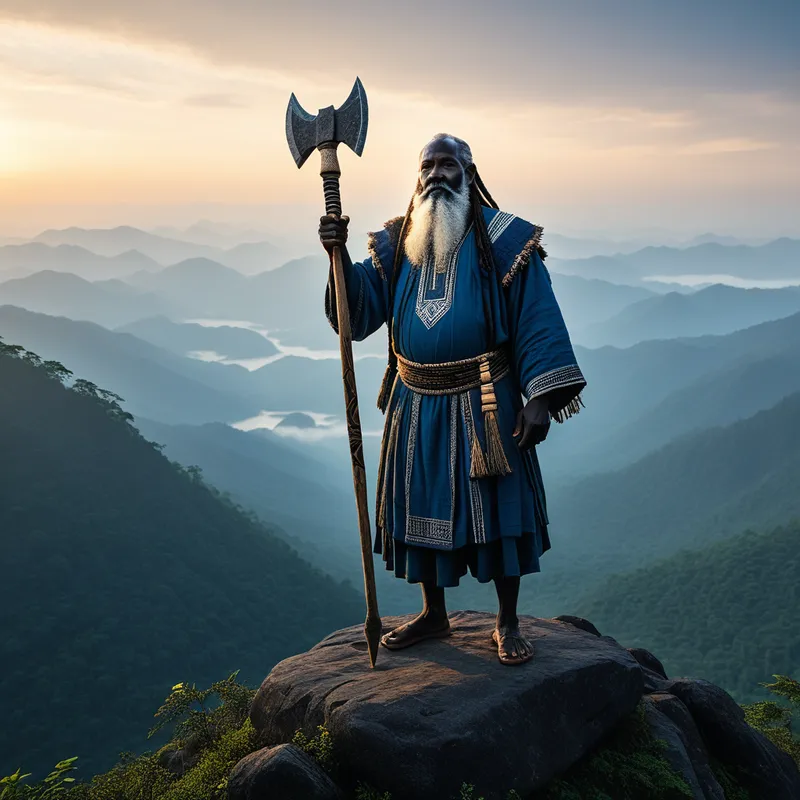
In the time before time, in the Dreaming, the world was a formless, sleeping thing. Then, from the great void of the east, he came. Baiame the Sky Father. His footsteps were thunder, his breath the first wind. He was vast, bearded, and luminous, a being of pure Djang.
He looked upon the flat, silent earth and began to sing. His song was not mere sound; it was the vibration of creation itself. Where he walked, mountains heaved themselves from the plains, their bones the stone of the law. He dragged his great stone axe across the land, and where it scored the earth, rivers sprang forth, singing their way to the sea. He opened his hands and scattered the seeds of the first forests, of the gnarled gum and the whispering grass.
But the world was empty of life. So Baiame took the red ochre from the sacred earth and, mixing it with his own breath and the morning dew, he fashioned the first people. He painted them with the patterns of their clans, the designs of their destiny, and breathed into them the spirit of life. He showed them the plants for food and medicine, the trees for shelter and tools. He gave them fire to warm their camps and light the long nights.
Then, from the sky, he brought down the great Emu, placing it in the heavens as a constellation, a eternal reminder of the hunt and the balance of life. He established the sacred sites—the waterholes, the mountain peaks, the stone arrangements—and connected them with invisible pathways of power: the Songlines.
His final and greatest gift was the Law. Gathered his children on a sacred mountain, Baiame spoke not with a voice, but directly into their hearts. He gave them the laws of kinship, of marriage, of ceremony. He taught them right relationship with every rock, creature, and stream. He showed them the dances and the songs that would keep the world in balance, that would remember the Dreaming.
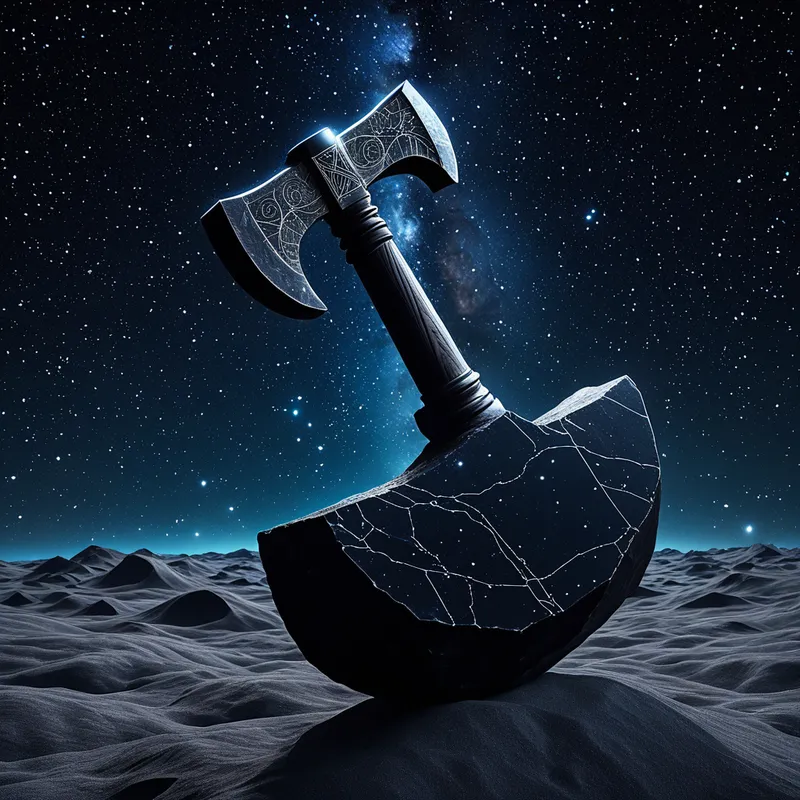
When his work was complete, Baiame did not die. He turned, and with a final, long look of deep love and stern expectation at the world he had sung into being, he began to ascend. He climbed a great, invisible ladder at a place called Googoorewon. With each step, his earthly form faded, until he merged entirely with the sky. He became the sky, watching forever, his eyes the twin stars we call the Pointers. He left behind his stone axe, embedded in the earth, and his giant footprints filled with water, becoming life-giving springs. He left his people not as orphans, but as custodians, with the Law in their hearts and the Song in their feet.
Cultural Origins & Context
The stories of Baiame are central to the spiritual life of many Aboriginal nations across southeastern Australia, including the Kamilaroi, Wiradjuri, and Wonnarua peoples. This is not a singular, monolithic myth but a living tapestry of interconnected stories, ceremonies, and laws that vary between language groups and custodial lineages. The myth was never written; it was—and is—carried in the oral tradition, enacted in elaborate corroborees, painted on rock shelters and bodies, and encoded in the landscape itself.
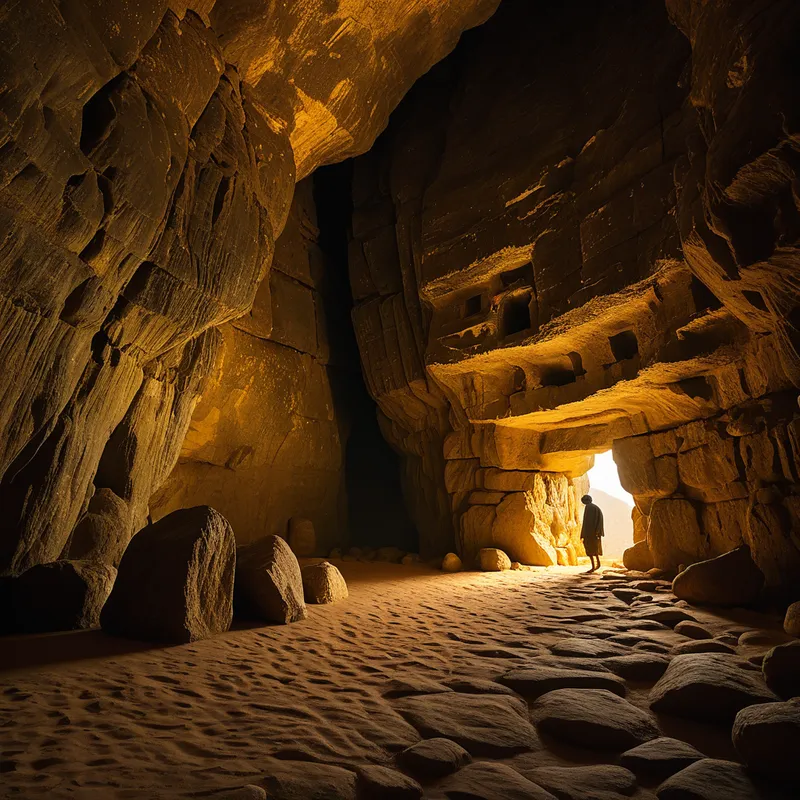
Knowledge of Baiame was traditionally restricted, passed down through initiated elders—the lore-keepers. Sacred sites like Baiame Cave in New South Wales, with its awe-inspiring painting of the Sky Father, served as focal points for teaching and ceremony. The myth’s primary function was ontological and sociological: it explained the origin and structure of the universe, established an immutable moral and social order (the Law), and inextricably linked human identity and responsibility to a specific, sacred geography. To know the story of Baiame was to know who you were, who your kin were, and how to walk correctly upon your country.
Symbolic Architecture
Baiame represents the archetypal principle of the Cosmic Father. He is not a distant, clockwork god, but an immanent, shaping presence whose act of creation is an act of love and law-giving. His departure is not an abandonment, but the necessary completion of the creative act, forcing psychic independence and responsibility onto his creation.
The Sky Father does not rule from a distant throne; he becomes the canopy of law under which all life must grow, and the watchful eye that sees every breach of the sacred order.
His tools are profoundly symbolic. The stone axe is the instrument of differentiation—it cuts the riverbeds, separating water from land, carving order from chaos. The footprints are the imprint of the divine upon the mundane, a template for the human journey. The ladder signifies the axis between worlds, the pathway of spirit. His ascent represents the withdrawal of the conscious creative impulse into the unconscious (the sky), leaving the conscious world (the earth) to manifest and maintain what has been dreamed into being.
The Dreamer's Resonance
When the pattern of Baiame emerges in the modern psyche, it often manifests in dreams of immense, benevolent, yet authoritative figures—grandfathers, wise kings, or luminous giants who bestow a gift or deliver a crucial instruction before vanishing. The dreamer may find themselves in a pristine, newly formed landscape, or discover a sacred, man-made object (a tool, a stone) of immense power and antiquity.
Somatically, this can feel like a profound grounding, followed by a surge of creative or moral responsibility. Psychologically, it marks the emergence of the inner Ruler. The dreamer is undergoing a process where a new, overarching principle of order is being established in their personal cosmos. It is the end of an inner chaos and the beginning of a self-governance based on deeper, more sacred laws. The poignant feeling of the figure’s departure mirrors the necessary loneliness of stepping into one’s own authority.

Alchemical Translation
The myth of Baiame models the alchemical process of Coagulatio—the spiritualization of matter and the giving of durable form to spirit. For the modern individual, the journey is one of conscious world-building and law-making within one’s own soul.
First, we must confront our own formless, chaotic inner landscape—the unmapped potential of the psyche. The Baiame within is that potent, creative force that can "sing" this chaos into order: establishing healthy internal boundaries (rivers), building structures of discipline (mountains), and populating our inner world with the seeds of potential (ideas, talents). The gift of the Law is the crucial, often difficult, stage of creating an internal ethical code, a personal constitution by which to live. This is not about external rules, but the discovery of one’s own sacred Songline—the authentic path that aligns with one’s deepest nature.
The ultimate sacrifice of the Sky Father is the sacrifice of omnipotent control. For the individual, this translates to the release of the ego’s need to micromanage life, trusting that once the inner law is established, the self can operate with sovereignty.
Finally, the ascent is the integration of this creative, ruling principle. We do not become Baiame; we internalize him. The conscious ego, having received the gifts and the law, must let the archetype recede back into the unconscious sky of the psyche, from where it watches as our conscience and guiding star. We are left standing on the earth of our daily lives, holding the stone axe of our will, responsible for maintaining the world we have been given the power to shape.
Associated Symbols
Explore related symbols from the CaleaDream lexicon:
- Father — The primordial source of structure, law, and benevolent authority, representing the archetypal principle that brings order from chaos and establishes the foundational rules of existence.
- Sky — The realm of the transcendent, the cosmic law, and eternal watchfulness; the domain into which Baiame ascends, becoming the all-encompassing canopy of consciousness.
- Stone — The embodiment of permanence, law, and sacred truth; represented by Baiame's axe and the sacred sites he established, which anchor the Dreaming in the physical world.
- Mountain — The axis mundi, the meeting point between earth and sky; the sacred place where Baiame delivered the Law and from which he began his ascent.
- Water — The life-force released by creation; seen in the rivers Baiame carved and the life-giving springs that formed in his footprints, symbolizing the flow of spiritual sustenance.
- Journey — The sacred walk of creation itself, mapped by Baiame's footsteps which become the Songlines, the eternal pathways of meaning and connection across the land.
- Order — The supreme gift of the Sky Father, the intricate system of kinship, ecology, and ceremony that maintains balance and harmony in the world.
- Dream — The foundational state of the Dreaming from which all reality is sung into being; the timeless dimension where Baiame's creative acts eternally reside.
- Origin — The absolute beginning point, the moment of emergence from the formless void, encapsulated by Baiame's arrival from the east to initiate the world.
- Law — The immutable spiritual and social code given by Baiame, which governs all relationships and ensures the continuity of the sacred balance of life.