Athanor Myth Meaning & Symbolism
The Athanor is the eternal, self-sustaining furnace of alchemy, a mythic vessel where base matter and spirit endure the sacred fire of transformation to become gold.
The Tale of Athanor
Listen, and I will tell you of the vessel that is not a vessel, the fire that is not a flame. In the beginning of the Great Work, there was only the chaos of the Prima Materia, a dark, swirling sea of potential and longing. The early seekers, with their crude fires and brittle crucibles, watched their hopes shatter. Their flames were too fierce, consuming all; or too weak, leaving only dross. Their vessels cracked under the strain of the spirit, and the secret of the Lapis Philosophorum seemed a cruel jest whispered by the stars.
Then, in the silent watch of a soul-deep night, the vision came. It was not given to kings, but to the patient ones, those who had learned to listen to the hum of the earth and the slow breath of the metals. They saw in their mind’s eye a structure born of necessity and grace: the Athanor.
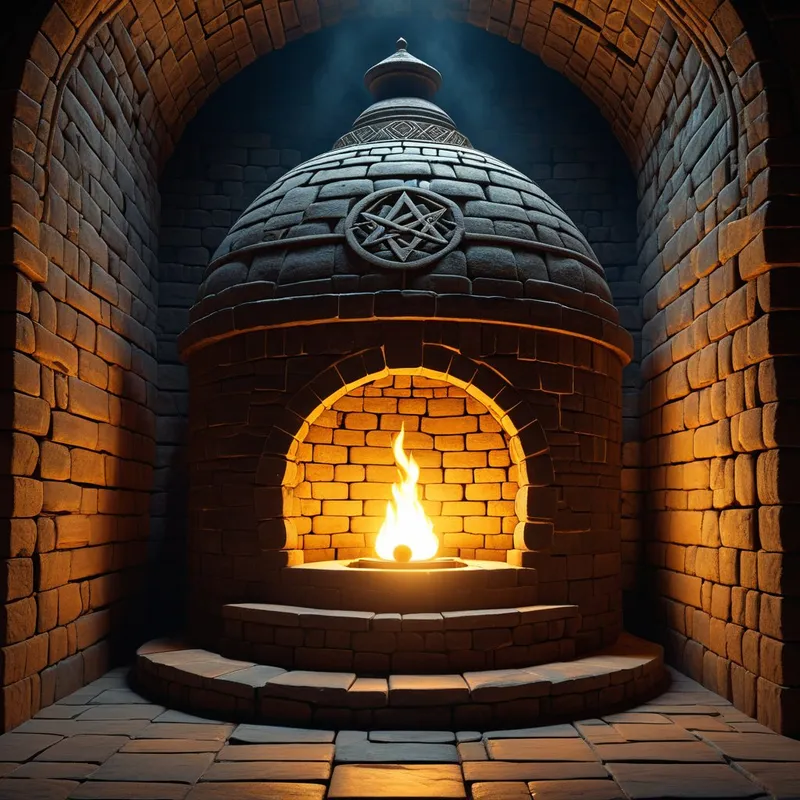
It rose from the foundation of the world—a tower of fire-brick and stubborn clay, shaped like the egg that contains all worlds. Its heart was not a raging pit, but a chamber of perfect, measured heat, fed by a labyrinth of flues that breathed like a sleeping dragon. Its fire was not stolen from the hearth, but born from its own design, a self-renewing glow that required no bellows, only the subtle art of balance. The alchemist did not command this fire; they became its tender, its guardian. They learned the rhythm of its warmth, a heat so constant and gentle it could coax a stone to bloom.
Into its side, they placed the sealed vessel, the Hermetic Vase, holding the compounded mystery of soul and substance. And then began the vigil. Not for hours, but for seasons. Not for days, but for the turning of a life. The Athanor stood unwavering through the outer storms and the inner winters of doubt. Within its embrace, the matter underwent its sacred passion: the blackening of Nigredo, the whitening of Albedo, the yellowing of Citrinitas, and at the long last, the glorious reddening of Rubedo.
The triumph was not an explosion, but a dawning. When the work was complete, the alchemist opened not a furnace, but a womb. And within, shining with its own inner light, was the fruit of the enduring fire: not common gold, but the living gold of a spirit refined. The Athanor had done its work. It had held the tension of opposites, sustained the necessary heat, and in its silent, constant presence, made the impossible, gradual.
Cultural Origins & Context
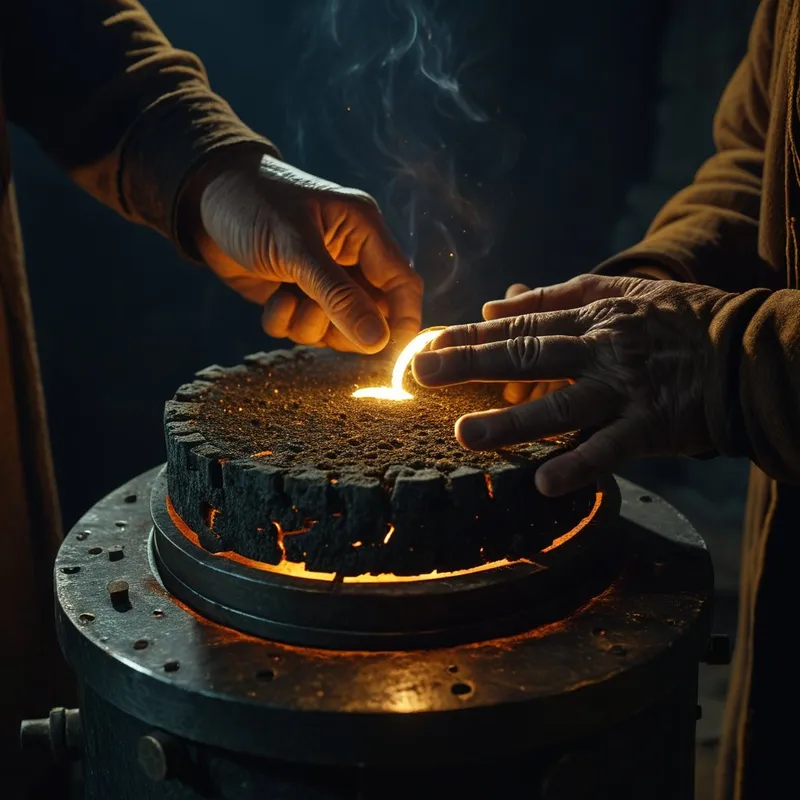
The myth of the Athanor is not a narrative of gods and heroes, but a procedural legend born from the crucible of European Hermeticism between the 12th and 17th centuries. It emerged from the coded manuscripts and laboratory journals of practitioners who saw their work as a divine art, the Opus Magnum. Unlike public myths, this was an esoteric teaching, passed master to apprentice, hidden in allegorical illustrations of dragons, kings, and strange furnaces.
Its societal function was dual. On the exoteric level, it was a technical ideal: the perfect, self-regulating furnace that solved the practical problem of maintaining a constant, low heat for the months or years a transmutation was believed to require. On the esoteric level, it was the central metaphor for the disciplined container of the work itself—both the physical laboratory and the alchemist’s own life and mind. The myth taught that transformation cannot be rushed; it requires a vessel strong enough to hold the process and a fire sustained not by frenzy, but by unwavering, patient application. It was a myth for initiates, a map for those willing to undertake the long journey of the soul.
Symbolic Architecture
Psychologically, the Athanor represents the contained and self-sustaining process of individuation. It is the total psychic environment we must create and maintain to undergo profound change.
The Athanor is not the fire of inspiration, but the hearth that keeps it burning through the long, dark night of the soul.
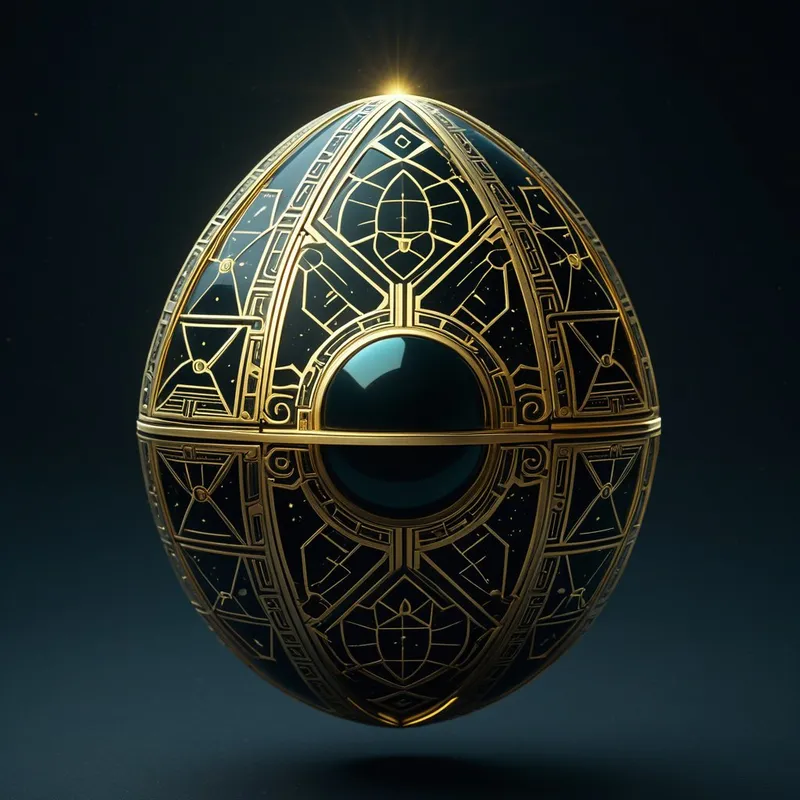
The furnace’s egg-shape symbolizes the Vas, the sealed universe of the work and the totality of the psyche. Its brick and clay construction signifies the earthly, disciplined, and often mundane efforts required to build a stable inner life—our routines, commitments, and practices. The self-feeding fire is the paradox of the work: the energy for transformation is generated from the process of transformation itself. It represents the moment when tending to our growth ceases to be a draining effort and becomes a source of its own renewal and warmth.
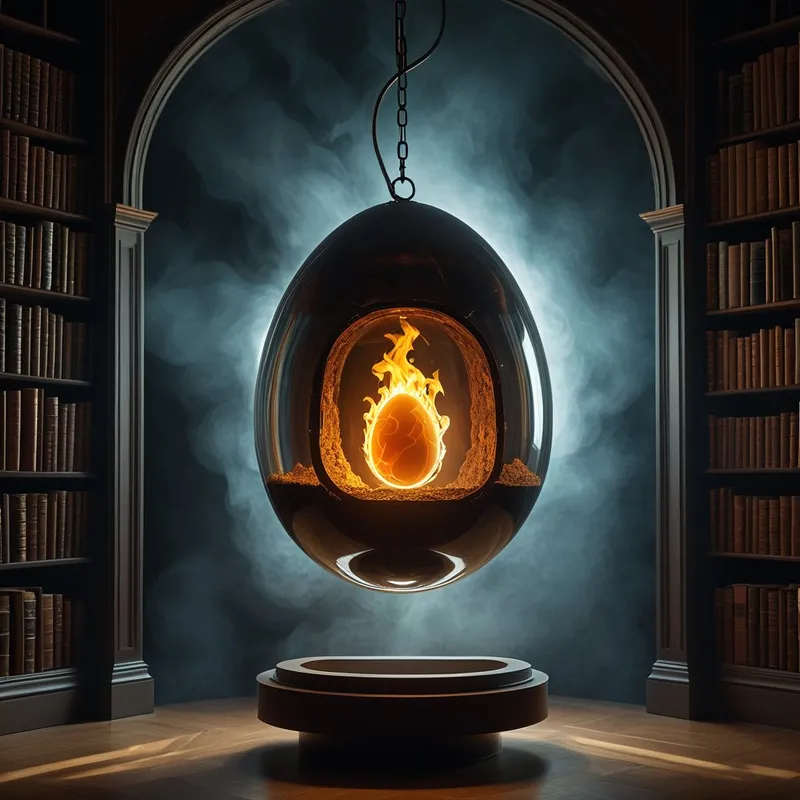
The sealed Vase inside is the specific complex, wound, or potential placed into the therapeutic or introspective process. The Athanor does not act directly on this material; it provides the constant, holding environment in which it can safely “cook,” decompose, and reconstitute.
The Dreamer's Resonance
When the pattern of the Athanor appears in modern dreams, it signals a profound somatic and psychological process of incubation. The dreamer may not see a furnace, but they will feel its presence in the imagery.
They may dream of a house with a always-warm hearth in its center, a greenhouse that maintains perfect climate despite outer storms, or a heart or womb that glows with a steady, internal light. They may find themselves in a prolonged, patient activity—tending a slow-growing plant, maintaining a vigil, or keeping a delicate machine running. The somatic sense is one of contained heat, of a low hum of activity beneath the surface of conscious life. This is the psyche’s way of indicating that a deep, autonomous process of integration is underway. The conflict is not with an external monster, but with the temptation to break the seal, to stir the pot, to force a result before its time. The dream Athanor cautions against impulsive action, advocating for a trust in the slow, organic intelligence of the unconscious.
Alchemical Translation
For the modern individual, the myth of the Athanor models the essential framework for psychic transmutation. Our culture glorifies the flash of insight, the breakthrough, the dramatic purge. The Athanor teaches the virtue of the Labor Longus.
The first step is building our own Athanor—constructing a reliable inner container. This is our daily practice: journaling, meditation, therapy, creative ritual, or simply committed self-observation. It must be built of the “brick and clay” of regularity and honesty. Into this container, we place our Prima Materia: a relationship pattern, a childhood wound, a creative block, our shadow.
The great work is not to violently change what is within the vase, but to faithfully maintain the gentle, constant fire around it.
Then begins the vigil. We learn to sustain the “fire” of our attention and care without burning out. We resist the urge to violently analyze (too hot) or to avoid and neglect (too cold). We simply maintain the condition for change. In this held space, the Nigredo—the depression, confusion, and despair—is not a failure, but a necessary dissolution. The Albedo—clarity and washing away—emerges in its own time. The process is self-sustaining because each small insight fuels the patience for the next.
The ultimate transmutation is the realization that the Athanor and the alchemist are one. We are both the vessel and the tender of the fire. The “gold” produced is not a fixed state of perfection, but the living capacity to hold ourselves in a state of becoming, to be our own sustained, transformative hearth. The myth concludes that the greatest treasure is not what is found in the vase, but the enduring, wise vessel of the self that made the finding possible.
Associated Symbols
Explore related symbols from the CaleaDream lexicon: