Astraios Myth Meaning & Symbolism
The myth of Astraios, Titan of stars and dusk, tells of cosmic order, prophetic winds, and the marriage of celestial light to earthly winds.
The Tale of Astraios
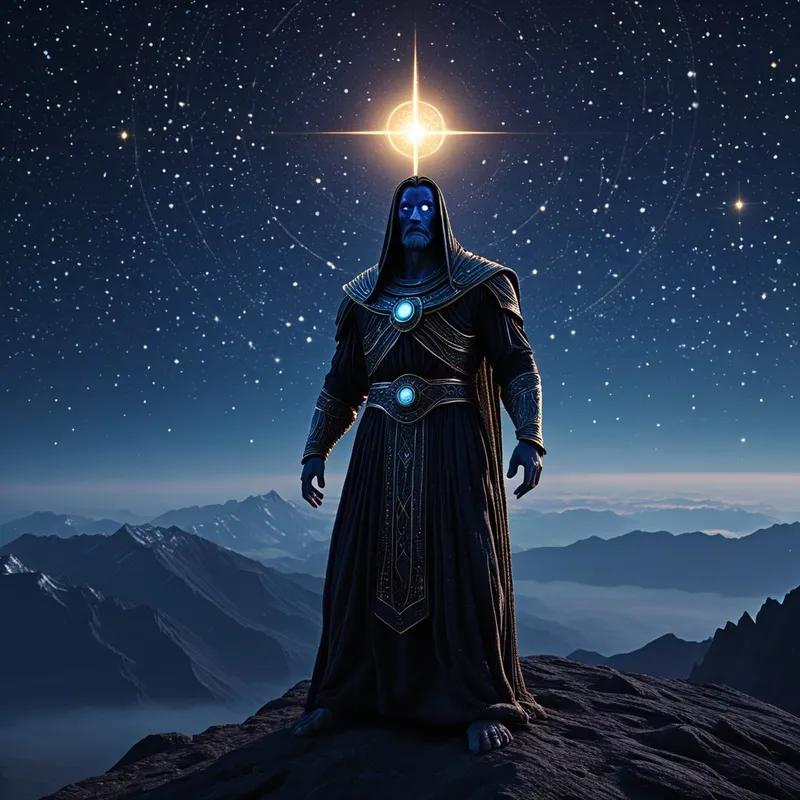
Before the Olympians claimed their thrones, when the world was raw and the sky a canvas of primordial fire, there existed the Titans. Among these elder powers, born of Uranus and Gaia, was one whose essence was not of rock or sea, but of the fathomless void between lights. His name was Astraios, and he was the starry dusk.
He did not walk; he descended. His form was not solid, but a gathering of shadows tinged with the last embers of the sun, shot through with the first, faint pinpricks of silver. His domain was the threshold, the holy hush between day and night, where colors bleed into memory and the infinite reveals itself. He was a quiet god, a watcher, his consciousness spread across the vault of heaven, learning the slow, silent dance of the spheres.
His solitude was profound, yet not empty. For in the east, another power stirred with the tender insistence of new beginnings. She was Eos, whose rosy fingers parted the curtains of night. Where Astraios was the deep, contemplative close, she was the brilliant, hopeful opening. They were opposites on the great wheel of time, destined never to meet in fullness, only in the fleeting, magical interlude of twilight and dawn.
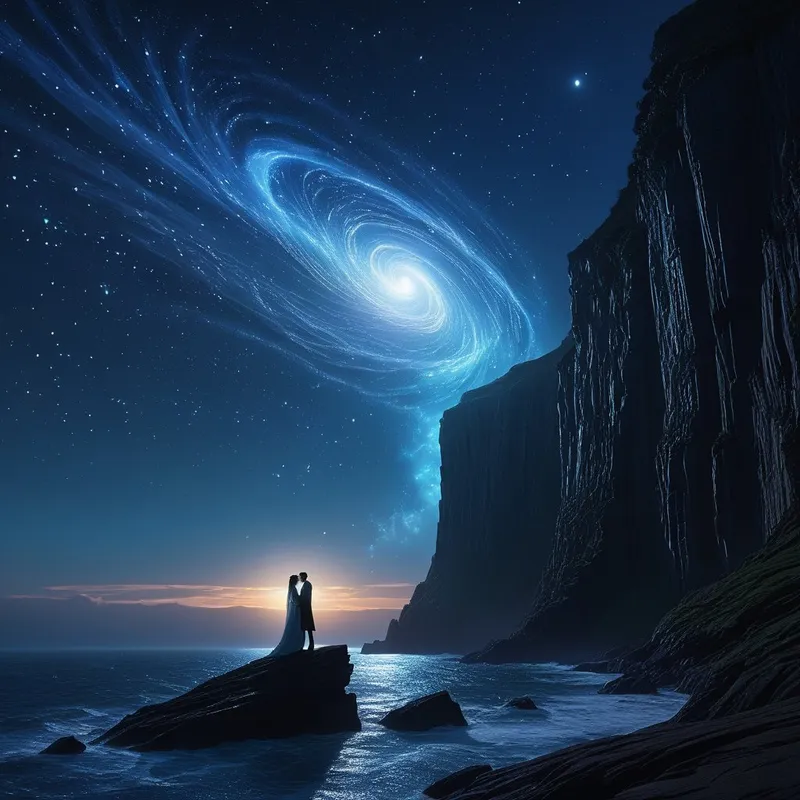
And meet they did. It was at the world’s edge, where the ocean of air meets the cup of the earth. Eos, in her saffron robes, arrived on a breath of cool morning, and found not darkness, but Astraios, holding the space for her light. He did not fight the day; he prepared for it. In that moment, the star-titan and the dawn-goddess recognized in each other the completion of a celestial cycle. Their union was not a clash, but a confluence—a marriage of the boundary-maker and the boundary-breaker.
From this sacred union, the winds were born. Not mere gusts of air, but intelligent, prophetic spirits. Their sons were the four Anemoi: Boreas of the icy north, Zephyrus of the gentle west, Eurus of the uncertain east, and Notus of the stormy south. They were the children of celestial observation and daily renewal, fated to carry messages, weather, and change across the world. Furthermore, Astraios and Eos became the parents of all the stars and planets, the Planetai, and the host of constellations, setting the very patterns of fate in the night sky.
Thus, Astraios, the quiet Titan, did not fall in the great war with the Olympians. He receded. He fulfilled his purpose. He mapped the firmament, fathered the forces of atmospheric destiny, and then, as order was passed to a new pantheon, he faded into the very fabric of the night he had helped to define, an eternal presence in the arrangement of lights, a name whispered by the wind that carries the scent of coming rain and the promise of the next dawn.
Cultural Origins & Context
The myth of Astraios is preserved primarily in the seminal works of the poet Hesiod, in his Theogony, a foundational text that systematized the genealogy and origins of the gods. In the pre-philosophical Greek world, mythology was not mere story but a proto-science, a way of explaining the natural world's operations and humanity's place within it. Astraios belongs to the second generation of Titans, a bridge between the raw, elemental chaos of the first gods and the more personified, psychologically complex Olympians.
His myth functioned as an etiological narrative, explaining the origins of the winds and the stars. More importantly, it established a cosmology of order. The Greeks saw the cosmos as a divine household (oikos), and every natural force had its presiding deity, its lineage, and its domain. Astraios’s role was to categorize and stabilize the celestial realm. He represents the human impulse to find patterns, to name the unnamed, and to understand the movements of the heavens as a legible text written by the gods. His story was likely told not for dramatic adventure, but for solemn context—a reminder that the predictable winds and the fixed stars were born from a divine, orderly intelligence, making the vast, terrifying universe feel like a governed, and therefore potentially comprehensible, home.
Symbolic Architecture
Astraios is the archetype of the Cosmic Cartographer. He does not create the raw material of the cosmos; he gives it form, measure, and meaning. His marriage to Eos is the central alchemical symbol of the myth.
The marriage of Dusk and Dawn is the eternal moment where knowing meets becoming, where the mapped territory is kissed by the unmapped possibility.
The Stars: They are not just lights, but fixed points of reference, symbols of fate (Moira), destiny, and the enduring patterns that govern life. Astraios, as their father, is the principle that discerns these patterns. Psychologically, he represents the faculty of consciousness that seeks to observe, structure, and understand the inner chaos—the mapping of one's own psychic constellations, traumas, and talents.
The Winds: Born from the union of starry knowledge and radiant change, the winds are the active, dynamic manifestations of cosmic order. They are the "children" of this union—the applied knowledge, the prophecies that move through the world. They symbolize how inner understanding (the stars) must translate into outer influence and change (the winds). They are the breath of spirit, the movement of insight into action, and the inevitable change that follows true awareness.
The Dusk: Astraios’s primary identity is crucial. Dusk is not night; it is the threshold. He is the god of liminality—the in-between space where one state ends and another has not yet begun. This is the psychological space of reflection, insight, and preparation. It is the moment after an old identity dies but before a new one is born, the essential, quiet pause where true orientation occurs.
The Dreamer's Resonance
When the pattern of Astraios stirs in the modern unconscious, it often manifests in dreams of mapping, observing, or encountering vast, orderly systems. One might dream of:
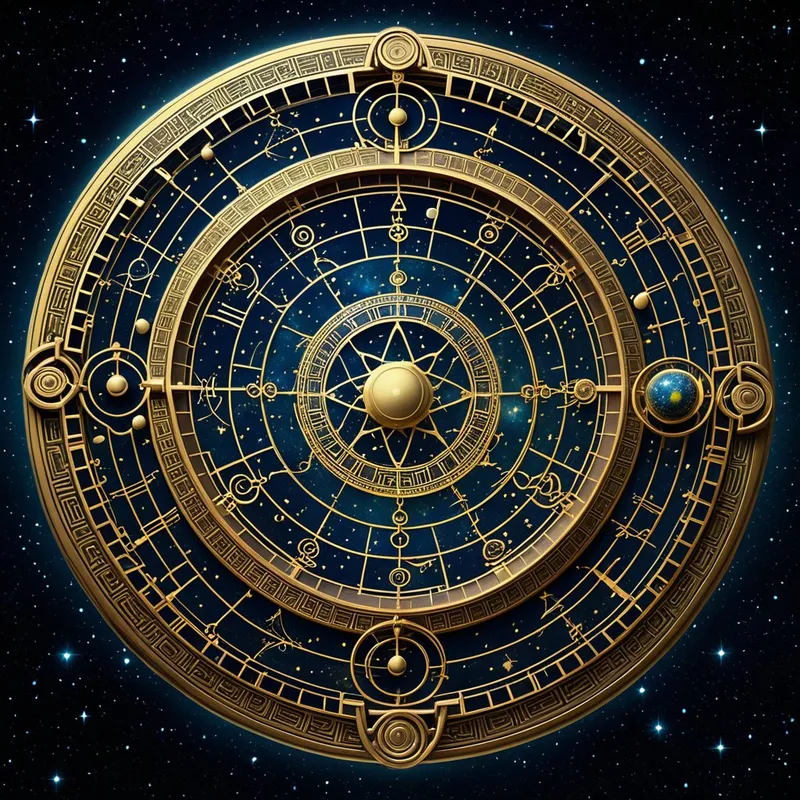
- Studying an impossibly complex but beautiful star chart or blueprint that somehow maps their own life.
- Standing at a high vantage point (a mountain, a tower) at twilight, feeling a profound sense of calm understanding as lights appear in the landscape below or the sky above.
- Hearing the wind speak clearly, delivering a message that feels both personal and cosmic.
- Feeling the urgent need to "name" or "categorize" swirling, chaotic emotions or life events.
Somatically, this can feel like a deep, centering calm—a settling of anxiety as chaos finds a provisional order. It is the psyche's attempt to perform its own theogony, to genealogize its own contents. The conflict present is not one of battle, but of integration: the tension between the overwhelming complexity of inner experience and the soul's innate desire to find a pattern, a narrative, a "constellation" that makes sense of it all. The dreamer is in the process of becoming the observer of their own inner cosmos.
Alchemical Translation
The individuation process modeled by Astraios is not one of heroic conquest, but of meticulous, patient orientation. It is the "Night Sea Journey" undertaken not blindly, but with a celestial compass.
The first stage is Withdrawal into the Liminal (The Dusk). The ego must step back from the blinding "day" of persona and daily demands into the reflective "dusk" of the self. This is an introverted, often lonely phase of observation without judgment, akin to Astraios holding the space before the dawn.
The second is Cartography of the Inner Firmament (Fathering the Stars). Here, one begins to identify recurring patterns—complexes, dreams, emotional reactions—and "plot" them like stars. This is the development of self-knowledge. This is my anger, which flares like Mars. This is my nurturing instinct, steady like Polaris. This wound forms a dark nebula in my southern sky. One becomes the parent of their own psychic components, granting them a place and a name in the personal cosmos.
To individuate is to become both the astronomer and the sky, to plot the fixed stars of your nature while remaining the space that holds them.
The third is Union with the Anima/Animus (Marriage to Eos). Pure, cold observation (Astraios) is sterile without the energy of renewal and connection (Eos). The inner "dawn" represents the eros principle, the feeling function that brings warmth, relationship, and vitality to the mapped structures. This sacred marriage births the Winds—the active, living expression of this integrated self. These are the insights that now move you, the new directions your life takes, the prophetic sense of your own destiny in motion.
Finally, the Astraian process ends in Fading into the Fabric. The Titan does not rule; he recedes. Similarly, in mature individuation, the ego does not tyrannically govern from a central throne. Having done its work of orientation and integration, it relaxes its rigid control, allowing the self to function as a harmonious, self-regulating cosmos. The individual no longer has a psychology; they inhabit it as a lived, breathing universe, with the quiet, enduring presence of Astraios as the very order of their being.
Associated Symbols
Explore related symbols from the CaleaDream lexicon: