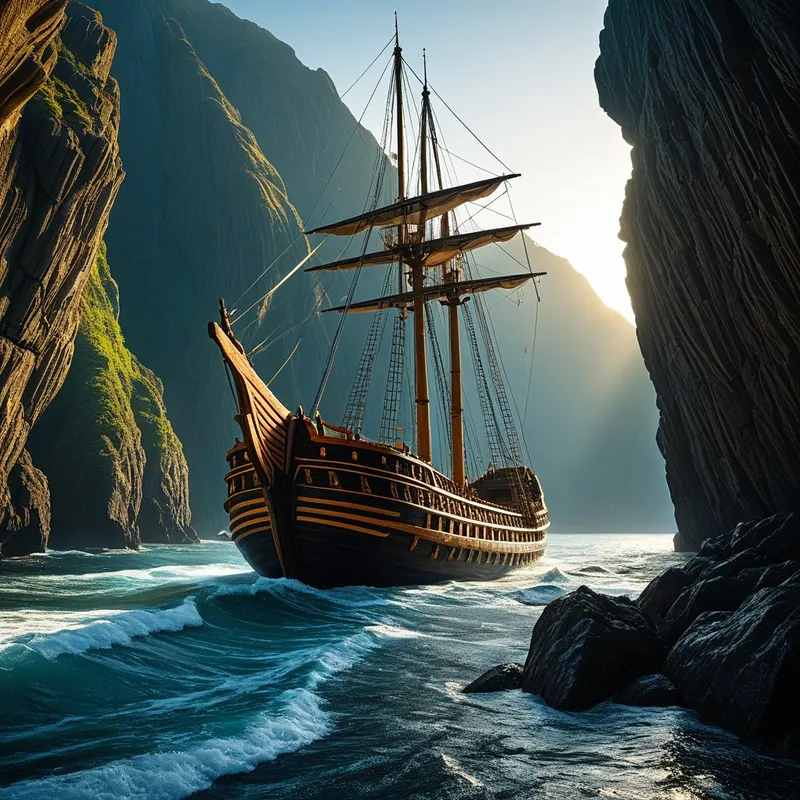
Argo Myth Meaning & Symbolism
The story of the first ship, Argo, built to carry Jason and his heroes on the impossible quest for the Golden Fleece, a vessel imbued with divine will.
The Tale of Argo
Hear now of the first ship, the vessel that was more than wood and pitch, but a soul cast upon the deep. It began not with a king, but with a stolen throne. A usurper’s promise hung in the air of Iolcus, a glittering, impossible bait: bring me the Golden Fleece, and your birthright shall be restored. So spoke the tyrant Pelias to the young prince Jason.
But a single man cannot wrest a dream from the edge of the world. The gods whispered, and the call went out. From every corner of Hellas, they came—not an army, but a constellation of might and mystery. Heracles, whose breath was a gale. Orpheus, whose lyre could soothe the fury of the sea. The swift sons of the North Wind, the prophetic seer, the unerring hunter. Fifty souls, each a legend, bound by a single oath.
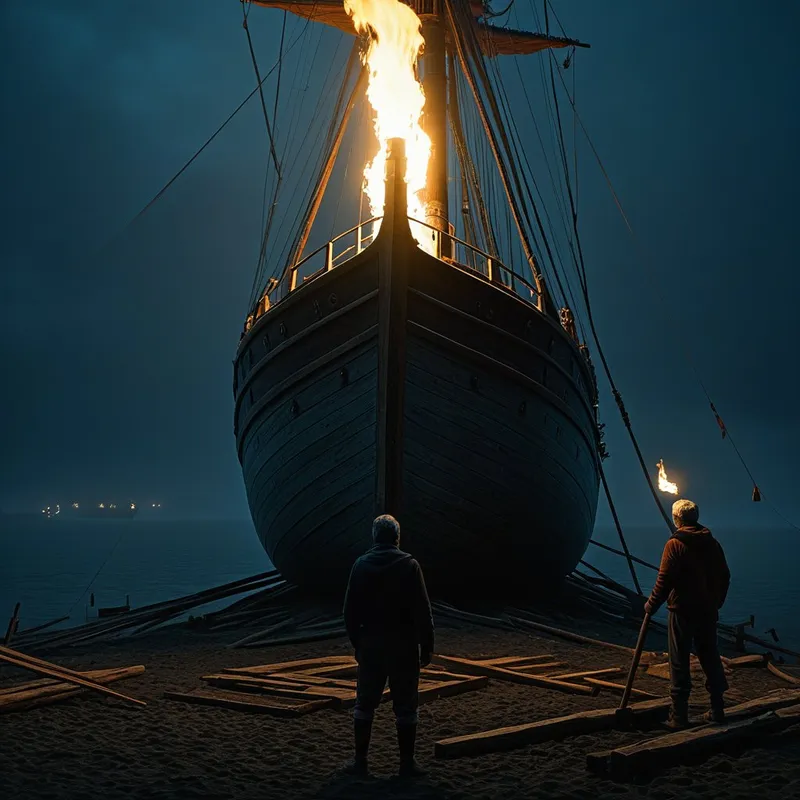
Yet a constellation needs a sky to sail. In a hidden grove, under the watchful eye of Athena herself, the master builder Argos laid hands upon sacred timber. But this was no ordinary craft. Into its very spine, its keel, he fitted a beam hewn from the speaking oak of Dodona. As the hull took shape, the wood did not merely accept nails; it seemed to drink the purpose of the men who stood around it. Athena anointed the prow with a chip of her father’s Dodonian oak, and the ship gained a voice—a low, murmuring counsel in moments of peril. They named her Argo, after her maker, and she was alive with intent.
Then came the launching, the groan of wood on stone, the first kiss of saltwater on a hull that had never known the sea. The Argonauts took their benches, and the oars bit the water in unison. Their journey was the map of the soul’s trials: the harpies on the lonely isle, the clashing rocks that roared like the jaws of the earth, the sleepless dragon guarding the Fleece in the grove of Ares in far-off Colchis. Through each, the Argo was their moving homeland, its timbers flexing against sea monsters and sorcery. It carried them to the edge of betrayal and love, where Medea wove her dark magic, and it carried them back, heavy with gold and grief, pursued by a king’s wrath. It was the shell of their collective fate, bearing them through storms not just of water, but of passion, despair, and triumph, until its weary hull finally scraped onto the familiar shore, its great quest complete, its story etched forever in the stars.
Cultural Origins & Context
The saga of the Argo is one of the oldest and most pervasive in the Greek tradition, a foundational “road movie” of the ancient world. Its most complete surviving version comes from the Hellenistic poet Apollonius of Rhodes, but its roots dig far deeper into the oral tradition. Before Homer sang of Achilles’ rage, bards were likely recounting the voyage of the first great ship. It functioned as a mythic charter for Greek exploration and colonization, narrativizing the very real perils and wonders of venturing into the Black Sea (the Euxine). The story served to define heroic identity not as solitary conquest, but as collaborative endeavor. It was a tale told to bind communities, illustrating how disparate strengths—the brute force of Heracles, the cunning of Tiphys, the art of Orpheus—must unite to achieve the impossible. The Argo itself became a cultural symbol of technological and spiritual audacity: humanity’s first conscious step to master the chaotic element of the sea, blessed and guided by the gods.
Symbolic Architecture
The Argo is not merely a vehicle; it is the central symbol of the myth, a perfect vessel of meaning. It represents the constructed self, built for a specific, transcendent purpose. Its sacred Dodonian timber signifies that this self is founded on a connection to the divine, to prophecy and deep knowing—the inner voice that guides.
The ship is the soul's first conscious form, built from the timber of fate and launched onto the unconscious sea.
The crew of fifty heroes symbolizes the fragmented yet potent aspects of the psyche. We all contain a Heracles (raw strength), an Orpheus (the voice that charms the inner demons), a Dioscuri (duality and balance). Individually, they are talents; assembled on the Argo, they become a directed force. The quest for the Golden Fleece is the search for the core of one’s authentic authority and wholeness, which is always guarded by dragons (our deepest fears and complexes) in a far-off land (the unconscious). The journey out is the descent into the unknown self; the journey back is the fraught integration of that self (symbolized by Medea, the reclaimed but dangerous power) into the known world.
The Dreamer's Resonance
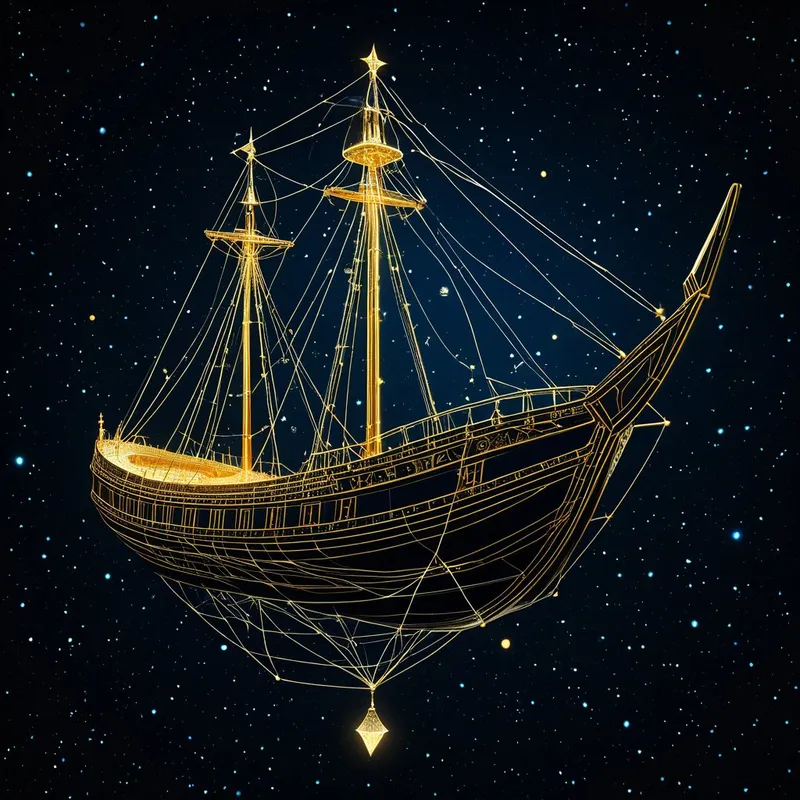
To dream of an Argo is to dream of vocation and collective psyche. You may dream of a strange, purposeful vehicle—a bus, a spaceship, a house with many rooms—that is preparing for a vital departure. The somatic feeling is one of gathering tension, anticipation in the chest and shoulders, the body preparing for exertion. Psychologically, this dream emerges when the conscious ego (Jason) has accepted a call that is beyond its individual capacity. The dream-Argo is the nascent psychic structure being built to contain and direct the multitude of inner “heroes” or resources you must mobilize. Anxiety in the dream—the ship being unfinished, or not knowing your role on board—points to a fragmentation of purpose. The dream asks: What is your Golden Fleece? And what sacred, speaking timber must form your keel to pursue it?
Alchemical Translation
The myth of the Argo is a precise blueprint for psychic alchemy, the opus of individuation. The prima materia, the base material, is the exiled prince—the ego aware of its dispossession from its rightful throne (the Self). The first stage, calcinatio, is the fiery ambition of the quest, burning away complacency.
The building of the ship is the coagulatio: the giving of solid, navigable form to the swirling waters of potential.
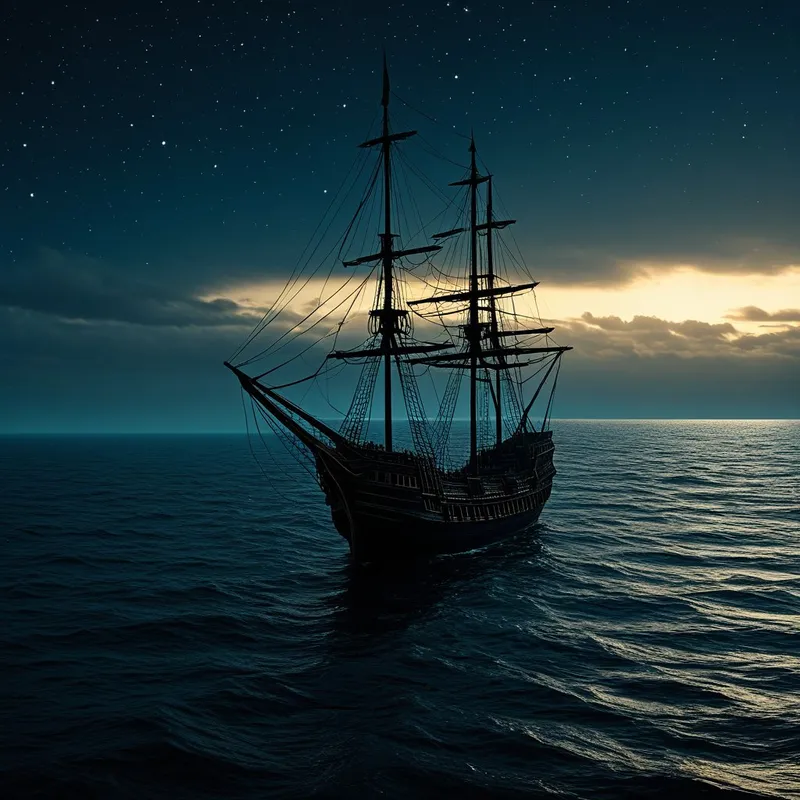
The gathering of the crew is the conscious recognition and recruitment of inner archetypes (solutio). The voyage itself, with its symphonic trials, is the relentless separatio and coniunctio—facing the harpies (neglectful patterns), navigating the clashing rocks (impossible dilemmas), confronting the dragon (the shadow guardian of one’s treasure). Each challenge forces a new integration of the crew, a new harmony between the vessel and the sea. The retrieval of the Fleece is the mortificatio and exaltatio of the ego; it wins its prize only through reliance on the “other” (Medea, the anima, the transformative function of the unconscious). The final return is the projectio, the fraught attempt to bring the transformed self back into the ordinary world. The Argo, retired to the stars, becomes the lapis philosophorum—the proof that the alchemical process was complete. For us, the transmutation is complete not when we possess the gold, but when we realize we were the ship all along: the crafted, living vessel capable of the journey.
Associated Symbols
Explore related symbols from the CaleaDream lexicon: