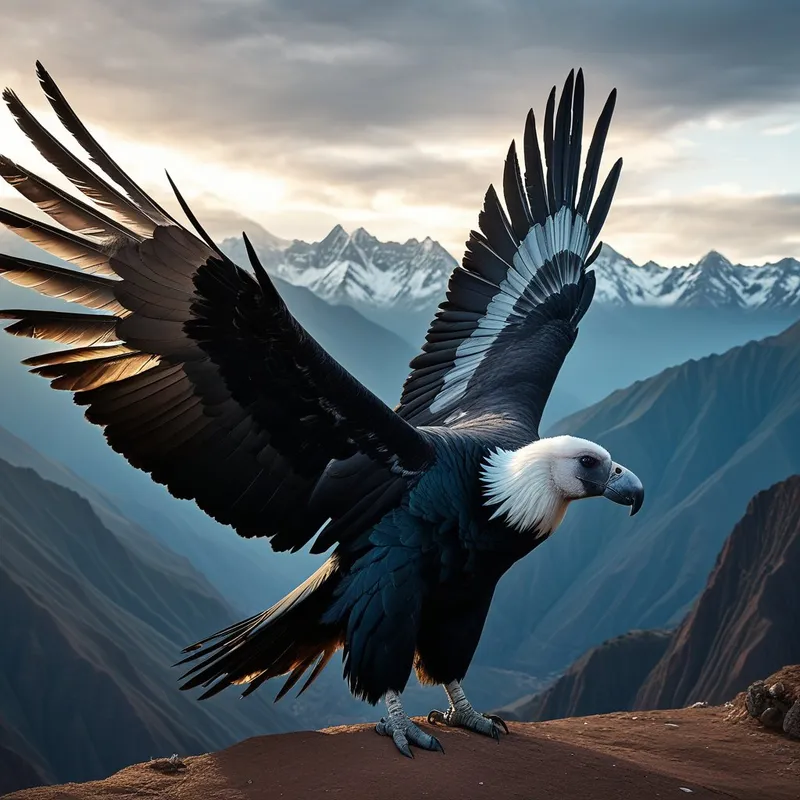
Apu Kuntur Myth Meaning & Symbolism
A sacred condor, Apu Kuntur, sacrifices itself to become a mountain, bridging the earthly and celestial realms for the Inca people.
The Tale of Apu Kuntur
Listen. The wind that howls through the high passes of the Antisuyu is not just wind. It is the breath of a god, a memory carved in stone and sky. Before the Sapa Inca walked the earth, before the first stone of Cusco was laid, there was only the great silence of the peaks and the vast, cold eye of the sun.
And there was Apu Kuntur.
He was the lord of the air, a being of such immense size that his shadow could swallow a valley. His feathers were not mere feathers; they were shards of the night sky, tipped with the silver of the moon. His eyes held the patience of glaciers and the fire of distant stars. He soared on the thermals rising from the belly of Pachamama, a solitary king in an empty realm. Below him, the world was formless, a churning of rock and cloud. The people who would one day be the Inca were scattered, small, and afraid, huddled in the cold shadows of the mountains, unable to reach the warmth of Inti.
Apu Kuntur watched them. He saw their shivering forms, their eyes turned upward in longing and despair. He heard the silent cry of their spirits, earthbound and lost. A great sorrow, heavier than any mountain, settled in his heart of air and fire. The gulf between the human world and the celestial realm of Hanan Pacha was a wound in the cosmos itself.
He circled once, a final, graceful arc against the deepening blue. Then, with a cry that split the silence—a sound like tearing stone and ringing metal—he folded his vast wings. He did not dive for prey. He dove for destiny.
Down he plunged, not as a bird, but as a falling star, a deliberate meteor of flesh and spirit. He aimed for the greatest, most desolate pass between the worlds. The wind screamed in protest. The earth trembled in anticipation.
He struck.
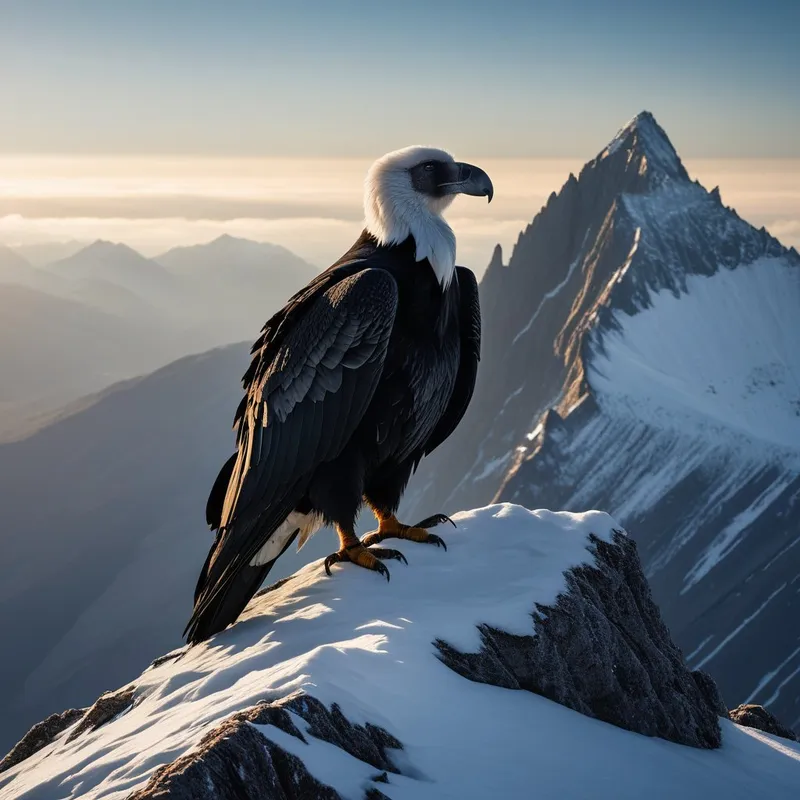
It was not an impact of destruction, but of terrible, deliberate creation. His body did not shatter; it unfolded. His great wings stretched and hardened, their feathers melting into ridges of granite and veins of quartz. His powerful breast became a broad, sheltering plateau. His proud head and curved beak transformed into a towering, watchful summit, forever gazing at the sun. His bones became the bedrock; his spirit, the thin, vital air of the heights.
Where Apu Kuntur had been, now stood a mountain. But not a silent one. A path, a staircase of stone and spirit, now led from the valleys of Kay Pacha up his newly formed slopes to his summit, which brushed the lower realms of Hanan Pacha. The people, drawn by the thunderous silence that followed, approached. They felt no fear, only a profound awe. They looked up the impossible path and understood. The condor was gone. In his place was a bridge. A sacrifice. A way.
Cultural Origins & Context
This myth originates from the heart of the Andean cosmovision, a worldview where geography is theology, and the landscape is a living text. The story of Apu Kuntur is not a mere folktale but a foundational ayni, a story of sacred reciprocity that explains the very relationship between humanity, the divine, and the land.
It was likely passed down by Amautas and priests, not as entertainment, but as essential doctrine during rituals and initiations. Its societal function was multifaceted. It sanctified the specific mountain it described, transforming it from a geological feature into a huaca—a living deity and ancestor. It provided a cosmological map: the condor (kuntur) was the creature of the upper world, and its transformation into a mountain physically enacted the connection between the three worlds of Uku Pacha, Kay Pacha, and Hanan Pacha.
Most importantly, it modeled the ultimate principle of ayni. The condor gave its entire being so that life below could flourish and connect to the divine above. In turn, the people were obligated to honor the mountain with offerings, pilgrimages, and respect, maintaining the balance of the cosmos. The myth taught that existence is sustained not by taking, but by a conscious, willing, and total offering of the self for a greater connection.
Symbolic Architecture
At its core, the myth is a profound allegory of mediation and conscious sacrifice. Apu Kuntur represents the transcendent function—that psychic force which arises to bridge irreconcilable opposites within the soul.
The conscious mind dwells in the valley, the unconscious spirit in the sky. The Self is the mountain that is both, born from the sacrifice of the ego that only knows how to soar alone.
The condor is pure spirit, untethered consciousness, and panoramic vision. It sees the whole, but it is disconnected from the earthly, suffering, human reality (Kay Pacha). The scattered people represent the fragmented, unconscious, or undeveloped aspects of the psyche, longing for wholeness and meaning (the sun, Inti). The chasm between them is the neurosis, the depression, the feeling of meaninglessness that plagues an unintegrated life.
The condor's dive is the ultimate act of descent. It is the spirit choosing to incarnate, to take on form, limitation, and solidity. It is the idea sacrificing its purity to become actionable reality. The resulting mountain is the axis mundi, the central pillar of the individual's world. It is the integrated psyche, where the heights of aspiration and the depths of embodied experience are forever joined. The path up its side is the lifelong process of individuation—arduous, step-by-step, but now possible.
The Dreamer's Resonance
When this myth stirs in the modern unconscious, it often manifests in dreams of profound transition and somatic weight. You may dream of flying with immense freedom, only to feel a sudden, compelling pull downward, not into danger, but into a deliberate landing on a stark, beautiful peak. You may dream of your own body feeling heavy, turning to stone or earth, but in the dream, this is not frightening; it is a solemn, necessary process.
Psychologically, this signals a critical phase where a lofty ideal, a spiritual insight, or a transcendent awareness (the condor) is being asked to "come down to earth." It is the process of grounding inspiration into daily practice, of embodying a truth rather than just understanding it. The somatic feeling of heaviness or petrification is the ego's resistance to this necessary incarnation. The dream is the psyche's way of initiating the sacrifice of a purely spiritual or intellectual identity to build something more substantial, more connected, and ultimately more useful—a personal "mountain" of character and lived wisdom.

Alchemical Translation
The alchemical journey mirrored in this myth is the solve et coagula—dissolve and coagulate. The condor, a creature of air (the spiritus), dissolves its ethereal form to coagulate into the mountain, a body of earth (the corpus).
For the modern individual, the "Apu Kuntur process" begins with a panoramic vision or a calling—a clear sight of a higher state of being or purpose. This is the condor's flight. The crisis, the nigredo, is the painful realization that this vision is disconnected from one's actual life, creating isolation and despair in oneself or perceived in the world. The transformative act is not to abandon the vision, but to sacrifice the form in which it first appeared.
Individuation is not about reaching the sky; it is about becoming the bridge so that the sky and earth may finally meet within you.
This means letting the pure, airy ideal "die" so it can be reborn as a structured, earthly reality. It is the artist who must sacrifice the perfect image in their mind to wrestle with the imperfect medium. It is the healer who must sacrifice theoretical purity to sit in the muddy complexity of human pain. It is anyone who must take their private enlightenment and build a "path" of habits, relationships, and work that others can also climb.
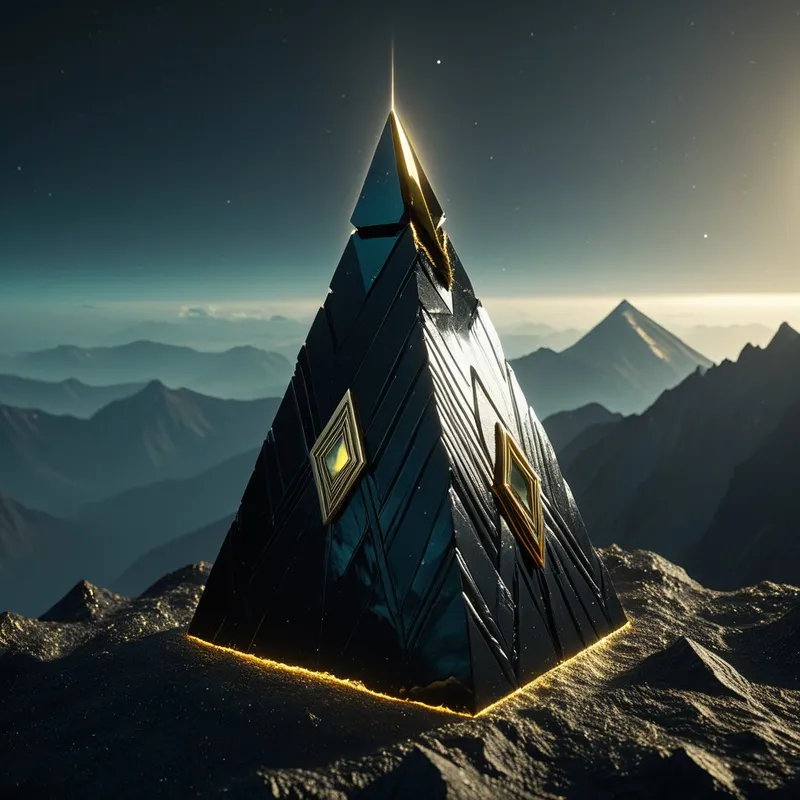
The mountain that remains is the Lapis Philosophorum—the enduring, integrated Self. It is no longer just you; it is a landmark, a sanctuary, a testament that the greatest freedom is found not in escape, but in becoming the necessary ground between heaven and earth. The myth of Apu Kuntur whispers that our highest purpose may not be to soar away, but to become the sacred ground where connection is forever possible.
Associated Symbols
Explore related symbols from the CaleaDream lexicon: