
Antigone Myth Meaning & Symbolism
A princess defies a king's edict to bury her traitor brother, choosing sacred duty over political law, and becomes an eternal symbol of conscience.
The Tale of Antigone
Listen, and hear the tale of a house cursed by the gods. The air in Thebes is thick with the dust of brotherly slaughter. Two princes, Eteocles and Polyneices, lie dead by each other’s hand, their blood soaking the earth their father, the blinded Oedipus, once ruled. Upon the throne now sits their uncle, Creon, his face set like stone. He issues a decree that chills the very sun: Eteocles, the defender, shall be buried with full honors. Polyneices, the attacker, shall be left as carrion for dogs and birds, his soul forbidden passage to the Underworld. To bury him is death.
But in the shadows of the palace, a different fire burns. Antigone, sister to the dead, feels the weight of a older, deeper law—the unwritten statutes of the gods, the Thesmophoroi. The duty of kin to kin, of the living to the dead. She confronts her sister, Ismene, whose fear is a palpable cloak. “I will not defy the citizens,” Ismene whispers. Antigone’s reply is a blade: “Then I will bury him alone, and die with honor.”
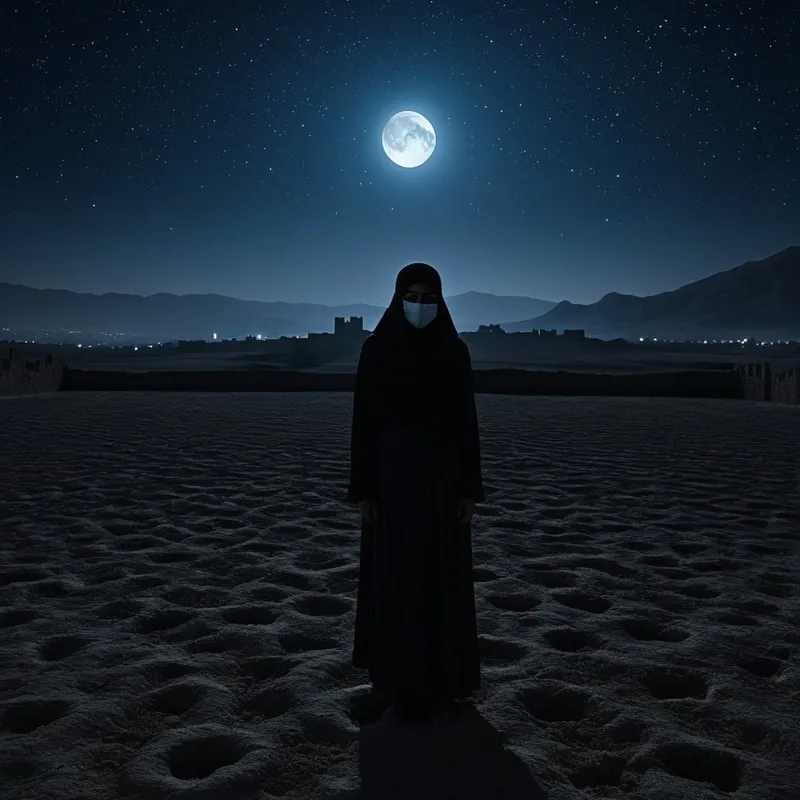
Under the cover of a dust-choked wind, she steals to the field of shame. With no tool but her own hands, she scatters dry, thirsty earth over her brother’s rotting form—a token burial, a sprinkling of dust to appease the gods below. The guards, lazy in their watch, are startled by the sudden storm. They brush the dust away, and wait.
Antigone returns. They seize her as she pours a final libation of wine and sand, her cries a raw hymn to Hades and Persephone. Dragged before Creon, she stands unbent. “Your law is not the law of Zeus,” she declares. “The justice of the gods is not of today or yesterday, but lives eternal.” Creon, his pride a fortress, sees only a defiant girl. He condemns her to be walled alive in a rocky tomb, a living descent to Hades.
In that stone womb, Antigone hangs herself, a final act of sovereignty. Her death unleashes the chain. Her betrothed, Creon’s son Haemon, falls on his own sword at her feet. Hearing this, Creon’s wife, Eurydice, takes her life in silent despair. Creon is left alone on his throne, holding the scepter of his law, surrounded by the dead his decree created. The chorus murmurs the oldest truth: “Of happiness, the crown and chiefest part is wisdom, and to hold the gods in awe.”
Cultural Origins & Context
The myth of Antigone comes to us primarily through the tragic play Antigone by the Athenian playwright Sophocles, written around 441 BCE. It was not a distant legend but a vital, living narrative performed for the citizenry of Athens during the City Dionysia. In this democratic but deeply patriarchal society, the play staged a profound civic debate. It questioned the very foundations of law: was it the mutable decree of the polis (the city-state), or the immutable, divine order of the cosmos?
The story exists within the larger, cursed saga of the House of Labdacus, a cycle of tales exploring fate, pollution (miasma), and familial doom. Sophocles’ telling was not an isolated artifact but a potent political and religious commentary. It gave voice to tensions between gender roles, youthful defiance, and gerontocratic authority, between the obligations of family (oikos) and the demands of the state. It functioned as a societal mirror, a cathartic ritual where the audience could witness the catastrophic consequences of hubris—not the pride of a hero against the gods, but the pride of a ruler against the fundamental, human laws of piety.
Symbolic Architecture
At its core, Antigone represents the archetypal collision between two irreconcilable orders of reality. Creon embodies the logos of the State: rational, political, temporal, and masculine. His law is clear, written, and enforced by power. Antigone embodies the mythos of the Soul: intuitive, sacred, eternal, and rooted in the chthonic feminine. Her law is unwritten, felt in the blood and the bonds of earth.
The conflict is not between right and wrong, but between two kinds of right—the right of order and the right of love.
Polyneices’ unburied body is the ultimate symbol of the repressed, the denied, the exiled part of the family and the state. To leave him exposed is a psychic act of dismemberment, a refusal to integrate the shadow of conflict. Antigone’s act of burial is an act of soul-making; she insists on performing the ritual that acknowledges wholeness, even in death. Her tomb becomes a potent symbol of the interiority where one is sealed with one’s convictions. Creon’s tragedy is that he mistakes rigidity for strength, and in defending the city’s walls, he destroys his own house. The myth demonstrates that a law which violates the sacred bonds of humanity is a law that ultimately destroys the very community it seeks to protect.

The Dreamer's Resonance
When the pattern of Antigone stirs in the modern dreamer, it signals a profound interior crisis of conscience. One may dream of being forced to choose between a deeply felt, personal truth and an external, authoritarian demand—be it from a parent, a partner, an employer, or an internalized critical voice. The somatic experience is often one of constriction: dreams of being buried alive, walled in, or trying to speak with a mouth full of earth.
This is the psyche’s initiation into what psychologist James Hillman called “soul’s code.” The dreamer is being asked to honor a part of themselves that the “kingdom” of their conscious ego has declared traitorous or shameful. It might be a neglected talent, a stifled grief, or an unpopular but vital truth. The psychological process is one of moving from the sister Ismene’s position of fearful compliance (“I must obey”) to Antigone’s position of sacred defiance (“I must do this”). The dream invites a burial—not an ending, but a sacred act of acknowledgment for what the conscious mind has left to rot.

Alchemical Translation
The alchemical journey modeled by Antigone is the opus contra naturam—the work against the prevailing nature, which in this case is the collective, consensual reality. The first matter for the modern individual is the recognition of the inner Creon: the tyrannical, rational complex that demands order at the expense of soul, that prioritizes reputation, security, and control over fidelity to one’s deepest values.
The transmutation begins not with rebellion for its own sake, but with the humble, earth-stained act of pietas—the devotional duty to what is most authentic in one’s being.
Antigone’s act is the separatio: she separates herself from collective opinion and familial caution. Her confrontation with Creon is the coniunctio oppositorum in its most violent form—the forced marriage of opposing principles that cannot be reconciled in life, only in death. Her entombment is the nigredo, the dark night of the soul, where one is sealed alone with the consequence of one’s truth. From this darkness, however, comes a paradoxical liberation. The suicide is not a failure, but symbolically, the ultimate dissolution of the ego’s attachment to life on the terms of the collective.
For the individual, the triumph is not in “winning” against the outer authority, but in achieving inner sovereignty. The alchemical gold forged in this crucible is an unshakeable integrity. One becomes, like Antigone, a “law unto oneself,” not in narcissism, but in profound obedience to a divine, interior mandate. The Creon complex is not destroyed—it remains, broken and grieving—but it is forever changed, forced to behold the ruins wrought by its own inflexibility. The process completes the individual, granting them the terrible, lonely dignity of having chosen soul over safety, and in so doing, becoming fully human.
Associated Symbols
Explore related symbols from the CaleaDream lexicon: