Antahkarana Myth Meaning & Symbolism
The story of the inner bridge, Antahkarana, a psychic structure connecting mortal awareness to divine consciousness, forged through sacrifice and self-knowledge.
The Tale of Antahkarana
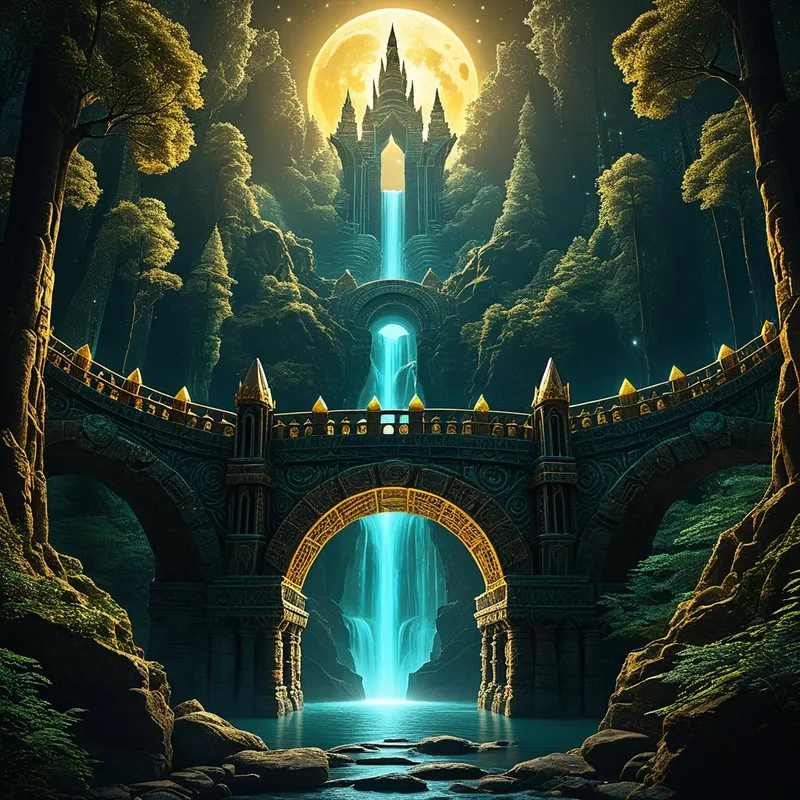
Listen. In the beginning, before the worlds were fully formed, there was a great chasm. Not a chasm of rock and earth, but a chasm of being. On one shore lay the world of Nama-Rupa, a realm of ten thousand things—of scent and sound, of desire and dread, of the beating heart and the fleeting thought. It was vibrant, tumultuous, beautiful, and binding. On the far shore, veiled in a light that does not cast shadows, rested the realm of pure Brahman, the silent, boundless ocean of consciousness itself. Between them roared the torrent of Maya, a river of forgetting, its currents made of time, space, and causality.
And the human being stood on the near shore, gazing into the mist. They felt the pull of the far-off light, a homesickness for a home they had never seen, a whisper of the Self that was their source. But to look into the torrent was to see only the reflection of their own face, fractured and fearful. They were marooned in the sensory world, a spark aware of its separation from the great fire.
The sages, the Rishis, in the deep caves of meditation, heard the lament of this separation. They saw that the spark was not truly separate, only asleep to its connection. The bridge, they proclaimed, was not to be built of stone or wood, for no material thing could span this divide. It had to be woven from the very substance of consciousness itself. They named this bridge Antahkarana.
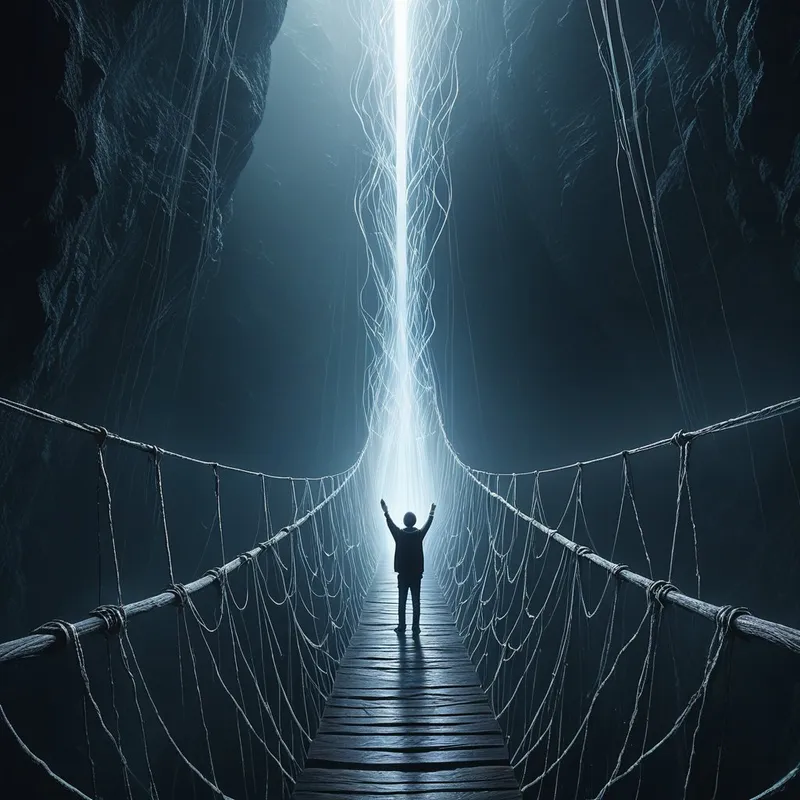
Its construction was the great, silent work. It required the aspirant to sit at the precipice, not in physical space, but in the inner chamber of the heart. From the chaos of the mind (Manas), one had to draw out threads of sustained attention. From the storehouse of memory and latent impressions (Chitta), one had to sift for the pure gold of wisdom, not the dross of old pain. The faculty of discernment (Buddhi) became the architect, and the sense of "I" (Ahamkara), once the great wall of separation, had to be dissolved into mortar, its energy repurposed from building a fortress to building a passage.
The process was one of terrifying subtraction. To build the bridge, one had to stop throwing oneself into the torrent. Every surrendered attachment, every stilled desire, every moment of true self-observation became a sturdy stone laid upon the void. The bridge grew in silence, invisible to the outer eye, known only by a deepening peace, a clarity that began to pierce the mist. It was a path forged not by moving forward, but by becoming still; not by acquiring, but by releasing.
And when the final stone was laid—which was no stone at all, but the utter cessation of the builder's separate will—the seeker took the first step. They walked across the bridge they had become. The roaring torrent of Maya fell silent, revealed to be a painting on the surface of their own mind. The chasm closed, not because the shores moved, but because the distinction between them was seen as the final illusion. The seeker arrived, only to discover they had never left. The bridge, having served its purpose, vanished, for in the light of Brahman, there is no here, no there, only Here.
Cultural Origins & Context
The concept of Antahkarana is not a single, codified myth from the Vedas or Puranas with a cast of gods and demons. It is a profound metaphysical and psychological model that emerged from the systematic introspection of the Upanishads and was later refined in the schools of Yoga and Advaita Vedanta. Its "story" is the story of every serious spiritual aspirant (sadhaka).
It was passed down not as a bard's tale for entertainment, but as a technical map of consciousness from teacher (guru) to disciple (shishya) in the oral tradition of the forest academies. Its societal function was deeply transformative: it provided a structured, internal path to liberation (Moksha) that was accessible in theory to anyone, regardless of external social status (Varna). It democratized the journey to the divine by locating the entire cosmos—and the means to transcend it—within the human psyche. This was the ultimate internalization of the sacred, shifting the focus from external ritual (karma-kanda) to internal realization (jnana-kanda).
Symbolic Architecture
Antahkarana is the ultimate symbol of connection and integration. It represents the dynamic, living process of psychic synthesis.
The bridge is not found; it is forged. Its material is the very substance of your fragmentation.
The Two Shores symbolize the fundamental duality of human experience: the personal, egoic self (the near shore of Jiva) and the transpersonal, universal Self (the far shore of Brahman or Atman). The Torrent of Maya is the flow of phenomenal experience, the hypnotic drama of life that convinces us the duality is real. The Four Components—Manas, Chitta, Buddhi, and Ahamkara—are not problems to be eliminated, but raw materials to be mastered and integrated. The ego, often seen as the villain, is here the essential energy of focus that must be redirected from creating separation to creating connection.
Psychologically, this maps directly to the process of individuation—the bridging of the conscious ego to the vast, unconscious Self. The chasm is the dissociation we feel from our own depths, our instincts, our wholeness. The bridge-building is the arduous work of therapy, introspection, and shadow-work, where we reclaim disowned parts of ourselves to become more complete.
The Dreamer's Resonance
When this myth stirs in the modern unconscious, it rarely appears as a literal bridge. Its presence is felt in the process and the sensation of the dream.
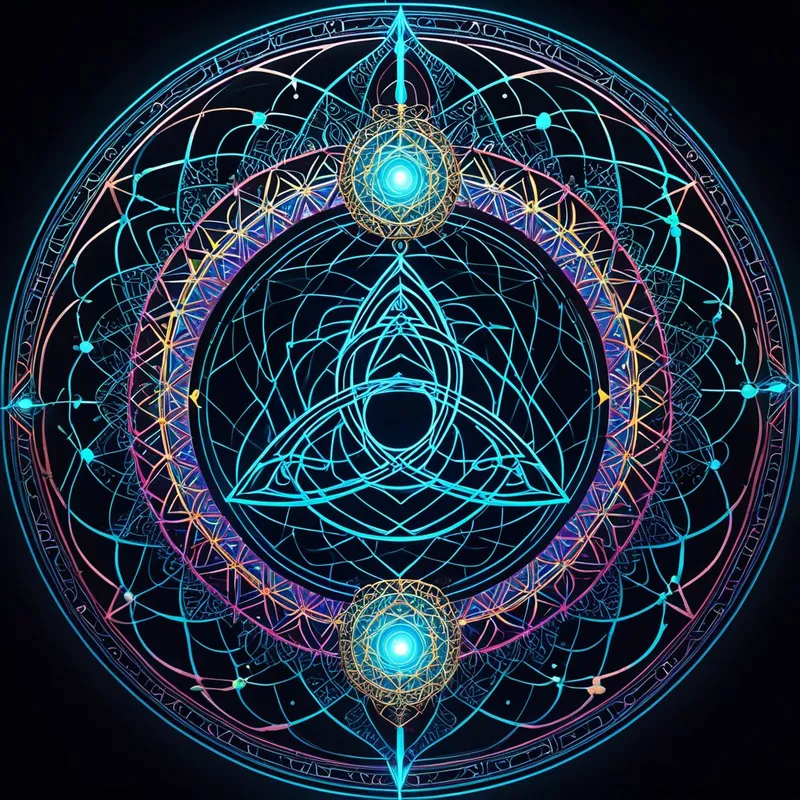
You may dream of repairing a broken walkway over a deep ravine, painstakingly tying frayed ropes. This somaticizes the work of integrating a trauma, of slowly rebuilding trust (in yourself, in others, in life) after a fracture. You might dream of finding a hidden door or passageway in your own home that leads to a vast, beautiful garden you never knew existed. This is Antahkarana’s promise: the connection to wholeness is not "out there," but within the very structure of your familiar psyche, waiting to be discovered.
Conversely, dreams of being stranded on one side of an impassable flood or canyon, watching a loved one or a radiant figure on the other side, speak to the acute pain of disconnection—from your own potential, your purpose, or a sense of the sacred. The somatic feeling here is often one of profound longing and helpless frustration. The psyche is signaling that the time for bridge-building has come, that the conscious mind must initiate contact with a deeper, ignored aspect of the Self.
Alchemical Translation
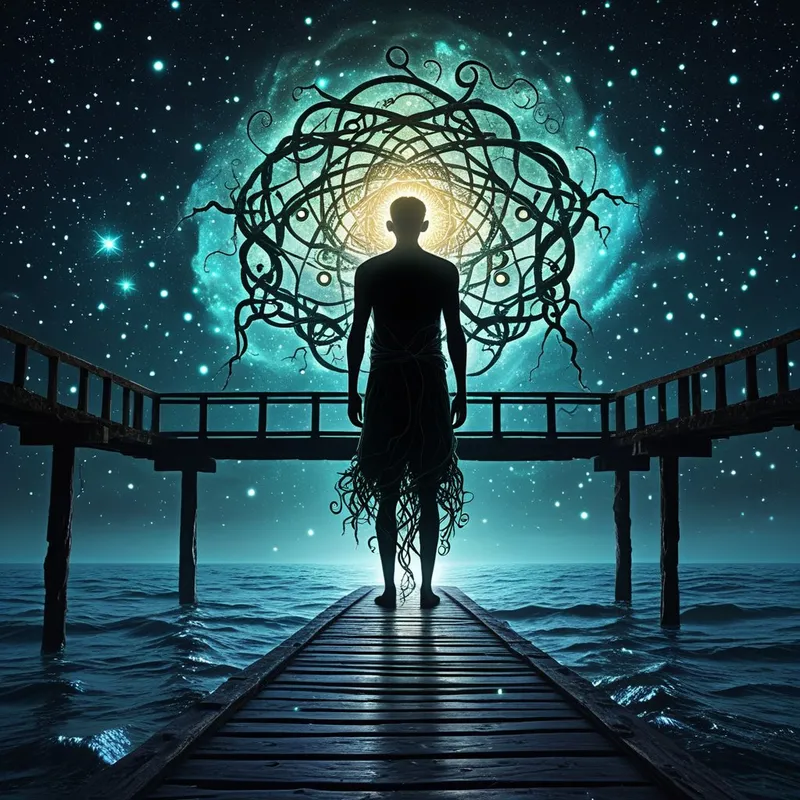
The alchemy of Antahkarana is a transmutation of perception. It is the "Great Work" of turning the lead of fragmented, ego-bound awareness into the gold of unified consciousness.
The modern individual begins identified solely with the "near shore"—the persona, the resume, the social media profile, the bundle of reactions and opinions. Life in this mode is a series of stimuli and responses, a constant negotiation with the torrent. The alchemical process starts with the Nigredo, the blackening: the painful realization that this identity is insufficient, that it feels separate, anxious, and unrooted. This is the glimpse across the chasm.
The first step onto the bridge is the step back from your own thoughts.
The Albedo, the whitening, is the purification of the inner components. It is practicing discernment (Buddhi): Is this thought true? Is this reaction serving my wholeness? It is cleaning the storehouse (Chitta) through introspection and perhaps therapy, sorting latent impressions. It is calming the restless mind (Manas) through meditation. It is the humble, gradual work of laying each stone.
The Rubedo, the reddening or culmination, is the moment the bridge is walked. This is not a dramatic, external event, but an internal shift of identity. The sense of being a "bridge-builder" dissolves into the realization of being the bridge itself—a living conduit. You no longer have a connection to creativity, to love, to intuition, to peace; you are that connection happening. The ego (Ahamkara) becomes a useful tool for navigation in the world, not the master of the house. The psyche is integrated. The struggle for wholeness transforms into the expression of wholeness.
In the end, the myth of Antahkarana teaches that liberation is not an escape to another world, but the full, conscious inhabitation of the one bridge that was here all along: your own awakened awareness, spanning the illusory gap between the personal and the eternal.
Associated Symbols
Explore related symbols from the CaleaDream lexicon: