Airavata Myth Meaning & Symbolism
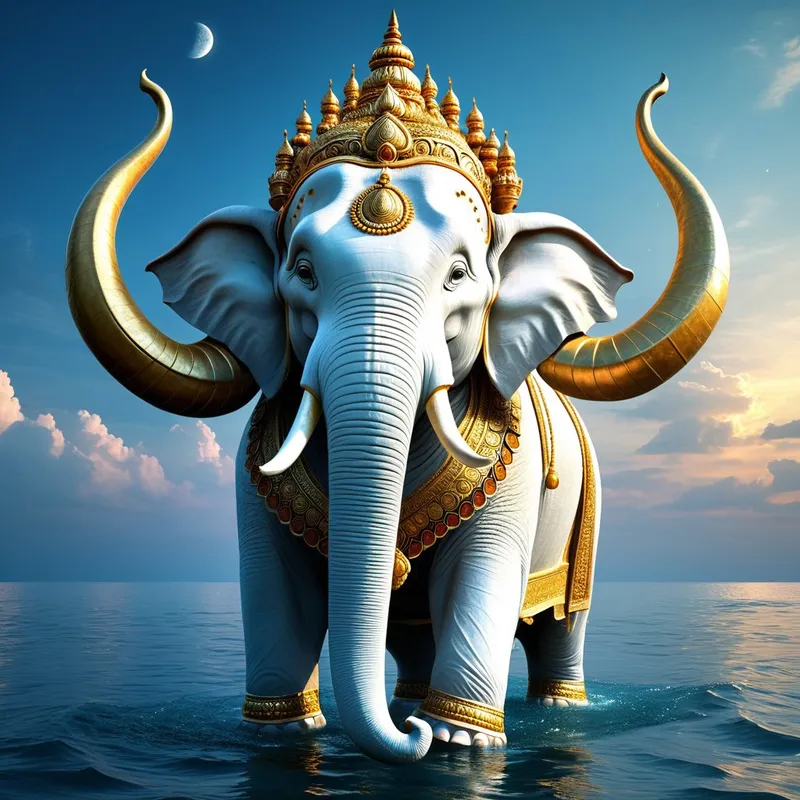
The myth of the divine white elephant, born from the churning of the cosmic ocean, who carries the king of gods and upholds the axis of the world.
The Tale of Airavata
Listen, and let the veils of time part. In the age before ages, the cosmos was adrift. The Devas, the shining ones, were weakened, their light dimmed by the shadow of mortality. The Asuras, the titans of power, hungered for dominion unending. The great equilibrium was broken. A desperate council was held on the shores of the Kshirasagara, the ocean of milk, whose depths held the nectar of immortality and the seeds of all that was lost.
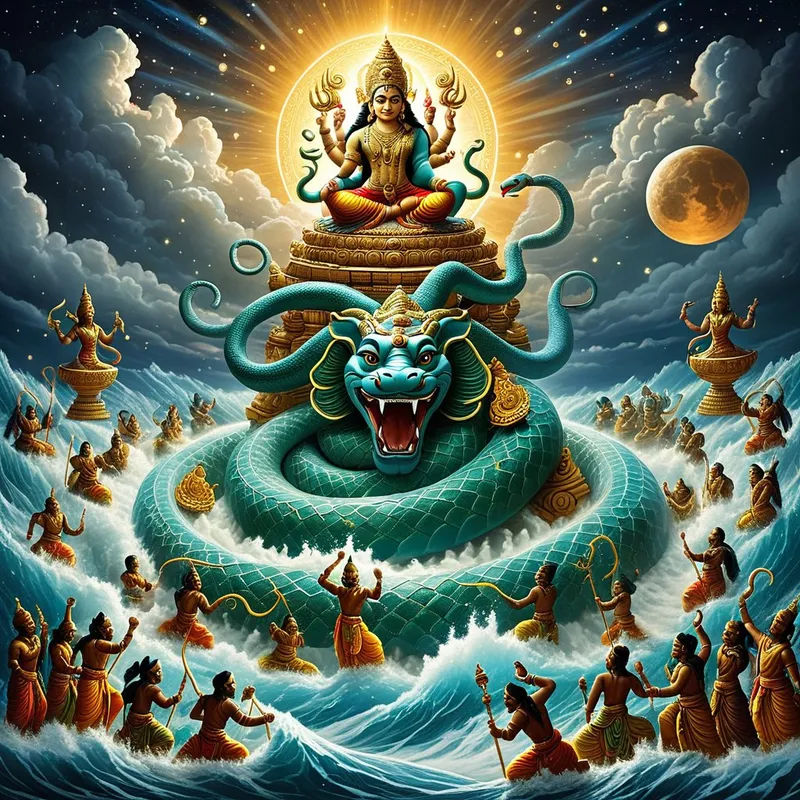
A plan, vast and perilous, was forged. They would churn the cosmic ocean itself. The serpent-king Vasuki consented to be the rope. The mountain Mandara was uprooted to be the rod. The Devas took the serpent’s tail, the Asuras its head, and with a roar that shook the foundations of space, they began to pull. Back and forth, for an acon, the mountain spun. The ocean frothed and boiled, heaving with the strain of creation.
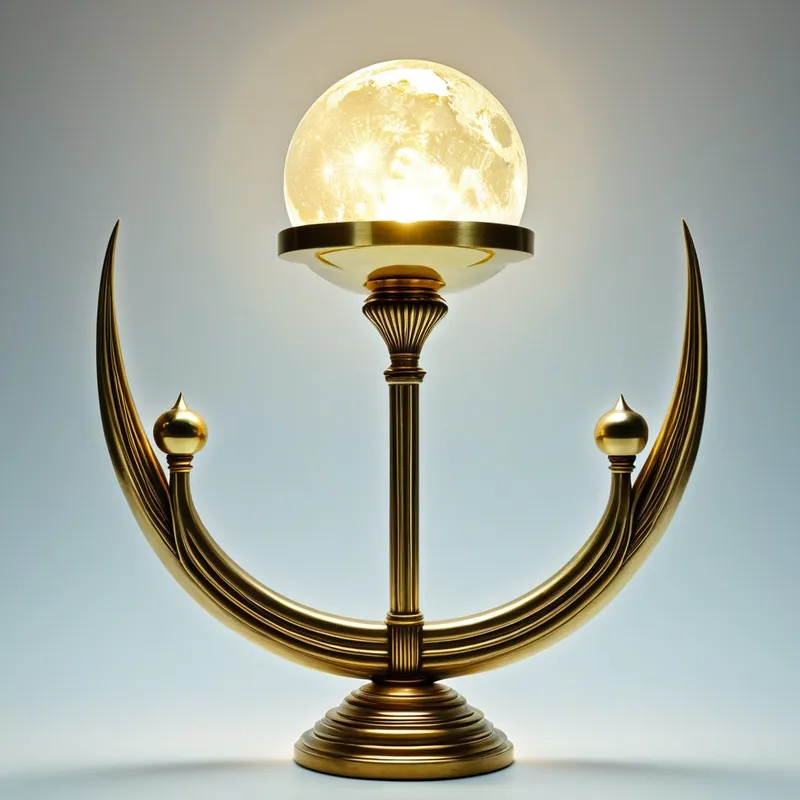
First came Halahala, a venom so potent it threatened to unmake all worlds. Then, treasures began to rise. The moon, captured in Shiva’s hair. The goddess Lakshmi, born from a lotus. And then… a sound, deep and resonant, like the first note of a universe tuning itself. The waters parted not with a splash, but with a profound, graceful emergence.
He rose—not born, but manifested. Airavata. His form was the white of dawn clouds and bleached ivory, a luminous counterpoint to the milky sea. Four mighty tusks, like pillars of a celestial palace, framed a visage of serene sovereignty. From his brow sprouted not one, but seven trunks, each moving with independent, gentle purpose, as if conducting the symphony of the emerging world. He stood upon a giant, unfurling lotus, his very presence a declaration of order from chaos. The air stilled. The churning paused. All eyes beheld this living embodiment of regal stability.
The king of the Devas, Indra, whose weapon was the thunderbolt and whose domain was the sky, felt a call in his soul. He approached the magnificent being. Without command or bridle, Airavata knelt, offering his broad back. In that silent exchange, a covenant was sealed. Indra mounted his vahana, his divine vehicle. With Airavata beneath him, Indra was no longer merely a powerful deity; he was the ordained ruler, the axis around which the celestial order would revolve. The white elephant became his strength, his majesty, and the living symbol of his righteous power to uphold Dharma. Together, they ascended to Amaravati, where Airavata would stand guard at the eastern gate, a perpetual sentinel of creation’s pristine dawn.
Cultural Origins & Context
The myth of Airavata is woven into the grand tapestry of the Mahabharata and detailed in the Puranas, particularly the Vishnu Purana and the Shiva Purana. Its primary vessel is the narrative of the Samudra Manthan, one of Hinduism’s central cosmogonic myths. This was not a story told merely for entertainment; it was a cosmological map and a societal anchor.
Passed down through generations by priestly scholars (pandits) and itinerant storytellers (kathakas), the tale functioned on multiple levels. It explained the origin of divine beings and cosmic objects, reinforcing a worldview where the universe is periodically renewed through divine struggle and cooperation. For the royal courts, Airavata was the ultimate symbol of kingly legitimacy—the ideal king (raja) was to be like Indra, supported by the unwavering strength (symbolized by Airavata) to protect his realm and maintain order. In temple iconography and festival processions, especially in South India, the image of the royal elephant echoes Airavata’s majesty, connecting earthly authority to a divine blueprint.
Symbolic Architecture
Airavata is not merely a mythical beast of burden; he is a complex symbolic organism. His birth from the churning ocean positions him as a primal archetype of consciousness emerging from the unconscious, form coalescing from the formless potential of the Kshirasagara.
The white elephant is the psyche’s first, most profound act of self-definition: order declared against the void, consciousness arising from the churning depths of the unformed.
His radiant whiteness symbolizes purity, but not a passive innocence. It is the purity of a primordial principle—untainted, foundational Dharma. The four tusks represent the four cardinal directions, the four Vedas, or the four pillars of a stable psyche: thought, feeling, sensation, and intuition. The seven trunks are a profound mystery, often linked to the seven chakras, the seven notes of scale, or the seven layers of reality—a symbol of the multifaceted, adaptable intelligence required to navigate existence. As the vahana of Indra, Airavata represents the embodied power of the sovereign self. Indra (the ego-consciousness, the ruling principle) is ineffective without the grounded, immense strength and stability of Airavata (the supportive, instinctual power of the unconscious, aligned with order).
The Dreamer's Resonance
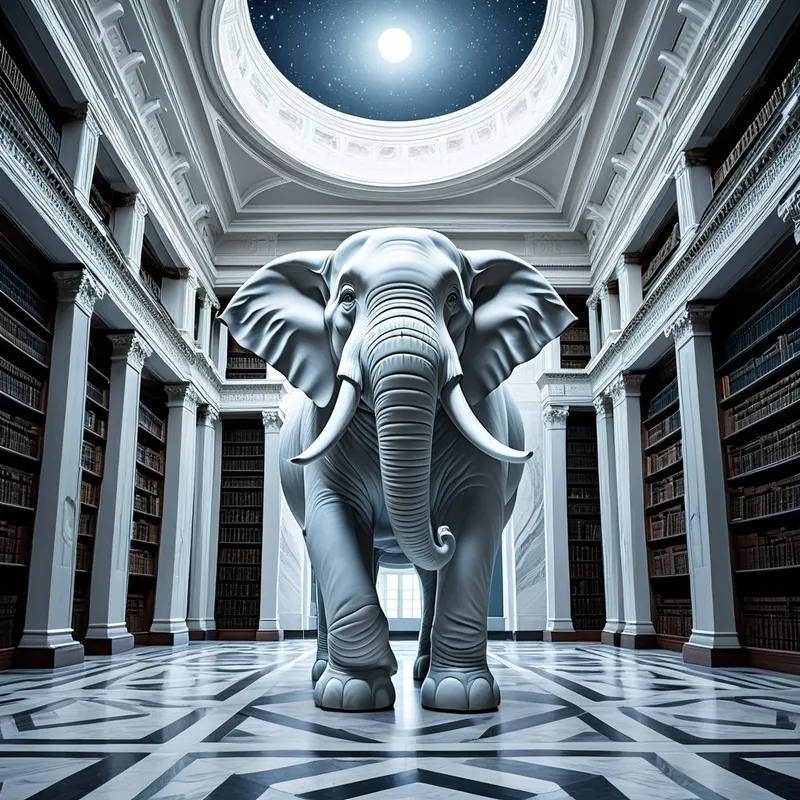
When Airavata strides into the modern dreamscape, he rarely appears in his full mythological regalia. The dreamer may encounter a strangely quiet, overwhelmingly large white elephant in an urban parking garage, a ghostly ivory statue in a forest that feels alive, or simply a profound sense of a supportive, immense presence behind them.
This is the psyche signaling a critical integration. The dreamer is likely in a phase where a new, conscious structure (a decision, a role, a personal “rule” or code) is being formed or tested. The appearance of the elephant-essence suggests that the unconscious is offering its colossal support. The somatic feeling is often one of deep, calm solidity—a weight that grounds rather than crushes. Psychologically, it indicates the alignment of personal will (Indra) with a deeper, archetypal mandate for order and integrity (Airavata). If the elephant seems distressed or trapped, it may reflect that the dreamer’s conscious attitudes are misusing or ignoring this inner foundation, leading to a sense of instability despite outward strength.
Alchemical Translation
The myth of Airavata models the alchemical process of coagulatio—the making solid, the creation of the enduring stone from the volatile waters. Our personal “ocean of milk” is the swirling, chaotic potential of our unlived life, our mixed motives, our unresolved conflicts. The “churning” is the inevitable friction of existence—challenges, dilemmas, and deep introspection that agitate our depths.
The treasure born from this inner churning is not a skill or an idea, but the very capacity to hold the center—to become the axis for one’s own world.
Airavata’s emergence is the moment when, from our struggles, we crystallize a core principle of our being. This is not the rigid ego, but the inner sovereign—a resilient, compassionate authority rooted in something older and wiser than the personality. To “mount your Airavata” is to consciously accept this inner support. It means your actions are carried by a strength that is not brute force, but the dignified power of aligned being. Your “four tusks” become your ethical boundaries, your “seven trunks” your adaptive intelligence in the world. You cease to be buffeted by every storm because you have become, in part, the mountain around which the winds must flow. This is the individuated state: not a king ruling over subjects, but a sovereign self, in harmonious covenant with the vast, supportive powers of its own profound nature, standing guard at the eastern gate of each new dawn in your life.
Associated Symbols
Explore related symbols from the CaleaDream lexicon: