Tibetan Dream Yoga: Mastering the In-Between State
Discover the 1,000-year-old practice of Dream Yoga (Milam). Learn how the masters of Tibet use sleep as a laboratory for enlightenment and spiritual freedom.
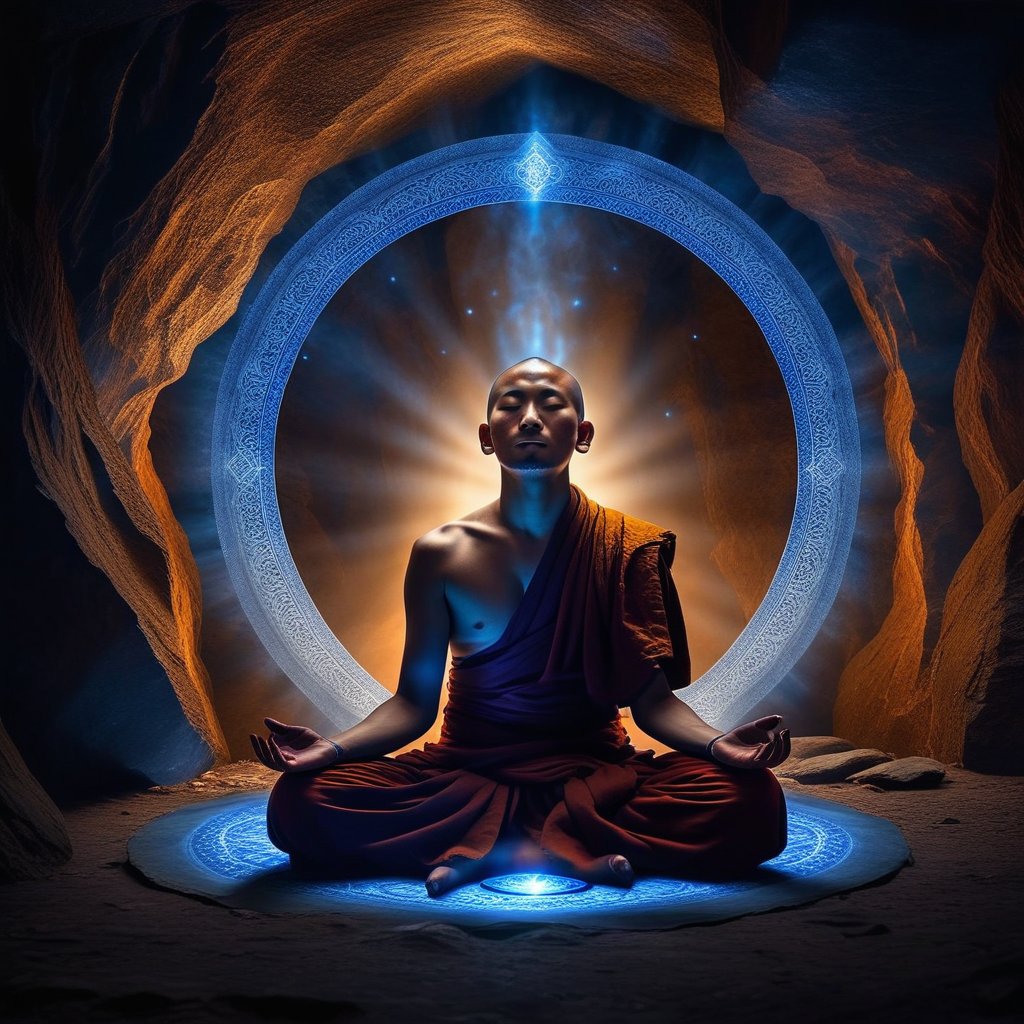
While the Western world is slowly discovering the benefits of Lucid Dreaming, the practitioners of Tibetan Buddhism have been mastering the night for over a millennium. For them, “Dream Yoga” (Milam) is not a hobby or a way to have fun. It is a rigorous spiritual discipline designed to prepare the soul for the ultimate transition: Death.
In the Tibetan tradition, the state of dreaming is remarkably similar to the state of the Bardo—the “In-Between” space where the soul goes after the body dies. By learning to stay conscious in a dream, you are learning to stay conscious in the afterlife.
In this 5,000-word deep dive, we will explore the secret techniques of the Great Masters and learn how to turn your sleep into a path to enlightenment.
The Theory of the Mirror: Reality vs. Illusion
At the heart of Dream Yoga is a radical realization: The waking world is also a dream.
- The Dream of the Day: We are currently in a “Waking Dream” created by our senses and our conditioning. We believe it is solid and permanent, just as we believe the floor in a dream is solid.
- The Dream of the Night: This is a “Subtle Dream.” It is less dense, making it easier to see through its illusory nature.
- The Goal: If you can realize the dream is a dream at night, you can realize the world is a dream during the day. This realization is what the Buddhists call Emptiness (Sunyata).
Part 1: The Four Main Practices of Dream Yoga
Before you can perform yoga in your sleep, you must master the four stages of the night.
1. Apprehending the Dream (Realization)
This is exactly like becoming lucid. You realize: “This is a dream.” In Tibetan practice, this is achieved by constantly reminding yourself throughout the day: “Everything I see is a dream.”
2. Transforming the Dream (Control)
Once conscious, you must practice Flexibility. Transform a Fire into Water, or turn a Mountain into a Bird. This proves to your soul that nothing in the manifest world is “fixed.”
3. Multiplying the Dream (Creative Power)
Try to create ten versions of yourself, or a thousand Lotus Flowers. This expands the capacity of your consciousness to hold multiple perspectives simultaneously.
4. Travel to Sacred Realms (The High Journey)
The ultimate stage. Instead of creating your own dream, you use your lucidity to travel to “Pure Lands” or to consult with Divine Messengers (Buddhas and Bodhisattvas). (See Astral Projection).
Part 2: The Physical Yoga of Sleep
Tibetan masters use specific physical postures to influence the “Wind” (Prana) in the body.
- The Lion’s Posture: Sleep on your right side. This is said to open the “Wisdom Channel.”
- The Throat Chakra Focus: Before sleep, imagine a glowing red “A” (the letter) in your throat. This is the seed-syllable of communication and memory.
- The “Great Void” Meditation: Imagine the entire universe dissolving into white light before you drop into sleep.
Part 3: The Bardo and the Clear Light
The most advanced stage of Dream Yoga is not dreaming at all—it is The Yoga of Clear Light Sleep. This is staying aware during deep, dreamless sleep (Delta state).
- Sustaining Awareness: When the images of the dream fade, you don’t “black out.” You remain as a point of presence in the “Primordial Void.”
- The Clear Light: This is the pure, uncolored energy of the universe. To rest here is to experience the “Mind of the Buddha.” It is the highest form of rest possible for a human.
Cultural Perspectives: The Lineage of the Night
The Jungian View: The Integration of the Void
Jung admired the Eastern traditions for their ability to go beyond the “Persona” and the “Shadow.” He saw Dream Yoga as the ultimate form of Individuation—where the “Self” stops identifying with the stories of the ego and starts identifying with the vastness of the Unconscious.
The Modern Scientific View: Gamma Wave Activity
Monks practicing Dream Yoga show incredible levels of Gamma Wave activity during sleep—the same waves associated with high-level cognitive functioning and “Aha!” moments. Their brains are “Waking Up” in the middle of the night.
Connections to the CaleaDream Database
- Lotus: The symbol of purity and realization.
- Cave: The traditional place of long-term dream retreat.
- Bell: The call to awareness and the sound of emptiness.
- Aura: The light of the subtle body.
- Rainbow: The symbol of the “Rainbow Body” achieved through mastery.
Conclusion: Wake Up to the Night
Tibetan Dream Yoga reminds us that we spend one-third of our lives in a state that we largely ignore. To the master, this is a waste of a precious opportunity.
By waking up in your dreams, you are waking up to the true nature of reality. You realize that you are not a small person in a big world; you are the Vast Consciousness that is creating the world in every moment.
Tonight, don’t just sleep. Practice.
FAQ
Q: Is it okay to use Dream Yoga if I’m not a Buddhist? A: Yes. The mechanics of the mind are universal. While the symbols are Buddhist, the experience of consciousness is a human right.
Q: Can I do this and still have ‘fun’ dreams? A: Yes, but you will find that “fun” dreams (like Flying) eventually lose their luster compared to the profound peace of the “Clear Light.”
Q: What if I get scared of the ‘Void’? A: Fear is simply a sign that your Ego is fighting for survival. It is afraid of “Emptiness” because the Ego is made of “Forms.” Use the Nightmare Alchemy techniques to face the fear.
Explore the cross-cultural science of the soul in our Physics of Soul guide.